
Reach stackers are essential in logistics, especially for moving and stacking containers. These powerful machines ensure smooth operations in busy shipping environments. But the question arises: is a reach stacker considered a vehicle?
In this article, we will explore what makes a reach stacker unique. We’ll discuss its design, functions, and how it compares to traditional vehicles. By the end, you'll understand why reach stackers are often classified as vehicles in certain contexts and their key role in material handling.
Key Takeaways
Reach Stackers Are Specialized Equipment: Although not a traditional vehicle, reach stackers possess vehicle-like mobility and function in material handling.
Versatility and Efficiency: Reach stackers offer superior reach, lifting capacity, and maneuverability compared to other equipment like forklifts and cranes.
Advanced Features for Safety and Productivity: These machines are equipped with advanced steering, hydraulic systems, and safety mechanisms to ensure effective container management in busy terminals.
Cost-Effective Operations: Reach stackers help optimize space, reduce wait times, and provide long-term operational savings, especially in high-traffic logistics hubs.
Increasing Automation: Modern reach stackers incorporate automation and eco-friendly technologies, offering enhanced efficiency and sustainability in terminal operations.
Understanding the Reach Stacker
Definition of a Reach Stacker
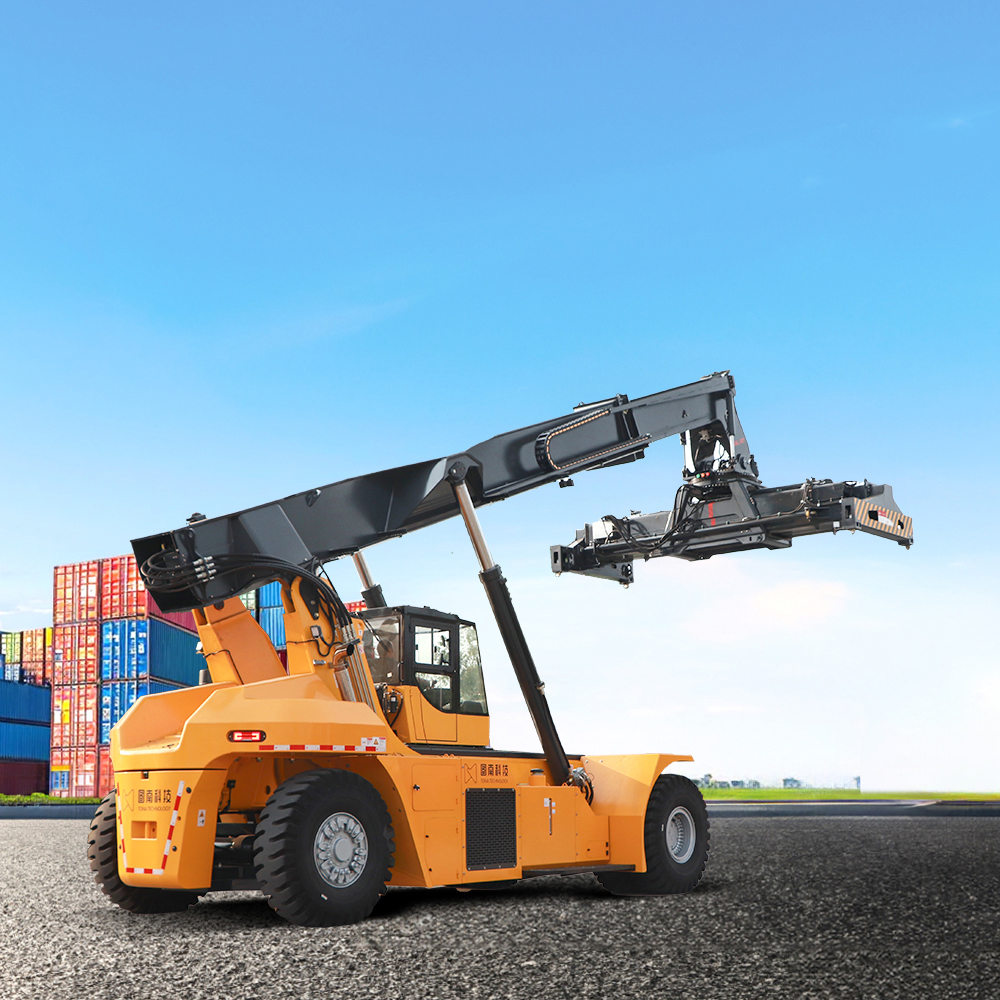
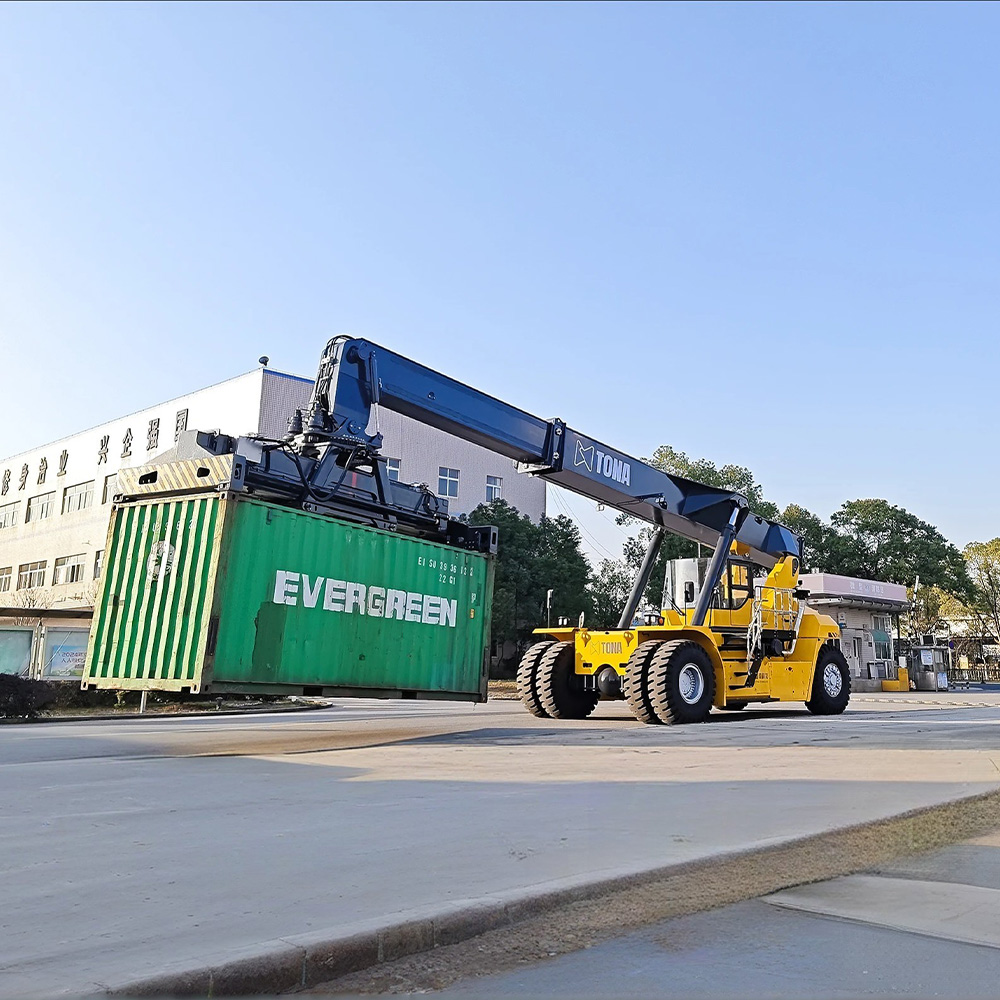
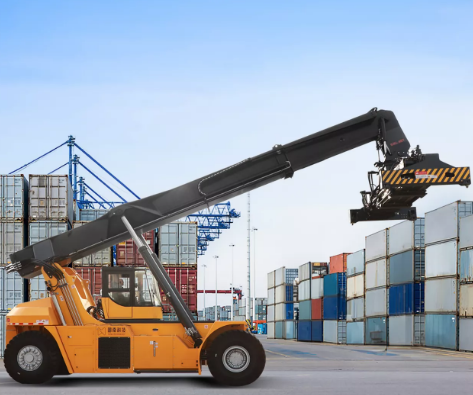
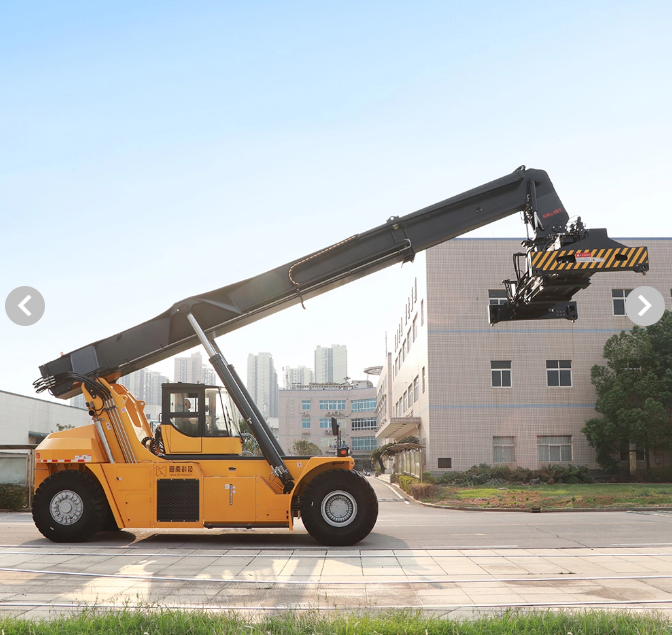
A reach stacker is a specialized piece of equipment used for handling intermodal containers. Its primary function is to lift, move, and stack containers within confined spaces, such as busy port terminals or freight yards. Unlike standard forklifts, reach stackers have a telescoping boom that allows operators to reach multiple rows of containers, even those placed high on top of one another.
The reach stacker’s design enables efficient vertical and horizontal movement of containers. With lifting capacities of up to 45 tons, these machines are equipped to handle a wide range of container sizes and weights, ensuring versatility in various operational environments.
Key Features and Functions
The core functionality of a reach stacker revolves around its ability to efficiently manage containers in tight spaces. Key features include:
| Feature | Description |
|---|---|
| Telescoping Boom | Extendable boom that allows operators to reach containers stacked up to five rows high. |
| Lifting Capacity | Capable of lifting containers up to 45 tons. |
| Maneuverability | Operates efficiently in tight spaces, reducing congestion and optimizing space. |
| Stacking Capabilities | Can stack containers vertically and horizontally, maximizing yard space. |
When selecting a reach stacker, consider its telescoping boom and lifting capacity to ensure it meets the specific needs of your facility.
The Nature of a Reach Stacker: Vehicle or Equipment?
Is a Reach Stacker a Vehicle?
To determine whether a reach stacker is a vehicle, we need to assess its design and functionality. While a reach stacker does not fall into the traditional category of road-going vehicles like trucks or cars, it shares many characteristics with vehicles used for transporting goods.
A reach stacker is mobile and capable of moving across various terrains, making it function similarly to a vehicle in many ways. It is equipped with large wheels or rubber tires that allow it to maneuver within tight spaces, much like how a vehicle would navigate through narrow roads or parking lots. However, unlike traditional vehicles, it lacks the ability to operate on public roads and is confined to operational areas such as ports and terminals.
Despite this, the mobility and transport function, combined with the fact that it is operated by a driver inside a cab with control mechanisms, classifies a reach stacker as a "vehicle" in a broader sense within material handling environments.
Comparing Reach Stackers to Traditional Vehicles
When comparing reach stackers to traditional vehicles, the most apparent difference lies in their specific function. Traditional vehicles like trucks are designed for road transportation, while reach stackers are built to lift, move, and stack heavy loads in controlled environments.
Key differences include:
| Feature | Reach Stacker | Traditional Vehicle |
|---|---|---|
| Function | Handling containers in yards | Transporting goods on roads |
| Mobility | Restricted to terminals | Operates on public roads |
| Design | Telescoping boom, hydraulic systems | Engine, transmission, wheels |
| Lifting Capacity | 30 to 45 tons | Varies by vehicle type |
Reach stackers are more specialized than traditional vehicles. While vehicles are optimized for long-distance travel, reach stackers are built for precision and power in confined areas. Reach stackers are often mistaken for forklifts, but their ability to reach higher and deeper stacks, along with their powerful lifting capacity, sets them apart.
Components and Operation of a Reach Stacker
The Vehicle-Like Design of Reach Stackers
A reach stacker is designed with several key components that give it vehicle-like characteristics. These include the hydraulic system, engine, and steering mechanisms, all of which enable the machine to function similarly to a vehicle within its operational context.
Hydraulic Systems: These are responsible for the lifting and positioning of containers, utilizing cylinders, pumps, and valves to operate the boom and forks.
Engine Components: The engine powers the machine’s mobility and lifting capacity, much like the engine in a traditional vehicle.
Steering Mechanism: Reach stackers are equipped with advanced steering systems, including crab steering, allowing operators to maneuver the machine in tight spaces.
Operation and Control Systems
Reach stackers are controlled from a cab, where the operator can control the hydraulic system using joysticks and pedals. The cab offers excellent visibility to ensure safe operation. Vehicle-like systems, such as the steering wheel, accelerator, and brake controls, make it easy for operators to control the machine’s movements.
Steering: With advanced steering capabilities, including articulated steering and crab steering, the reach stacker can move in different directions, making it ideal for working in narrow aisles.
Lift and Reach Control: Operators can extend and retract the boom, adjusting it to pick up and place containers at varying heights and distances.
| Component | Role in Operation |
|---|---|
| Hydraulic System | Lifts and positions containers with precision. |
| Engine | Powers the stacker for both mobility and lifting. |
| Steering System | Allows precise maneuvering in confined spaces. |
| Control System | Joysticks and pedals control movement and lifting. |
When operating a reach stacker, ensure regular maintenance of the hydraulic and steering systems to avoid delays and safety issues.
Reach Stackers in Action: Real-World Applications
Reach Stackers in Ports and Terminals
Reach stackers are indispensable in ports and terminals, where they are used to lift, move, and stack intermodal containers. In these environments, speed and accuracy are critical, and reach stackers excel at providing both. With their high stacking capabilities, they help organize containers efficiently, reducing congestion and improving space utilization.
They play a crucial role in reducing turnaround times for ships, trucks, and trains, ensuring that containers are moved quickly from one mode of transportation to another.
Efficiency and Flexibility in Logistics
The reach stacker’s ability to operate in confined spaces makes it incredibly versatile in various logistics operations. Whether it’s stacking containers in narrow yard spaces or lifting oversized cargo, reach stackers can adapt to different logistical needs. Their compact size and high maneuverability allow them to be used in areas that larger cranes or forklifts cannot access.
| Feature | Reach Stacker | Traditional Equipment |
|---|---|---|
| Maneuverability | High precision in tight spaces | Limited in narrow areas |
| Efficiency | Speeds up operations | Slower, more equipment needed |
| Adaptability | Handles a variety of tasks | Specialized for specific tasks |
Note: Reach stackers with advanced control systems and automated features are becoming increasingly popular in modern logistics hubs, offering greater flexibility and reducing human error.
Advantages of Reach Stackers
Enhanced Efficiency and Productivity
Reach stackers are highly efficient compared to traditional vehicles and other types of material handling equipment. Their ability to stack containers five rows high in narrow spaces improves yard space utilization, helping terminals handle more containers in less time.
When compared to forklifts, which have limited reach and lifting capacity, reach stackers provide significant advantages in container handling, reducing wait times for ships and trucks.
| Feature | Reach Stacker | Forklift |
|---|---|---|
| Lifting Capacity | 30–45 tons | Up to 5 tons |
| Stacking Height | 5+ rows | Limited to 1-2 rows |
| Maneuverability | High precision in tight spaces | Limited reach and maneuvering |
Cost Savings and Long-Term Benefits
Investing in a reach stacker can lead to long-term cost savings. Its high durability and low maintenance requirements ensure that it provides excellent value over time. Additionally, its ability to reduce the number of machines needed for container handling can help cut operational costs. Electric and hybrid reach stackers also offer fuel savings and lower emissions, making them environmentally friendly options for modern terminals. Consider the long-term savings from fuel efficiency and reduced maintenance costs when choosing a reach stacker for your facility.
Conclusion
In conclusion, while a reach stacker may not meet the traditional definition of a road-going vehicle, its mobility, design, and functionality place it within the broader vehicle category in material handling. Its precision in lifting, moving, and stacking containers makes it essential in logistics and port operations. Reach stackers offer significant efficiency, flexibility, and safety improvements over traditional vehicles like forklifts and cranes. Their versatility ensures they remain vital in container handling. TONA provides heavy-duty reach stackers that enhance productivity and offer long-term benefits for your business. Their robust design and advanced features make them a trusted solution for container handling in busy environments.
FAQ
Q: What is a reach stacker?
A: A reach stacker is a specialized machine used to lift, move, and stack containers in ports, terminals, and freight yards. Its telescoping boom allows it to reach containers placed up to five rows high.
Q: Is a reach stacker considered a vehicle?
A: While a reach stacker isn't a traditional road vehicle, it shares many vehicle-like features. Its mobility, powered by large tires and hydraulic systems, allows it to move and stack containers efficiently within confined areas.
Q: How does a reach stacker differ from a forklift?
A: Unlike forklifts, reach stackers can reach higher stacks and handle heavier containers, making them ideal for operations in crowded ports and terminals. Forklifts, however, are more suited for moving smaller loads over shorter distances.
Q: What are the benefits of using a reach stacker?
A: Reach stackers offer high efficiency, increased safety, and better space utilization in container yards. They can stack containers in multiple rows, saving space and reducing operational delays.
Related Blogs
-
 How Does a Reach Stacker Work?Introduction A reach stacker is a vital piece of equipment in modern logistics, especially for handling containers in ports, rail yards, and warehouses.blogs
 -
 What is the Life Expectancy of a Reach Stacker?Introduction Understanding the life expectancy of a reach stacker is crucial for businesses that rely on material handling equipment. A reach stacker’s lifespan impacts operational efficiency, maintenance costs, and equipment planning.blogs
 -
 A walkie reach stacker is an electric-powered material handling equipment that combines the functionality of a stacker and a reach truck. Unlike standard walkie stackers, a walkie reach stacker features a pantograph or scissor mast that allows the forks to extend forward
 -
 Operating a reach stacker safely is not a single action but a layered process that begins long before the ignition key turns. Because these machines lift 45 t more than 15 m high, a small lapse quickly becomes a catastrophic or costly event.