
Introduction
A walkie reach stacker is an electric-powered material handling equipment that combines the functionality of a stacker and a reach truck. Unlike standard walkie stackers, a walkie reach stacker features a pantograph or scissor mast that allows the forks to extend forward, making it ideal for handling loads in confined spaces and narrow aisles. In this article, we will explore the advantages of walkie reach stackers and why they have become a popular choice in many warehouses, retail spaces, and fulfillment centers.
What Is a Walkie Reach Stacker — and How It Differs from Other Stackers or Forklifts
A walkie reach stacker is designed to handle light to medium loads efficiently. The primary distinction between a walkie reach stacker and a standard walkie stacker is the reach capability of the mast. Unlike the fixed mast of a traditional walkie stacker, the reach stacker's pantograph mast can extend forward, allowing it to access deep racking systems without needing to reposition the vehicle. This feature is especially useful in environments where space is limited, and there is a need to store or retrieve items from high shelves or narrow aisles. Compared to standard forklifts or reach trucks, walkie reach stackers are more compact, offering excellent maneuverability in tight spaces. They are best suited for environments where ease of use, efficiency, and safety are top priorities, especially in indoor warehouse or distribution settings.
Key Advantages of Walkie Reach Stackers
Compact Size & Maneuverability — Ideal for Tight Spaces & Indoor Use
One of the standout features of walkie reach stackers is their compact size, which allows them to operate effectively in tight spaces. These stackers are perfect for narrow aisles, small warehouses, and environments where space is at a premium. Their small footprint means that they can easily navigate between narrow racks and shelves, making them a practical solution for high-density storage areas. In addition to their small size, the reach stacker's ability to extend its mast forward enhances its maneuverability, allowing operators to pick and place loads in deep racks or trailers with ease. This makes it a valuable tool in environments where forklifts would struggle to access certain areas.
Lower Cost & Lower Operational Overhead
Compared to full-sized forklifts or reach trucks, walkie reach stackers come at a significantly lower initial purchase price. This makes them an excellent choice for businesses with a tight budget or those looking to minimize capital expenditures. In addition to the lower upfront cost, walkie reach stackers also incur lower operational expenses, including reduced energy consumption, less wear on parts, and lower maintenance costs. Their electric-powered design makes them cost-effective to operate, especially in indoor environments where emissions and noise are a concern.
Versatility & Suitability for a Range of Warehouse Tasks
Walkie reach stackers are versatile machines that can handle a wide variety of tasks, including pallet stacking, loading and unloading trucks, order picking, and racking. Their ability to extend the mast makes them particularly useful in applications where loads need to be placed or retrieved from high shelves or deep storage locations. This versatility makes them ideal for use in small to medium-sized warehouses, retail stores, e-commerce fulfillment centers, and cold storage facilities. These stackers are also beneficial for operations that require frequent, light-to-medium load handling, but where using a larger forklift or reach truck would be overkill. With their compact size, they allow operators to work in tighter spaces and increase overall warehouse efficiency.
Easier Operation & Lower Barrier to Entry
One of the biggest advantages of walkie reach stackers is their ease of operation. Unlike larger forklifts or reach trucks, which require specialized training and licenses, walkie reach stackers typically do not require heavy-duty forklift licenses. This lowers the barrier to entry for businesses and employees, enabling more workers to operate the equipment safely and efficiently. Additionally, the walkie reach stacker’s ergonomic design, which includes easy-to-use control handles and user-friendly interfaces, reduces operator fatigue. Operators can maneuver the stacker with ease, even in cramped environments, increasing productivity and reducing the risk of accidents.
When a Walkie Reach Stacker Makes Sense — Use-Case Scenarios & Buyer Guidance
Walkie reach stackers are perfect for small to mid-sized warehouses, retail spaces, and e-commerce fulfillment centers where space is limited and the handling of light to medium loads is required. These stackers shine in environments with narrow aisles, high-density racking, and limited floor space. They are best suited for indoor use on smooth, flat surfaces such as concrete floors. They are not designed for rough terrain or outdoor use, which makes them unsuitable for heavy-duty, industrial-level applications or situations where high throughput is needed. Walkie reach stackers are also an excellent option for businesses that need to reduce operational costs while maintaining high efficiency. By replacing larger forklifts with more compact walkie stackers, businesses can streamline their operations, reduce maintenance costs, and improve the overall workflow.
Limitations / What It Does Not Replace
While walkie reach stackers offer many benefits, they do have limitations. The most significant limitation is their load capacity and lift height, which are lower than those of full-sized forklifts and reach trucks. Walkie reach stackers are ideal for light to medium loads but are not suitable for handling very heavy or bulky items. Additionally, walkie reach stackers are best suited for indoor use on smooth, flat surfaces. They are not suitable for use in outdoor environments or on rough terrain, such as construction sites or areas with uneven ground. For high-volume, high-throughput operations that require frequent heavy lifting or long-distance travel, traditional forklifts or reach trucks may be a better choice.
Conclusion
Walkie reach stackers provide an efficient, cost-effective solution for many modern warehouses, retail spaces, and e-commerce fulfillment centers. Their compact size, ease of operation, and ability to handle light to medium loads in tight spaces make them a valuable addition to any operation that requires flexibility and cost savings. While they may not replace heavy-duty forklifts in all scenarios, walkie reach stackers represent a smart, versatile alternative for businesses that need to improve efficiency without sacrificing cost-effectiveness. By assessing their specific needs, businesses can determine whether a walkie reach stacker is the right choice for their material handling requirements.
FAQs
What’s the difference between a walkie reach stacker and a standard walkie stacker?
A walkie reach stacker features a pantograph or scissor mast that extends forward, allowing operators to reach deep racking systems and place or retrieve loads without repositioning the stacker. In contrast, a standard walkie stacker has a fixed mast and is primarily used for shorter-range stacking or pallet handling.
Do I need a license to operate a walkie reach stacker?
Typically, no specialized forklift license is required to operate a walkie reach stacker, making it an accessible option for businesses with less experienced operators. However, it’s important to check local regulations, as some areas may require specific training or certification.
Can a walkie reach stacker replace a forklift in all warehouse tasks?
Walkie reach stackers are ideal for light to medium load handling in confined spaces, narrow aisles, and indoor environments. However, they cannot replace forklifts in all tasks, especially for heavy-duty lifting or outdoor use. Forklifts are better suited for large-scale operations and handling very heavy or bulky loads.
Is a walkie reach stacker suitable for outdoor use or rough terrain?
No, walkie reach stackers are designed for indoor use on smooth, flat surfaces such as concrete floors. They are not built for rough terrain or outdoor environments, such as construction sites or areas with uneven ground.
What is a typical load capacity and lift height for walkie reach stackers?
The typical load capacity for a walkie reach stacker ranges from 2,000 to 3,000 lbs, depending on the model. Lift heights can range from 10 to 15 feet, depending on the design and application. These stackers are suitable for handling light to medium loads in environments with moderate height requirements.
Related Blogs
-
 If you’re wondering what is reach stacker, it’s a powerful vehicle designed to lift, move, and stack large shipping containers. You’ll often spot a reach stacker at ports, container terminals, and storage yards.hot blog
 -
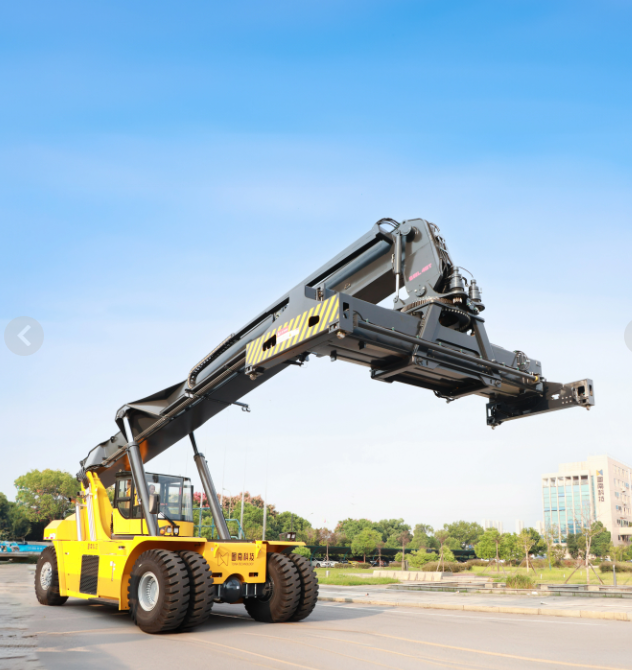 Reach stackers, also known as container handlers or intermodal handlers, are essential machines in material handling and logistics. They are equipped with a telescopic boom that allows for efficient lifting and stacking of containers at various heights. While reach stacker is the most common term, alternatives like container stacker and stacking crane emphasize different functionalities. The choice of terminology often depends on regional preferences, specific applications, or the machine's capabilities. Understanding these terms helps businesses select the right equipment for their operations. Whether lifting or stacking, reach stackers optimize container handling in ports, warehouses, and rail yards.
 -
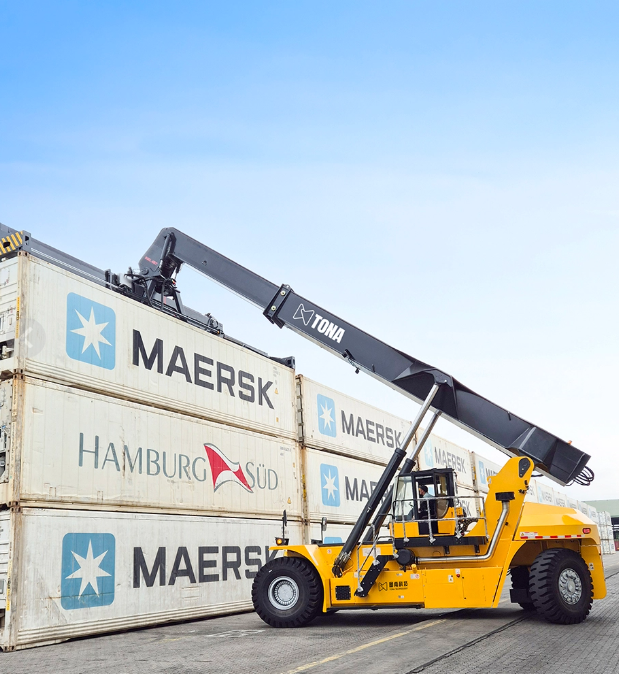 This article compares container handlers and reach stackers, two essential machines for container handling. It outlines their differences, including storage capacity, selectivity, and manoeuvrability. Container handlers excel in speed and efficiency for quick access to containers in narrow spaces, while reach stackers are ideal for maximizing storage density by stacking containers in multiple rows. The article discusses lifting capacities, cost considerations, and ROI for both machines, helping businesses choose the best option based on their specific needs. Reach stackers are recommended for operations focused on optimizing space, whereas container handlers are better for quick and efficient container movement.