
Introduction
A reach stacker is a vital piece of equipment in modern logistics, especially for handling containers in ports, rail yards, and warehouses. Its ability to lift, move, and stack containers efficiently is crucial for smooth operations in these busy environments. Unlike forklifts or cranes, the reach stacker offers exceptional versatility and maneuverability.
In this article, we will explore how a reach stacker works, its key components, and the advantages it provides in containerized logistics. By the end, you’ll understand why this machine is essential for maximizing efficiency in container handling.
What is a Reach Stacker?
Definition and Key Features
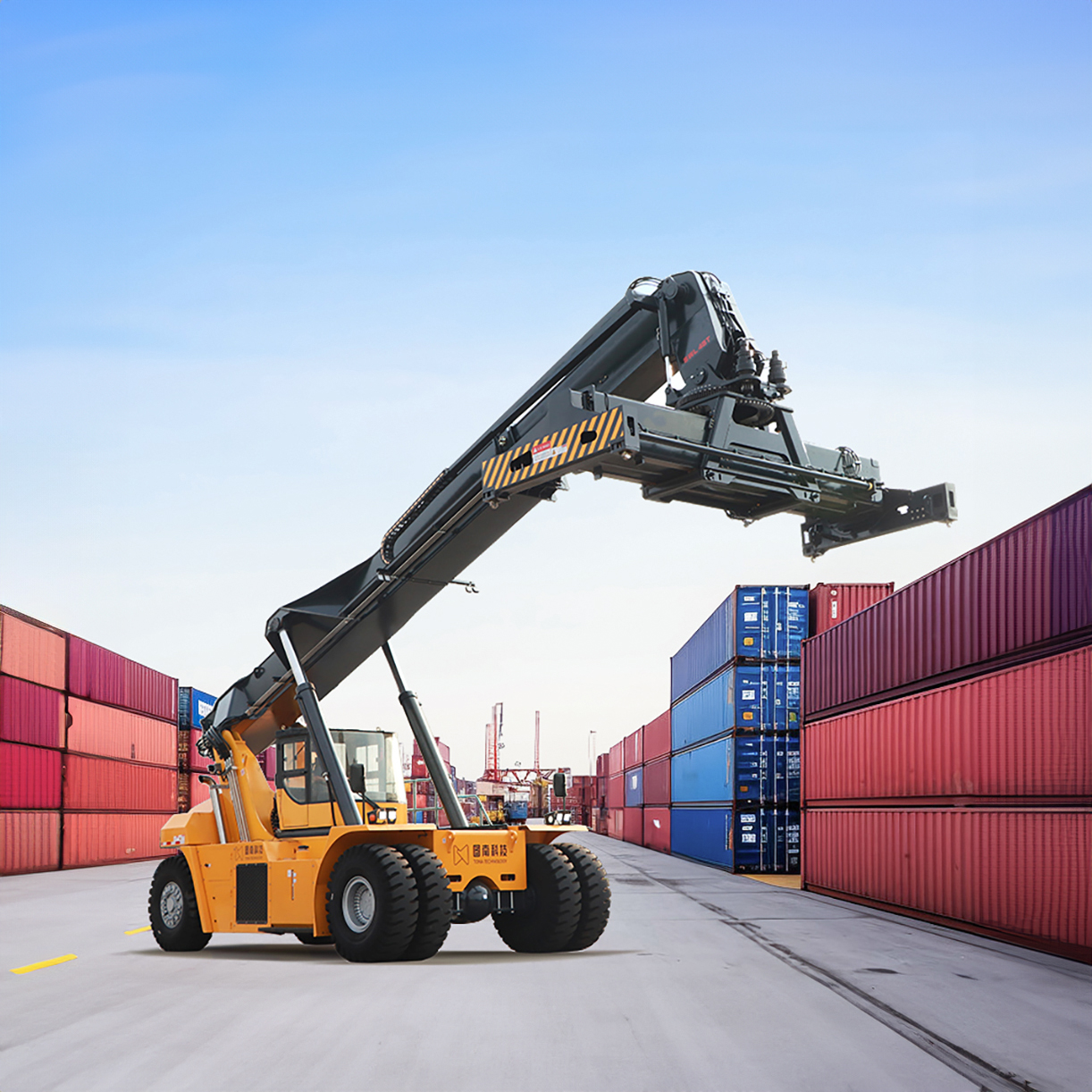
A reach stacker is a specialized piece of machinery designed for handling intermodal containers in ports, terminals, and warehouses. The core of its design is the telescopic boom, which allows it to extend and retract, reaching containers placed at high stacks or deep within rows. The hydraulic system of the reach stacker facilitates the precise lifting and positioning of containers, ensuring that even heavy loads can be managed with accuracy. Additionally, the chassis is designed to support the weight of both loaded and empty containers while ensuring stability and ease of movement.
The reach stacker can lift and transport containers weighing up to 45 tons, and its ability to stack containers vertically and horizontally allows for maximum use of space in busy container terminals. This ability makes it indispensable for optimizing storage, reducing the need for additional equipment like cranes or forklifts, and improving overall efficiency in container handling.
How It Differs from Other Machines
Compared to traditional forklifts or cranes, reach stackers offer several unique advantages. While forklifts are designed for handling smaller loads and have limited reach, reach stackers can handle much heavier containers and reach across several stacked rows. Cranes, on the other hand, are typically limited to specific tracks and require a larger footprint, making them less suitable for tight spaces.
The reach stacker is much more compact than a crane, making it highly maneuverable in confined areas such as port yards or warehouses. It combines the advantages of both a crane and a forklift, offering flexibility in handling containers, especially in environments where space optimization and quick turnaround times are critical.
Feature | Description |
Telescopic Boom | Enables the reach stacker to extend and retract for stacking. |
Hydraulic System | Provides the lifting force required to move heavy containers. |
Lifting Capacity | Can lift containers up to 45 tons, with some models handling more. |
Maneuverability | Compact design allows for use in tight spaces. |
Safety Features | Includes stability control, overload protection, and visibility enhancements. |
How Does a Reach Stacker Operate?
Main Components and Their Functions
The operation of a reach stacker relies on several key components, each playing a crucial role in its efficiency and safety. The hydraulic system is one of the most important, enabling the machine to lift containers with precision. It includes cylinders, pumps, and valves that work together to provide the necessary force to move heavy loads. The engine provides the power needed to lift and transport containers, while the electrical system ensures that all components function properly, from steering to control mechanisms.
The structure and chassis of the reach stacker are designed to bear heavy loads and provide stability during operations. This includes the masts, booms, axles, and wheels that enable the machine to maintain balance while lifting and stacking containers. The brake system is another critical component, ensuring that the reach stacker can stop safely, even when carrying a full load.
Step-by-Step Operating Process
The operator of a reach stacker uses the controls to extend or retract the boom and lift or lower containers. First, the operator drives the reach stacker to the designated container and uses the boom to lift it from the ground or from the top of a stack. The boom's telescoping action allows the operator to reach containers that are stacked high or placed deep within a row, offering the ability to handle containers in tight spaces.
Once the container is secured, the operator can move it horizontally to a new location, whether it is being stacked or unloaded onto a truck or rail car. After placing the container in position, the boom is retracted, and the operator uses the steering system to move the reach stacker to the next task. The ability to both lift and move containers makes the reach stacker highly efficient in port and warehouse environments.
Safety Mechanisms
Safety is a top priority when operating a reach stacker, given the heavy loads and complex maneuvering involved. Modern reach stackers are equipped with various safety mechanisms to protect both the operator and the cargo. Stability controls help prevent tipping by ensuring the reach stacker remains balanced while lifting and moving containers. Overload protection systems are in place to prevent the machine from lifting more than its rated capacity, reducing the risk of mechanical failure.
Operator safety is enhanced by features such as an elevated cabin for better visibility, which allows the driver to see the entire loading or stacking area. In addition, the cabin is designed to protect the operator from potential hazards, including falling containers. Emergency stop buttons and clear signaling systems further improve safety by providing quick responses in case of malfunction or danger.
Key Benefits of Using a Reach Stacker
Efficiency in Container Handling
One of the primary benefits of using a reach stacker is its ability to handle containers quickly and efficiently. With the reach stacker’s telescopic boom, it can lift containers to great heights and reach deep into container stacks, reducing the time needed for loading and unloading. This efficiency significantly cuts down on turnaround times, which is essential in busy ports where time is of the essence.
Additionally, the reach stacker’s ability to handle multiple containers in a single operation improves throughput. Operators can stack and unstack containers in quick succession, reducing idle time and boosting productivity.
Space Optimization
In environments where space is at a premium, such as in crowded container yards or port terminals, the reach stacker excels by maximizing the vertical space available. Its ability to stack containers up to six high allows operators to optimize the yard layout, reducing the need for additional storage space or equipment. This not only increases storage capacity but also enhances overall operational efficiency.
By stacking containers in an organized manner, reach stackers help prevent congestion and improve the flow of goods within the terminal, which ultimately leads to faster processing times and higher throughput.
Versatility in Different Environments
Reach stackers are highly versatile machines that can be used in a variety of environments. They are capable of handling both empty and loaded containers, making them suitable for diverse operations in ports, rail yards, and warehouses. Their ability to navigate tight spaces also makes them an excellent choice for operations where other equipment, such as cranes or forklifts, might be too bulky.
This adaptability allows reach stackers to be used in different sectors of logistics, including container handling, breakbulk cargo handling, and even in certain warehouse applications for lifting bulky items like steel coils or timber.

Different Types of Reach Stackers
Standard Reach Stackers
Standard reach stackers are designed for general container handling tasks in ports and storage yards. They typically offer lifting capacities ranging from 30 to 45 tons and can stack containers up to six high. These machines are ideal for standard intermodal container handling and are commonly used in environments where the primary need is to move containers quickly and efficiently.
Specialized Reach Stackers
Specialized reach stackers are tailored for specific applications. For example, intermodal reach stackers are designed to handle containers that need to be transferred between different modes of transportation, such as trucks, trains, and ships. These machines often have additional attachments or features that make them suitable for handling diverse container types and sizes.
Empty and loaded reach stackers differ in their lifting capacities and are optimized for either stacking empty containers or handling heavy, fully loaded containers. Operators can choose the model that best fits their specific operational needs.
Choosing the Right Reach Stacker
When selecting a reach stacker, factors such as lifting capacity, reach, and maneuverability should be considered. For operations with tight space constraints, a more compact reach stacker may be required, while those handling heavier containers may need a more robust model with a higher lifting capacity.
Type | Application | Max Lifting Capacity | Max Stacking Height |
Standard Reach Stacker | General container handling in ports and yards | Up to 45 tons | Up to 6 containers |
Intermodal Reach Stacker | Transferring containers between transport modes (truck, rail, ship) | Up to 41 tons | Up to 4 containers |
Empty/Loaded Reach Stacker | Handling empty or loaded containers separately | Up to 45 tons | Up to 5 containers |
How to Maintain a Reach Stacker
Regular Maintenance Practices
To ensure the longevity and optimal performance of a reach stacker, regular maintenance is essential. Operators should inspect the hydraulic system for leaks and ensure that all components are functioning properly. The tires should be checked for wear and replaced as necessary to ensure the reach stacker can move safely and efficiently.
Additionally, the operator should follow the manufacturer’s maintenance schedule, which includes regular checks of the engine, transmission, and control systems. Performing these tasks regularly can prevent costly repairs and ensure the reach stacker operates at peak performance.
Troubleshooting Common Issues
Common issues with reach stackers include hydraulic leaks, malfunctioning controls, and problems with lifting capacity. It’s important to address these problems quickly to avoid delays in operations. Regular preventive maintenance, including inspecting hydraulic hoses and seals, can help avoid leaks. Keeping the control systems calibrated and ensuring proper load distribution will also prevent mechanical failures and ensure smooth operation.
Component | Maintenance Task | Frequency |
Hydraulic System | Check for leaks, ensure smooth operation | Weekly |
Tires | Inspect for wear and tear, ensure proper inflation | Monthly |
Safety Features | Test stability control, visibility systems | Monthly |
Engine Components | Check fuel levels, inspect engine performance | Quarterly |
Control Systems | Calibrate joysticks and pedal controls | Annually |
Real-World Applications of Reach Stackers
Port Operations
In port terminals, reach stackers play a crucial role in managing containerized cargo. Their ability to quickly lift, move, and stack containers ensures that ships are loaded and unloaded efficiently, reducing turnaround times. By optimizing the use of space and providing quick access to containers, reach stackers contribute to the overall productivity of the port.
Rail Yards and Intermodal Transportation
Reach stackers are also used in rail yards, where containers are transferred between trucks, railcars, and ships. Their versatility allows them to handle different types of cargo and containers, improving the efficiency of intermodal operations. This helps speed up the movement of goods between various modes of transportation, enhancing the overall logistics process.
Warehouses and Distribution Centers
In warehouses, reach stackers are used to move bulky materials like steel coils, timber, and other non-containerized goods. Their ability to lift and stack containers in tight spaces makes them an ideal solution for improving warehouse efficiency. Reach stackers can adapt to various cargo handling needs, enhancing productivity and reducing the need for additional equipment.
Conclusion
The reach stacker is essential for efficient container handling in busy ports, rail yards, and warehouses. Its ability to lift, move, and stack containers with precision enhances throughput, reduces downtime, and optimizes storage space. With versatile features and advanced safety mechanisms, the reach stacker offers significant value. Products from Hunan Tona Machinery Technology Co., Ltd. provide unmatched reliability and efficiency, making them an excellent choice for improving logistics operations in various industries.
FAQ
Q: What is a reach stacker?
A: A reach stacker is a versatile container-handling machine designed to lift, move, and stack containers efficiently in ports, rail yards, and warehouses.
Q: How does a reach stacker operate?
A: A reach stacker uses a telescopic boom and hydraulic system to lift containers and move them both vertically and horizontally, ensuring precise stacking and positioning.
Q: What are the benefits of using a reach stacker?
A: The reach stacker offers high efficiency, space optimization, and maneuverability, making it ideal for container handling in crowded environments like ports and terminals.
Q: Why is a reach stacker better than a forklift?
A: Unlike forklifts, a reach stacker can handle taller stacks, reach containers placed deep in rows, and operate efficiently in tighter spaces, enhancing overall productivity.
Q: How much weight can a reach stacker lift?
A: Most reach stackers can lift containers weighing up to 45 tons, with some specialized models handling even heavier loads.
Related Blogs
-
 If you’re wondering what is reach stacker, it’s a powerful vehicle designed to lift, move, and stack large shipping containers. You’ll often spot a reach stacker at ports, container terminals, and storage yards.hot blog
 -
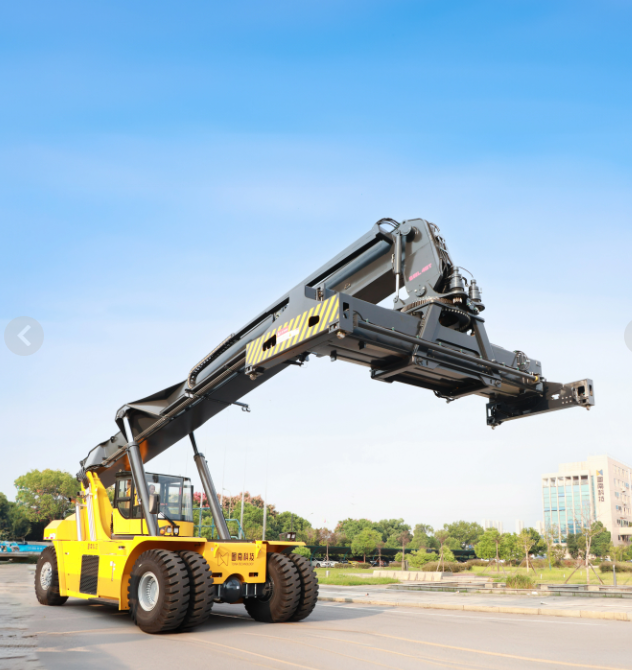 Reach stackers, also known as container handlers or intermodal handlers, are essential machines in material handling and logistics. They are equipped with a telescopic boom that allows for efficient lifting and stacking of containers at various heights. While reach stacker is the most common term, alternatives like container stacker and stacking crane emphasize different functionalities. The choice of terminology often depends on regional preferences, specific applications, or the machine's capabilities. Understanding these terms helps businesses select the right equipment for their operations. Whether lifting or stacking, reach stackers optimize container handling in ports, warehouses, and rail yards.
 -
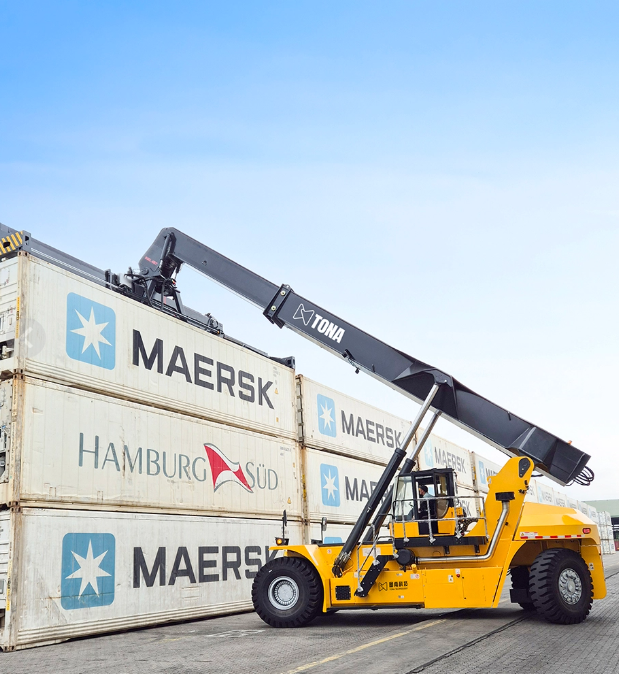 This article compares container handlers and reach stackers, two essential machines for container handling. It outlines their differences, including storage capacity, selectivity, and manoeuvrability. Container handlers excel in speed and efficiency for quick access to containers in narrow spaces, while reach stackers are ideal for maximizing storage density by stacking containers in multiple rows. The article discusses lifting capacities, cost considerations, and ROI for both machines, helping businesses choose the best option based on their specific needs. Reach stackers are recommended for operations focused on optimizing space, whereas container handlers are better for quick and efficient container movement.