
What are the Advantages of Container Unloading Systems?
Introduction
As global trade continues to expand, so does the demand for faster, more efficient logistics solutions. Traditional methods of container unloading often face challenges such as high labor costs, safety concerns, and operational bottlenecks. This has led many businesses to explore modern container unloading systems, which promise to enhance operational efficiency, reduce risks, and lower costs. In this article, we will discuss the advantages of these advanced systems, focusing on how they can streamline unloading processes and improve overall logistics performance.
What Is a Container Unloading System?
A container unloading system refers to the set of equipment and technologies used to efficiently unload goods from shipping containers. These systems can range from manual methods to semi-automated and fully automated solutions. The goal is to reduce human intervention and enhance speed, accuracy, and safety during the unloading process. Whether in warehouses, distribution centers, or ports, these systems are designed to handle a variety of goods, ensuring that operations run smoothly and without delays.
Core Advantages of Container Unloading Systems
1. Enhanced Operational Efficiency
One of the primary advantages of container unloading systems is the significant improvement in operational efficiency. Traditional manual unloading methods can take hours and lead to delays, particularly during peak times. Automated systems, however, drastically cut down the unloading time. They streamline the process, allowing goods to be unloaded faster and more effectively, leading to quicker turnover and a smoother supply chain. The integration of these systems with warehouse management systems (WMS) and transport management systems (TMS) further optimizes the workflow.
2. Lower Labor Costs and Resource Use
Reducing the need for manual labor is a critical benefit of container unloading systems. Automated systems minimize the reliance on large labor forces, enabling businesses to allocate resources to more value-added tasks. This translates into substantial labor cost savings. Furthermore, as these systems operate with fewer employees, they reduce the risk of human errors and injuries, which can lead to higher costs. The return on investment (ROI) from such systems is often realized faster due to these operational savings.
3. Increased Safety and Reduced Risk
Container unloading, especially with manual processes, can pose safety risks due to heavy lifting, awkward container positions, and potential exposure to hazardous goods. Automated unloading systems help mitigate these risks by performing the majority of the physically demanding tasks. Sensors, cameras, and precision controls are built into these systems to ensure safety during the unloading process. Additionally, automated systems comply with safety regulations, reducing accidents and injuries, and ultimately safeguarding the workforce and cargo.
4. Improved Accuracy and Cargo Protection
Another key advantage of automated container unloading systems is their ability to handle cargo with greater accuracy and care. Unlike manual unloading, which can be prone to human error and inconsistency, automated systems can consistently move items with precision. This is crucial in reducing product damage, especially with fragile or high-value goods. Automated systems often incorporate real-time monitoring and feedback mechanisms, ensuring that goods are unloaded without mishandling.
5. Seamless Integration & Scalability
Modern unloading systems are designed to be easily integrated with existing logistics networks, making them highly adaptable to various operational environments. Whether it's a small warehouse or a large-scale port, these systems can be customized and scaled to meet specific needs. As business demands grow, container unloading systems can evolve with the operation, offering flexibility and scalability that traditional methods cannot match.
Role of Reach Stackers in Container Unloading
What Is a Reach Stacker?
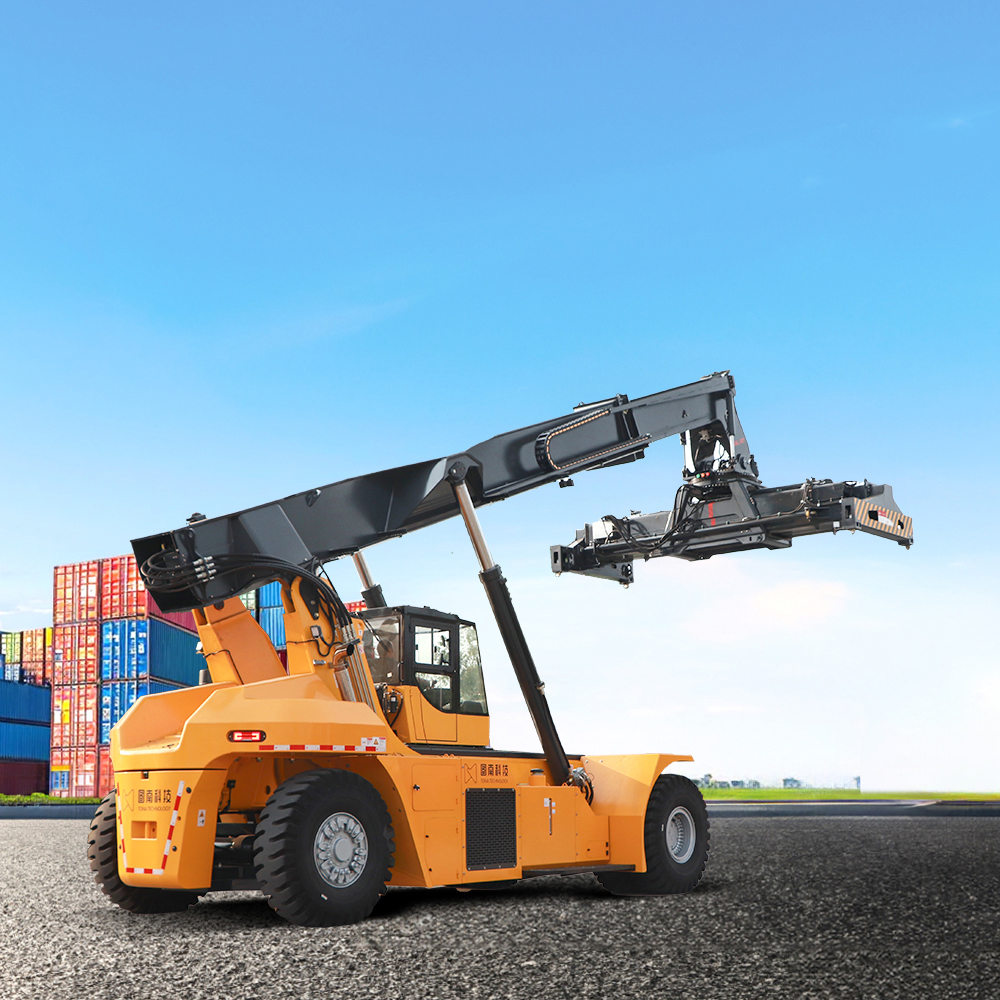
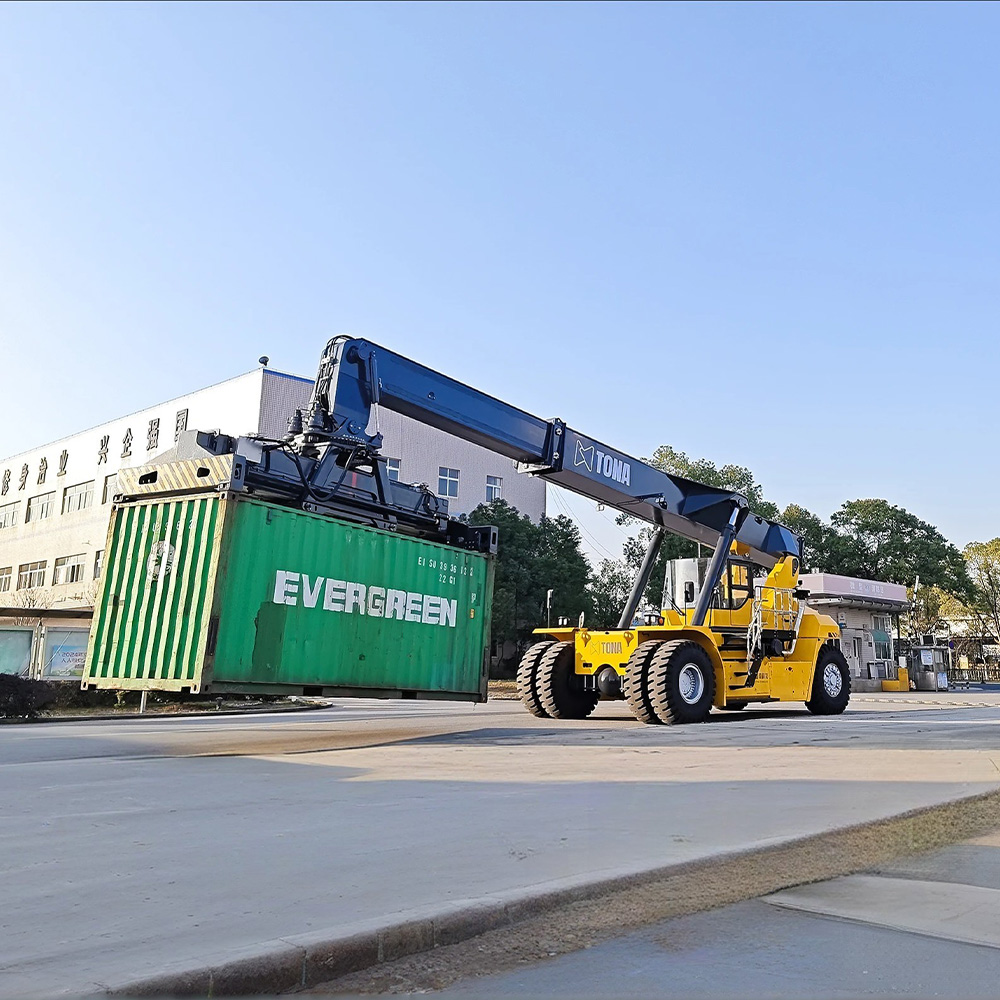
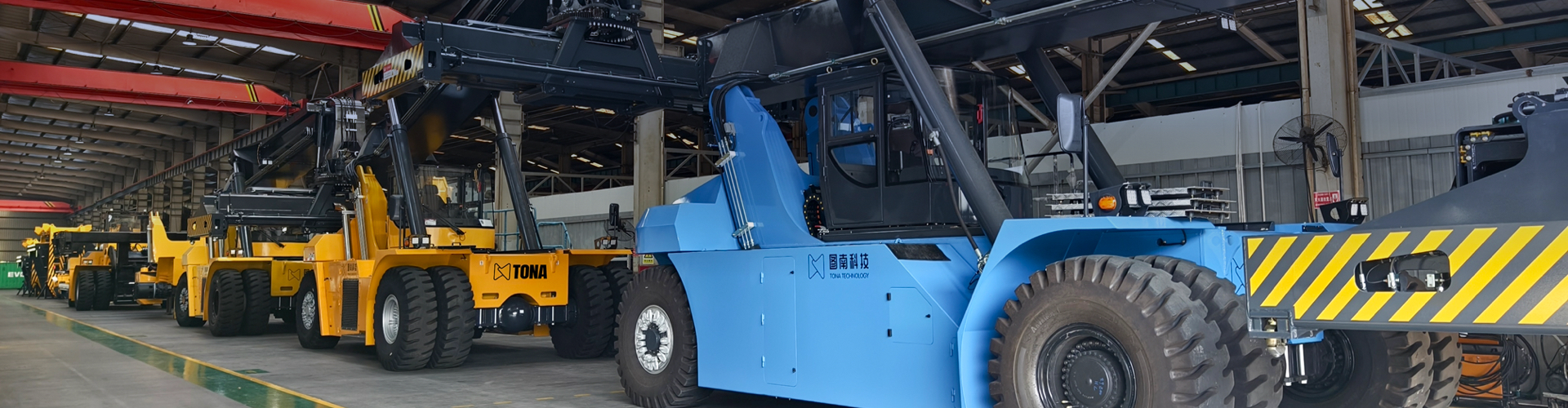
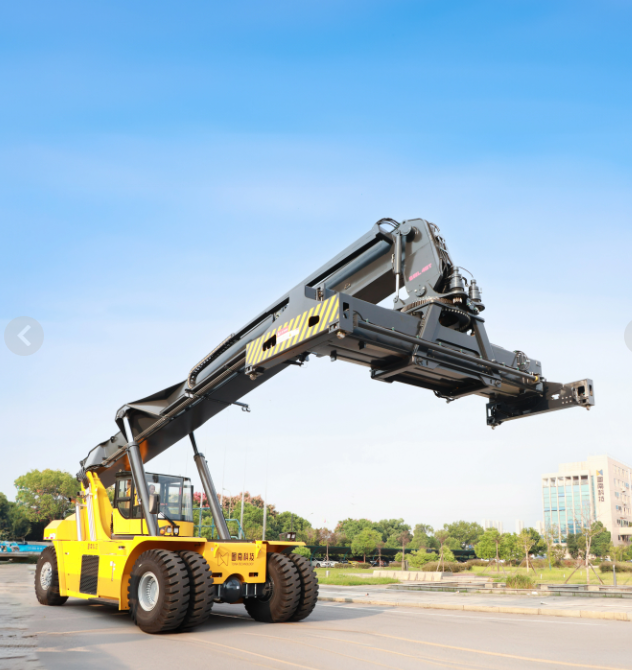
A reach stacker is a heavy-duty machine used to handle and stack containers in ports, warehouses, and logistics hubs. It is known for its maneuverability and ability to stack containers in tight spaces. These machines are particularly useful in operations where space is limited and where containers need to be moved quickly and efficiently.
Advantages of Reach Stackers for Unloading
Reach stackers play an essential role in enhancing the efficiency of container unloading operations. These machines offer the flexibility to move and stack containers of various sizes and weights. Their high maneuverability allows for faster repositioning of containers, reducing idle time and improving throughput. When paired with automated unloading systems, reach stackers enhance the overall performance of container handling by optimizing yard space and streamlining the unloading process. Reach stackers can also work seamlessly with automated systems to provide more flexibility in unloading and storing goods.
How Reach Stackers Complement Automated Systems
While automated systems focus on streamlining the unloading process, reach stackers are crucial for the movement and stacking of containers once they are unloaded. Their ability to handle containers in tight spaces and move them efficiently throughout the facility complements the automated unloading systems. The synergy between automated unloading systems and reach stackers results in faster operations, reduced congestion, and better use of available space.
Technology & Future Trends in Container Unloading
Automation and Robotics
As technology continues to advance, container unloading systems are incorporating robotics and artificial intelligence (AI) to further optimize performance. Automated robotic arms and AI-powered systems can now handle increasingly complex tasks, such as sorting containers based on their content and destination. These technologies are revolutionizing the industry by enhancing speed and precision.
IoT Integration
The Internet of Things (IoT) is becoming a key component of container unloading systems. By integrating sensors and smart devices into the unloading process, businesses can monitor and track real-time data about container conditions, unloading speeds, and cargo integrity. This data can be used to optimize unloading schedules and maintenance procedures, further improving efficiency and reducing downtime.
Sustainability
As companies look to reduce their environmental footprint, sustainable practices in container unloading are becoming increasingly important. Automated systems can help by reducing energy consumption and minimizing waste during the unloading process. Many modern systems are designed with energy-efficient technologies and can be integrated with green logistics initiatives.
Best Practices for Implementing a Container Unloading System
To successfully integrate a container unloading system into your operations, it's essential to follow best practices:
Assess Operational Needs: Understand the specific requirements of your operation and choose the system that best fits your volume, cargo type, and available space.
Train Personnel: Even with automation, it's crucial to train staff on system operation, maintenance, and troubleshooting to ensure smooth implementation.
Safety Protocols: Prioritize safety by adhering to industry safety standards and performing regular safety audits.
Performance Metrics: Establish key performance indicators (KPIs) to track the efficiency and effectiveness of your system.
Conclusion
In conclusion, the advantages of container unloading systems are undeniable. By offering enhanced efficiency, reduced labor costs, improved safety, and better cargo protection, these systems are transforming logistics operations worldwide. Paired with versatile equipment like reach stackers, they offer businesses the tools they need to meet the growing demands of modern trade. As technology continues to advance, container unloading systems will only become more efficient, paving the way for faster, safer, and more sustainable logistics.
Related Blogs
-
 Container unloading is a crucial step in the logistics and supply chain industry. The right choice of unloading equipment can significantly impact the efficiency and cost-effectiveness of operations. This article will explore various types of container unloading equipment
 -
 Automated container unloading systems are revolutionizing the logistics and warehousing industries by improving efficiency and safety. These systems, equipped with advanced robotics and sensors, replace manual labor, streamlining the process of unloading cargo from containers.hot blog
 -
 What are the Advantages of Container Unloading Systems?IntroductionAs global trade continues to expand, so does the demand for faster, more efficient logistics solutions.hot blog