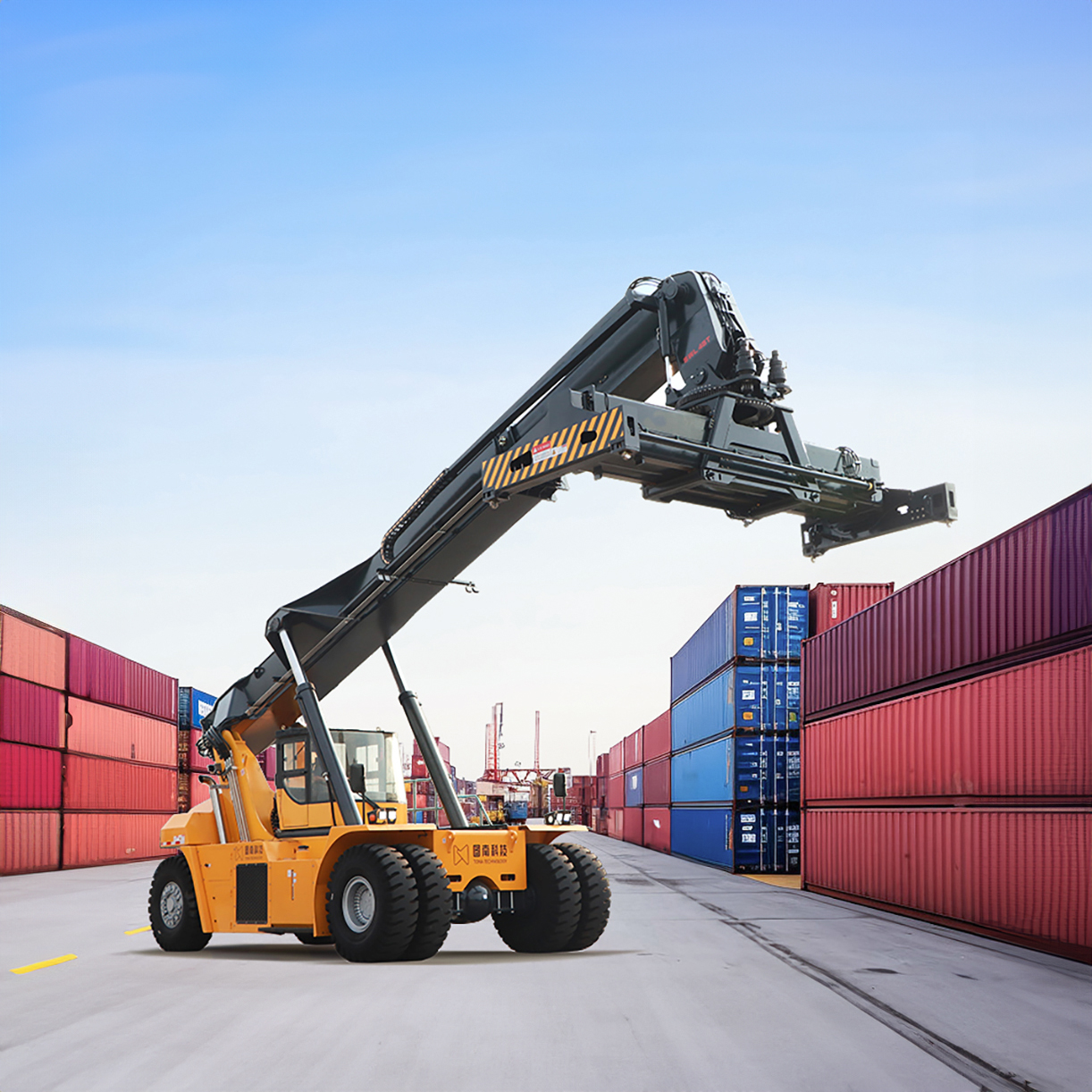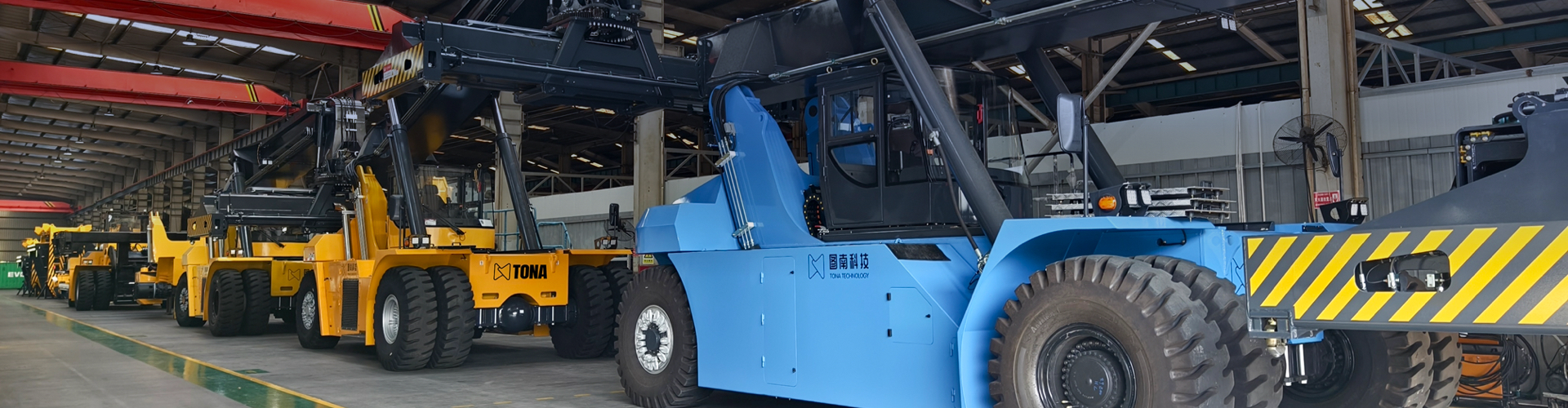

Ports move thousands of containers daily. Handling them requires powerful machines.A container reach stacker lifts and stacks heavy containers. It works efficiently across busy port yards.But how do ports choose the right machine? Capacity, reach, and layout all matter.In this article, you will learn how to select the best container reach stacker for port operations.
Why Container Reach Stackers Are Essential for Port Operations
Efficient Container Loading and Unloading in Ports
Container terminals operate under strict time constraints because ships, trucks, and trains must follow tight schedules to maintain global supply chain efficiency. A container reach stacker plays a critical role in this process by enabling operators to quickly lift containers from transport vehicles and move them directly to storage stacks within the yard. Because reach stackers are mobile machines, they can perform loading and unloading operations in multiple locations across a port terminal without requiring fixed infrastructure.
This mobility reduces container handling delays and improves cargo flow throughout the facility. Instead of relying solely on cranes or stationary lifting equipment, port operators can deploy reach stackers to handle containers wherever they are needed, ensuring that operations continue smoothly even during peak shipping periods.
Vertical Stacking to Improve Yard Space Utilization
Space utilization is one of the biggest challenges faced by container terminals, especially in ports located near major cities where land availability is limited and expensive. A container reach stacker helps address this challenge by enabling operators to stack containers vertically, allowing port yards to store more cargo within the same physical area.
Modern reach stackers can typically stack containers up to five levels high, which dramatically increases storage density and reduces the need for expanding yard space. By maximizing vertical stacking, port operators can manage higher cargo volumes without investing in additional land or building new storage facilities.
The following table illustrates how stacking height affects yard storage capacity:
Stacking Level | Operational Impact |
2–3 containers | Basic storage capacity |
4 containers | Improved yard density |
5 containers | Maximum space utilization |
Flexible Handling Across Trucks, Rail, and Yard Storage
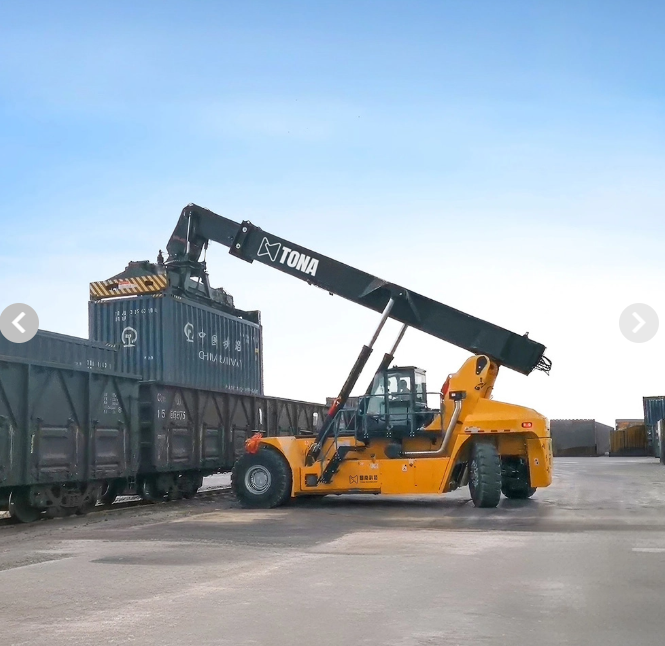
Another major advantage of the container reach stacker is its ability to operate across multiple transportation modes. Modern ports rely on intermodal logistics systems that connect ships, trucks, and rail networks. Reach stackers serve as the link between these transportation channels by lifting containers from train wagons, transferring them to trucks, and stacking them in yard storage areas.
Because of their flexible design and rotating spreader attachments, reach stackers can handle containers of different sizes and orientations while maintaining precise control during lifting operations. This flexibility makes them ideal for port environments where containers must be moved quickly between different logistics systems.
Reduced Operational Costs Compared With Traditional Equipment
Traditional container handling equipment such as gantry cranes requires expensive infrastructure, installation, and maintenance. In contrast, reach stackers provide similar container handling capabilities while remaining highly mobile and easier to maintain. This mobility allows ports to operate more efficiently without relying entirely on fixed lifting equipment.
Additionally, a single container reach stacker can often perform tasks that previously required multiple workers and machines. By reducing labor requirements and improving cargo handling efficiency, reach stackers help lower overall operational costs while maintaining high productivity levels.
Key Factors When Choosing a Container Reach Stacker for Ports
Selecting the right container reach stacker involves evaluating several technical and operational factors to ensure that the equipment matches the needs of the port terminal.
Evaluating Required Load Capacity for Port Containers
Load capacity is one of the most critical specifications when selecting a reach stacker. Container weights vary depending on cargo type, and many shipping containers weigh between 30 and 45 tons when fully loaded. Choosing a machine with sufficient lifting capacity ensures safe operations and prevents equipment overload.
The following table summarizes typical container weight ranges:
Container Type | Typical Weight |
Empty container | 2–4 tons |
Standard cargo container | 20–30 tons |
Fully loaded container | 30–45 tons |
Operators should always select a reach stacker that can handle the heaviest containers expected in daily operations.
Assessing Container Row Reach and Stacking Depth
Container yards store containers in multiple rows to maximize space efficiency. However, the deeper the row, the farther the reach stacker must extend its boom to access the container. This increased reach distance reduces lifting capacity because the load moves further away from the machine’s center of gravity.
As a result, operators must carefully evaluate how many container rows their equipment must handle before choosing a reach stacker model.
Determining Maximum Stacking Height Requirements
Stacking height determines how many containers can be stored vertically within the yard. Ports that process large cargo volumes often require reach stackers capable of stacking containers four or five levels high. However, increased stacking height also requires stronger boom structures and more powerful hydraulic systems.
Port managers should therefore balance stacking height requirements with operational safety and equipment performance.
Choosing the Right Power Source
Reach stackers are available in several power configurations, including diesel, electric, and hybrid models. Diesel reach stackers remain the most common choice for heavy-duty port operations because they provide strong lifting power and long operating endurance. Electric reach stackers, on the other hand, are gaining popularity in ports with strict environmental regulations because they produce zero emissions and lower noise levels.
Hybrid models combine the advantages of both systems by using electric power for low-load operations and diesel power for heavy lifting tasks. This configuration improves fuel efficiency while maintaining strong performance.
Understanding Load Capacity and Reach Distance
The lifting capacity of a container reach stacker is not constant and changes depending on the position of the container relative to the machine. Containers located closer to the machine allow higher lifting capacity, while containers located deeper in the yard reduce the safe lifting limit.
Container Position | Typical Capacity |
First row | Up to 45 tons |
Second row | 30–35 tons |
Third row | 20–25 tons |
This reduction occurs because extending the boom moves the load away from the center of gravity, increasing the risk of tipping. Modern reach stackers therefore rely on load charts and electronic stability systems to ensure safe operations.
Safety Features to Look for in a Container Reach Stacker
Safety plays a critical role in port operations because container handling involves extremely heavy loads. Modern reach stackers include advanced safety systems designed to prevent accidents and protect both operators and cargo.
Key safety features include load moment indicators that monitor machine balance, anti-tipping systems that prevent instability during lifting operations, and real-time monitoring sensors that track load weight and boom position. Many machines also include advanced operator cabins with improved visibility, ergonomic controls, and integrated camera systems that allow operators to monitor the surrounding environment more effectively.
Maintenance, Reliability, and Long-Term Operating Costs
Maintenance efficiency is another important factor when selecting a container reach stacker for port operations. Equipment downtime can disrupt cargo movement and lead to costly delays, so machines must be designed for easy servicing and reliable long-term performance.
Reach stackers with accessible hydraulic systems, easily replaceable filters, and convenient service panels allow technicians to perform maintenance tasks quickly. In addition, selecting a manufacturer with a strong global service network ensures that spare parts and technical support are available whenever needed.
Operators should also evaluate the total cost of ownership, which includes fuel consumption, maintenance costs, equipment lifespan, and resale value. While high-quality reach stackers may require a higher initial investment, they often provide better long-term reliability and operational efficiency.
Comparing Container Reach Stackers With Other Port Equipment
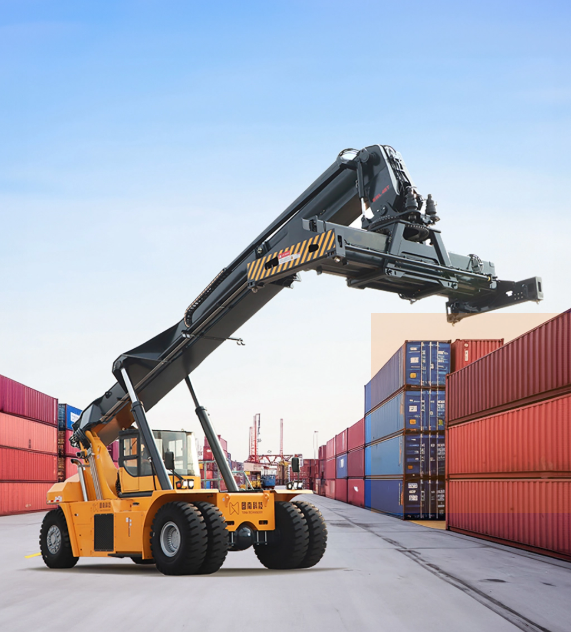
Ports use various types of equipment for container handling, including container forklifts, straddle carriers, and gantry cranes. Each type has its own advantages and operational limitations.
Container forklifts are versatile machines capable of lifting heavy loads, but they typically require more operating space and cannot reach multiple container rows as efficiently as reach stackers. Straddle carriers are commonly used in automated terminals but require large operating areas and significant infrastructure investment. Gantry cranes provide high lifting capacity but remain fixed in specific locations.
Compared with these alternatives, the container reach stacker offers a balanced combination of mobility, lifting power, and operational flexibility. It can operate across different areas of the yard while maintaining high container handling efficiency.
Conclusion
Choosing the right container reach stacker is essential for improving efficiency in modern port logistics operations. Port operators must carefully evaluate lifting capacity, reach distance, stacking height, power type, and yard layout to ensure the equipment meets operational requirements. Safety systems, maintenance accessibility, and long-term operating costs should also be considered before making an investment. With reliable solutions from Hunan Tona Machinery Technology Co., Ltd., ports can select equipment designed for demanding container handling environments.
When the correct equipment is selected, reach stackers significantly improve container handling speed, optimize yard storage capacity, and reduce operational costs. By analyzing operational needs and working with experienced manufacturers such as Hunan Tona Machinery Technology Co., Ltd., ports can ensure safe and efficient cargo handling while supporting long-term logistics growth.
FAQ
Q: What is a container reach stacker?
A: A container reach stacker lifts and stacks shipping containers in port yards.
Q: Why choose a container reach stacker for ports?
A: A container reach stacker offers flexible container handling and high stacking efficiency.
Q: How do ports choose the right container reach stacker?
A: Ports evaluate container reach stacker capacity, reach distance, and yard layout.
Q: What factors affect container reach stacker capacity?
A: Container reach stacker capacity depends on reach distance, load weight, and stacking height.
Q: How much does a container reach stacker cost?
A: Container reach stacker prices vary by capacity, engine type, and configuration.
Related Blogs
-
 Reach stacker operators are the backbone of efficient logistics. They ensure smooth cargo movement in busy ports and warehouses. This article explores what it takes to become a reach stacker operator. We’ll cover the key skills, training programs, certifications, and safety measures required.
 -
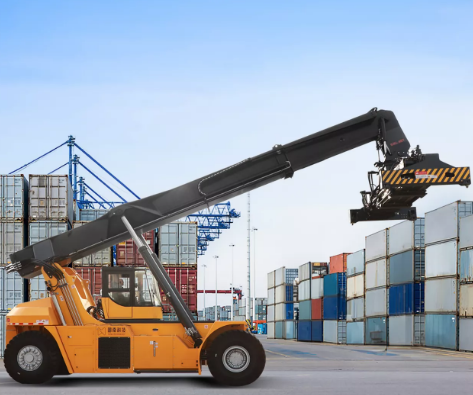 Reach stackers are essential in logistics, especially for moving and stacking containers. These powerful machines ensure smooth operations in busy shipping environments. But the question arises: is a reach stacker considered a vehicle?In this article,
 -
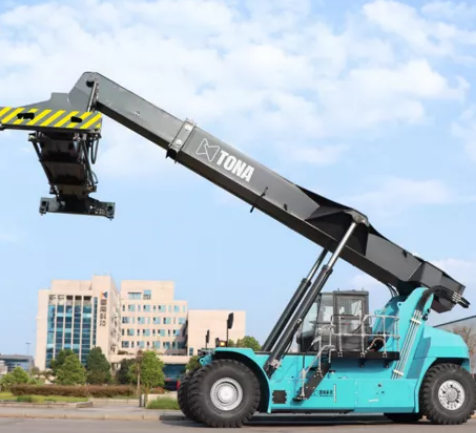 How Does a Reach Stacker Work?Introduction A reach stacker is a vital piece of equipment in modern logistics, especially for handling containers in ports, rail yards, and warehouses.blogs
 -
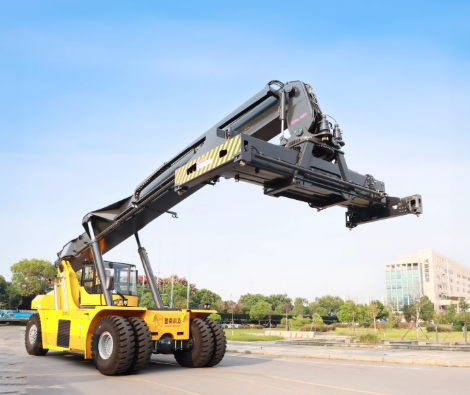 Operating a reach stacker safely is not a single action but a layered process that begins long before the ignition key turns. Because these machines lift 45 t more than 15 m high, a small lapse quickly becomes a catastrophic or costly event.