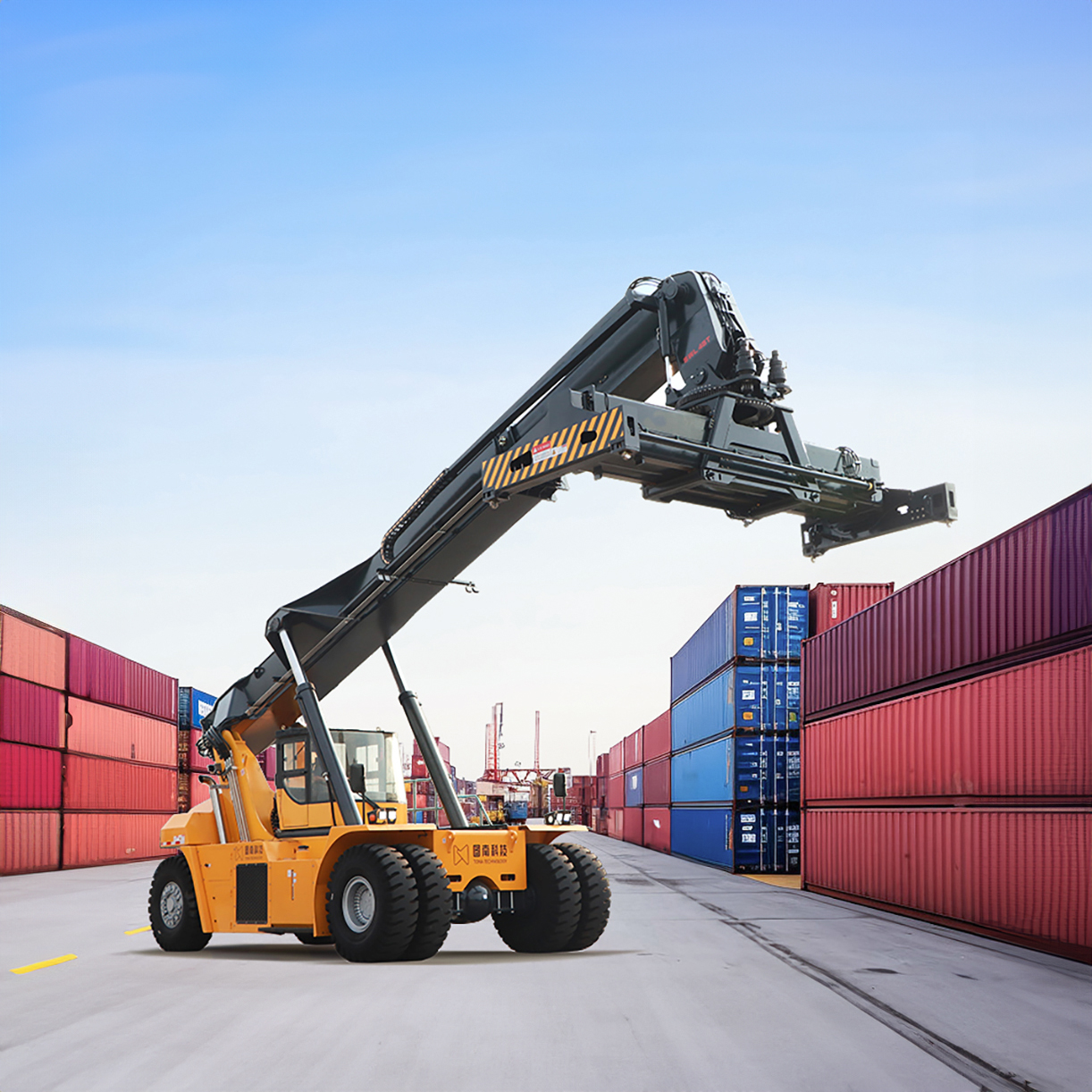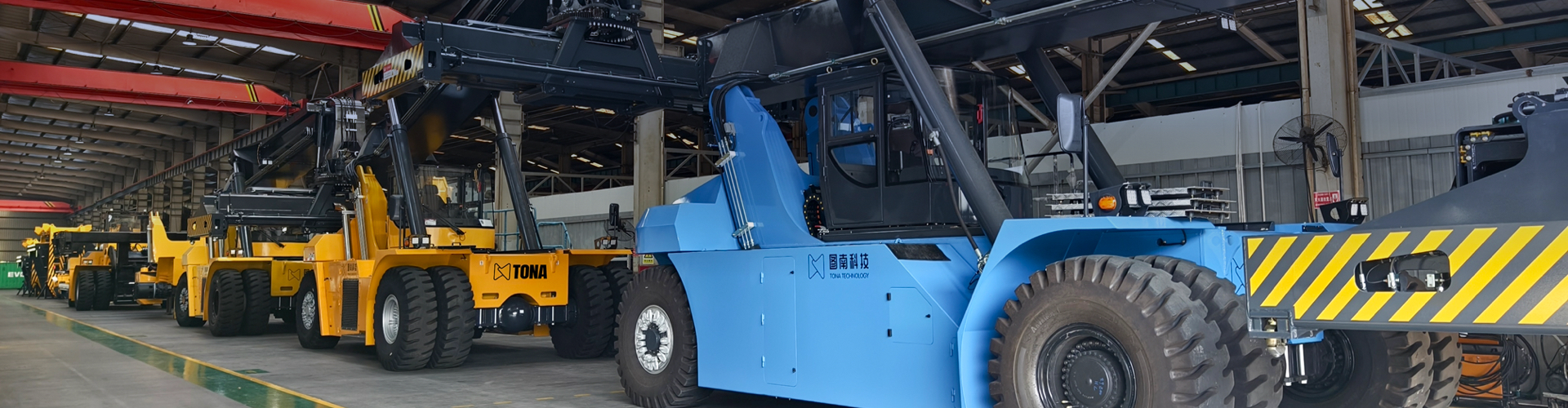

Buying a reach stacker is not like buying ordinary warehouse equipment. It is a major investment that directly affects container handling efficiency, operator safety, maintenance cost, and long-term terminal performance. A low-price machine may look attractive at first, but if the supplier cannot provide reliable quality, spare parts, or technical support, the real cost can become much higher later.
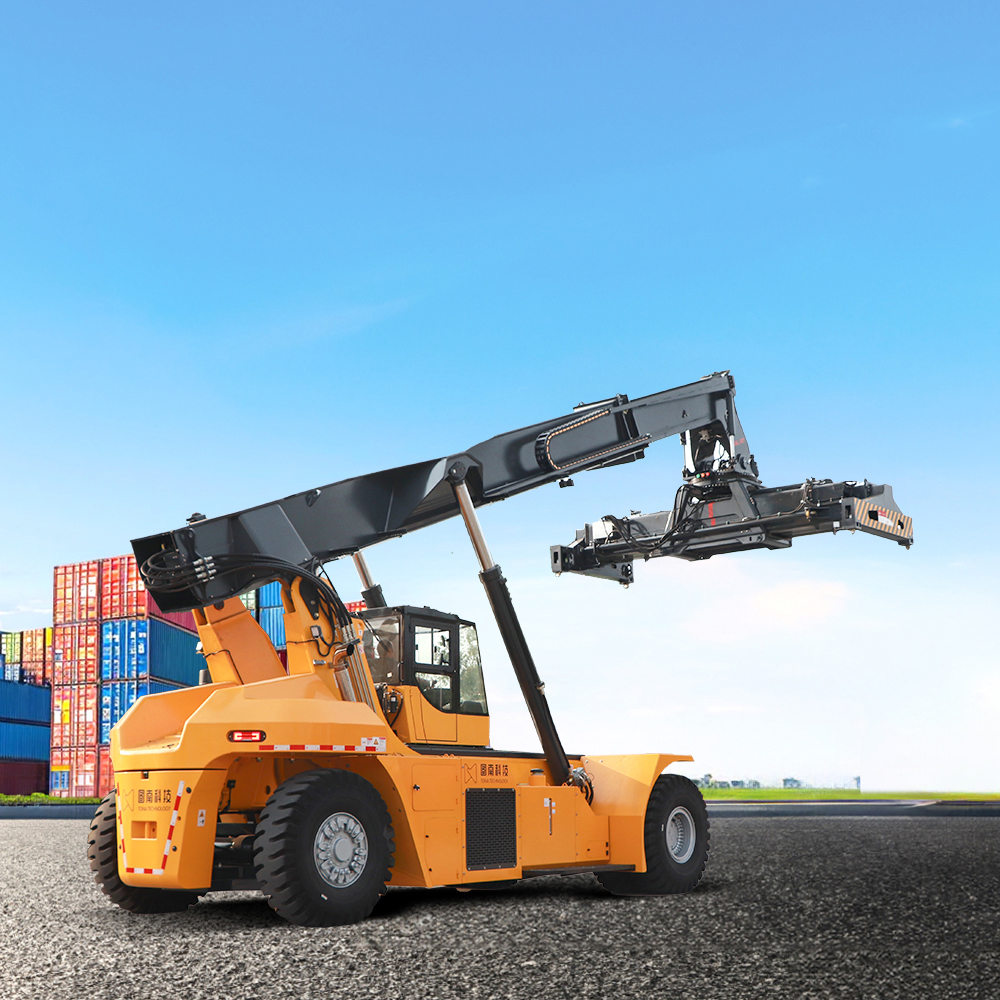
Many buyers search online for reach stackers for sale, but the results can be confusing. Some suppliers are manufacturers, some are dealers, some sell used equipment, and some only act as trading companies. The challenge is not simply finding a reach stacker for sale; the real challenge is finding a reliable reach stacker that matches your workload, yard layout, container type, service expectations, and budget.
In this post, we’ll discuss where to find reliable reach stackers for sale, how to compare different buying channels, what to check before purchasing, and how to identify a trustworthy reach stacker supplier. You’ll also learn the difference between buying new and used equipment, which red flags to avoid, and what questions to ask before placing an order.
Why Reliability Matters When Buying a Reach Stacker
A reach stacker usually works in ports, container yards, railway terminals, logistics centers, inland depots, and industrial handling sites. These working environments are demanding. The machine needs to lift heavy containers, travel frequently, stack accurately, and operate safely for long shifts. Because of this, reliability should always be one of the most important factors when looking for reach stackers for sale.
A reliable reach stacker can help reduce downtime. If the machine stops unexpectedly, container movement may be delayed, trucks may wait longer, and yard operations may become inefficient. For port and terminal operators, downtime is not only a repair issue; it can affect the whole workflow.
Reliability also affects safety. A reach stacker handles heavy loads at height and distance. The boom, spreader, hydraulic system, brakes, tires, and steering system must all work properly. A machine with poor quality or hidden problems can create serious safety risks for operators, workers, trucks, containers, and nearby equipment.
Long-term cost is another reason to care about reliability. A cheaper reach stacker may save money at the beginning, but frequent repair, poor fuel efficiency, difficult spare parts supply, and weak after-sales support can increase total ownership cost. When buyers compare reach stackers for sale, they should not only ask “What is the price?” They should also ask “How reliable is this machine over five or ten years of operation?”
Where Can You Find Reliable Reach Stackers for Sale?
There are several common places to find reach stackers for sale. Each channel has its own advantages and risks. The best choice depends on whether you need a new machine, a used machine, local support, export service, or customized configuration.
Buying Channel | Best For | Main Advantages | Possible Risks |
Direct manufacturer | New machines, customization, long-term use | Factory support, technical communication, flexible configuration | Need to verify production ability and service support |
Authorized dealer | Local purchase and local service | Easier communication, possible stock, local maintenance | Price may be higher, model choices may be limited |
Used equipment marketplace | Lower budget or short-term use | Lower initial cost, faster availability | Hidden faults, limited warranty, uncertain history |
Trading company | International sourcing and export support | Export documents, logistics support, model comparison | Technical knowledge may be weaker than manufacturer |
Industry exhibition | Supplier comparison and brand research | Face-to-face discussion, product comparison | Longer buying process and follow-up verification needed |
This comparison shows that reliable reach stackers for sale can be found through different channels, but buyers must evaluate each option carefully. The safest choice for many long-term users is often to work directly with a professional reach stacker manufacturer or a verified authorized supplier.
Buying Directly from a Reach Stacker Manufacturer
Buying directly from a reach stacker manufacturer is often a strong option for buyers who need new equipment, technical support, customized specifications, and long-term cooperation. A manufacturer usually understands the machine structure, performance, working conditions, and maintenance requirements better than a general trading company.
A direct manufacturer can help buyers choose a suitable reach stacker based on real operating conditions. For example, the buyer may need to confirm container weight, stacking height, working hours, yard surface, turning space, climate, and whether the machine will be used in a port, railway terminal, container depot, or industrial yard. A professional manufacturer should recommend a model based on these conditions rather than only sending a price list.
Another advantage is configuration flexibility. Buyers may need different lifting capacities, spreader options, engine configurations, safety systems, tire types, cabin features, or service packages. When buying directly from a manufacturer, it is usually easier to discuss these technical details.
After-sales service is also important. A reliable reach stacker manufacturer should be able to provide technical documents, maintenance guidance, spare parts support, training advice, and troubleshooting assistance. This is especially important for international buyers who need stable long-term equipment support.
Buying from Authorized Equipment Dealers
Authorized dealers can also be a good place to find reliable reach stackers for sale, especially when the buyer prefers local support. A local dealer may provide faster communication, on-site inspection, stock availability, and maintenance service in the buyer’s region.
For buyers who need quick delivery, a dealer may already have a reach stacker in stock. This can shorten the purchasing process compared with waiting for production and international shipping. Dealers may also understand local regulations, import procedures, and service requirements.
However, buyers should confirm whether the dealer is officially authorized. Some sellers may claim to represent a brand without real authorization. A reliable dealer should be able to provide clear product specifications, warranty information, spare parts support, and proof of cooperation with the manufacturer.
The limitation of buying through a dealer is that model selection may be more limited. The dealer may only promote available stock instead of the most suitable reach stacker for the buyer’s operation. Therefore, buyers should still compare technical specifications and confirm whether the machine truly matches their working conditions.
Buying Used Reach Stackers from Equipment Marketplaces
Used equipment marketplaces are common places to find reach stackers for sale, especially for buyers with limited budgets. A used reach stacker can be attractive because the initial purchase price is usually lower than a new machine. It may also be available faster if the equipment is already in stock.
However, buying a used reach stacker requires careful inspection. The biggest risk is unknown machine history. A used machine may have worked for many hours in a heavy-duty port, experienced overloading, poor maintenance, hydraulic problems, structural stress, or hidden electrical faults. These problems may not be obvious from photos.
Before buying a used reach stacker, buyers should request operating hours, maintenance records, repair history, inspection reports, photos, videos, and if possible, a third-party inspection. Important systems to check include the engine, transmission, hydraulic system, boom, spreader, brakes, steering, tires, electrical system, and frame structure.
A used reach stacker may be suitable for moderate workloads, temporary projects, backup operation, or buyers with strong maintenance ability. But for heavy-duty daily container handling, a new reach stacker from a reliable manufacturer may provide better long-term value.
Buying Through Port Equipment Trading Companies
Trading companies can help international buyers find reach stackers for sale, especially when buyers need sourcing support, export documentation, shipping arrangement, and communication with multiple suppliers. A good trading company may help compare different models, arrange inspection, and handle logistics.
This channel can be useful for buyers who are not familiar with international purchasing. However, the buyer should confirm whether the trading company has real knowledge of reach stacker equipment. Some trading companies may understand export procedures but may not have deep technical experience with container handling machines.
If buying through a trading company, ask detailed technical questions. For example, ask about rated capacity, stacking height, container size, hydraulic system, spreader type, maintenance requirements, spare parts supply, and warranty support. If the seller cannot answer clearly, it may be safer to contact the original manufacturer directly.
Finding Reach Stackers at Industry Exhibitions
Industry exhibitions and trade shows are useful for comparing reach stacker suppliers face to face. Buyers can meet manufacturers, inspect product information, discuss technical needs, and compare several brands in one place.
This channel is especially useful for buyers who are still researching the market. At an exhibition, buyers can ask about new technology, electric or hybrid options, safety systems, telematics, maintenance support, and customization. They can also evaluate how professional each supplier is by the way they explain product details.
However, exhibitions are only the beginning of supplier evaluation. After the event, buyers should still verify factory capability, product specifications, certifications, customer cases, warranty terms, and after-sales support before purchasing a reach stacker.
New vs Used Reach Stackers for Sale
When buyers search for reach stackers for sale, one of the most important decisions is whether to buy a new or used machine. Both options can be reasonable, but they suit different situations.
Comparison Item | New Reach Stacker | Used Reach Stacker |
Initial cost | Higher | Lower |
Reliability | Higher if supplied by a reliable manufacturer | Depends on machine history and condition |
Warranty | Usually available | Limited or unavailable |
Customization | Easier | Usually fixed configuration |
Spare parts support | Easier to plan | Depends on brand and model age |
Delivery time | May require production and shipping | May be faster if in stock |
Best for | Heavy-duty daily operation and long-term use | Lower budget, temporary use, moderate workload |
A new reach stacker is usually better for ports, container yards, and logistics operators that need stable daily operation. It offers longer service life, clearer warranty, lower hidden risk, and better customization. For buyers who plan to use the equipment for many years, a new reach stacker may be more cost-effective in the long run.
A used reach stacker may be suitable when the budget is limited or when the machine will not work under heavy daily load. However, buyers must inspect it carefully. A low purchase price does not always mean low total cost.
Key Specifications to Confirm Before Buying a Reach Stacker
Before purchasing a reach stacker, buyers should confirm technical specifications instead of focusing only on price. A reliable supplier should be able to explain how each specification affects real operation.
Important specifications include:
● Rated lifting capacity
● First-row, second-row, and third-row lifting capacity
● Maximum stacking height
● Suitable container sizes, such as 20ft, 40ft, or 45ft
● Spreader type and adjustment range
● Engine or power system
● Transmission system
● Hydraulic system
● Tire type and size
● Turning radius
● Overall dimensions
● Operator cabin design
● Safety systems
● Maintenance access
● Spare parts availability
● Working environment requirements
These details matter because not every reach stacker is suitable for every container yard. For example, a machine that performs well in a spacious port may not be ideal for a narrow inland depot. A reach stacker used for heavy loaded containers may need different capacity and stability than one used mainly for empty containers.
How to Identify a Reliable Reach Stacker Supplier
Finding reach stackers for sale is easy, but identifying a reliable supplier requires careful evaluation. A trustworthy supplier should be able to provide clear information, technical guidance, and long-term support.
First, check whether the supplier understands your application. A professional reach stacker supplier should ask about container weight, daily working hours, stacking height, yard layout, road condition, climate, and service requirements. If a supplier only discusses price without understanding your working conditions, that is a warning sign.
Second, check product information. Reliable suppliers should provide detailed specifications, photos, videos, technical documents, warranty terms, and optional configurations. They should explain what the reach stacker can and cannot do.
Third, evaluate communication quality. A professional supplier should answer questions clearly and honestly. If the answer is vague, inconsistent, or only focused on pushing payment, buyers should be cautious.
Fourth, confirm after-sales support. Spare parts, maintenance guidance, remote support, training advice, and troubleshooting are essential for long-term use. A reach stacker is a heavy-duty machine, so service support should be considered part of the product value.
Red Flags to Avoid When Looking for Reach Stackers for Sale
Buyers should be careful when a supplier offers a reach stacker at a price that seems too low without a clear reason. A very low price may mean old equipment, poor condition, weak configuration, limited warranty, or hidden repair costs.
Another red flag is unclear technical information. If the supplier cannot provide lifting capacity, stacking height, spreader details, engine information, hydraulic system information, or maintenance requirements, it may not be a professional reach stacker supplier.
For used equipment, unclear machine history is a major risk. Buyers should avoid used reach stacker offers without operating hours, maintenance records, inspection photos, or working videos.
No spare parts support is also a serious problem. Even a good reach stacker will need maintenance parts over time. If the supplier cannot support parts supply, future downtime may become expensive.
Poor communication is another warning sign. If the supplier avoids technical questions, refuses inspection, or pushes for quick payment before confirming specifications, buyers should slow down and verify the offer carefully.
Questions to Ask Before Purchasing a Reach Stacker
Before buying a reach stacker, buyers should prepare clear questions. These questions help confirm whether the machine and supplier are suitable.
Ask the supplier:
● Is the reach stacker new or used?
● What is the rated lifting capacity?
● What is the lifting capacity in the first, second, and third row?
● What container sizes can it handle?
● What is the maximum stacking height?
● What engine or power system does it use?
● What hydraulic system is installed?
● Is the spreader included?
● What safety systems are available?
● What is the turning radius?
● What are the overall dimensions?
● What is the warranty policy?
● Are spare parts available?
● Can you provide training or maintenance guidance?
● What is the delivery time?
● Can the machine be customized according to my working conditions?
A reliable reach stacker supplier should answer these questions directly. The more clearly the supplier explains the details, the easier it is for the buyer to make a confident decision.
Why After-Sales Service Is Important
After-sales service is one of the most important factors when buying a reach stacker. The purchase is not finished when the machine is delivered. Installation support, commissioning guidance, operator training, maintenance advice, spare parts supply, and troubleshooting all affect long-term performance.
A reach stacker works under heavy load, so wear parts must be replaced on time. Filters, seals, hydraulic hoses, brake parts, tires, electrical components, spreader parts, and lubrication items may all need support during the machine’s service life.
Good after-sales service helps reduce downtime. If a problem occurs, fast technical response can help the operator diagnose the issue and return the reach stacker to work sooner. For port and yard operators, this support can be more valuable than a small price discount at the time of purchase.
Why Work with a Professional Manufacturer
A professional reach stacker manufacturer does more than sell a machine. It helps buyers match the equipment with real working conditions. This is important because the wrong model may lead to poor efficiency, high maintenance costs, or safety problems.
A manufacturer should understand how the reach stacker will be used. Will it handle loaded containers or empty containers? How many hours will it work per day? What stacking height is required? What is the yard surface like? Does the buyer need port operation, rail transfer, depot storage, or industrial container handling? These questions help determine the suitable model and configuration.
For buyers looking for reliable reach stackers for sale, Hunan Tona Machinery Technology Co., Ltd. can provide suitable reach stacker solutions according to different container handling requirements, working environments, and long-term operation plans. By working with a professional manufacturer, buyers can receive clearer technical communication, more suitable product recommendations, and better support for future maintenance.
Conclusion
Reliable reach stackers for sale can be found through manufacturers, authorized dealers, used equipment marketplaces, trading companies, and industry exhibitions. Each channel has advantages, but buyers should choose based on reliability, technical suitability, after-sales service, and total ownership cost rather than price alone.
For long-term heavy-duty container handling, buying a new reach stacker from a professional manufacturer is often the safer choice. For buyers with limited budgets, a used reach stacker may be practical, but only if the machine history, working condition, spare parts supply, and inspection results are clear.
The best way to find a reliable reach stacker is to start with your real working conditions, confirm the required specifications, compare supplier capability, ask detailed questions, and avoid offers that lack transparency. When the machine, supplier, service, and application all match, a reach stacker can become a valuable long-term asset for ports, container yards, rail terminals, depots, and logistics operations.
FAQs
1. Where is the best place to find reliable reach stackers for sale?
The best place is usually a professional reach stacker manufacturer or an authorized equipment supplier. These channels are more suitable for buyers who need a new machine, technical support, warranty, spare parts, and long-term service.
2. Should I buy a new or used reach stacker?
A new reach stacker is better for heavy-duty daily operation, long service life, and warranty support. A used reach stacker may be suitable for limited budgets or moderate workloads, but it should be inspected carefully before purchase.
3. What should I check before buying a reach stacker?
Before buying a reach stacker, check lifting capacity, stacking height, container size compatibility, engine, hydraulic system, spreader, brakes, tires, safety devices, warranty, spare parts availability, and after-sales service.
4. How can I know whether a reach stacker supplier is reliable?
A reliable reach stacker supplier should provide clear specifications, professional recommendations, product photos or videos, warranty terms, spare parts support, export experience, and responsive technical communication.
5. Why should I buy a reach stacker directly from a manufacturer?
Buying a reach stacker directly from a manufacturer can provide better technical communication, more flexible configuration, factory support, possible cost advantages, and more reliable after-sales service for long-term use.
Related Blogs
-
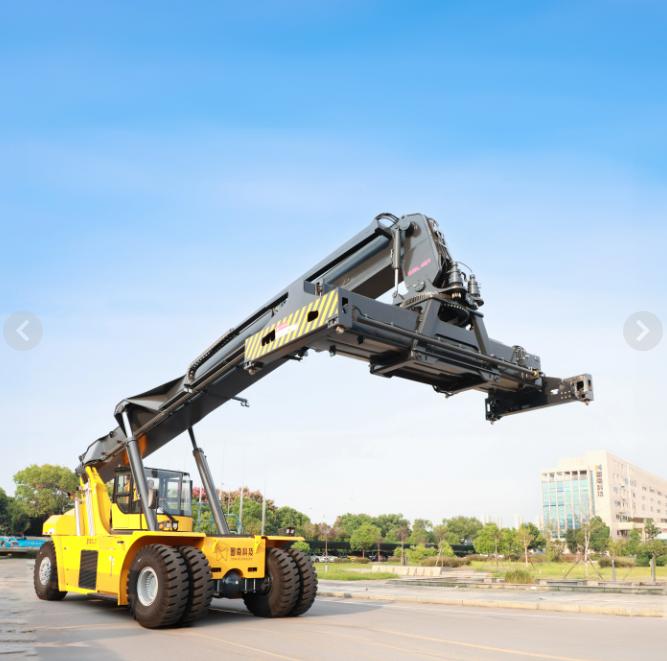 Reach stackers are essential machines for handling and stacking heavy containers in ports, rail yards, warehouses, and construction sites. They improve efficiency by quickly loading, unloading, and organizing containers in tight spaces. In ports, they optimize space by stacking containers up to six high and facilitate fast transfers between ships, trucks, and railcars. In rail yards, they reduce turnaround times, while in warehouses, they handle heavy loads and work in rough terrains. Reach stackers enhance supply chain productivity, reduce downtime, and improve cargo handling. Regular maintenance and operator training are key to maximizing their benefits in logistics operations.blogs
 -
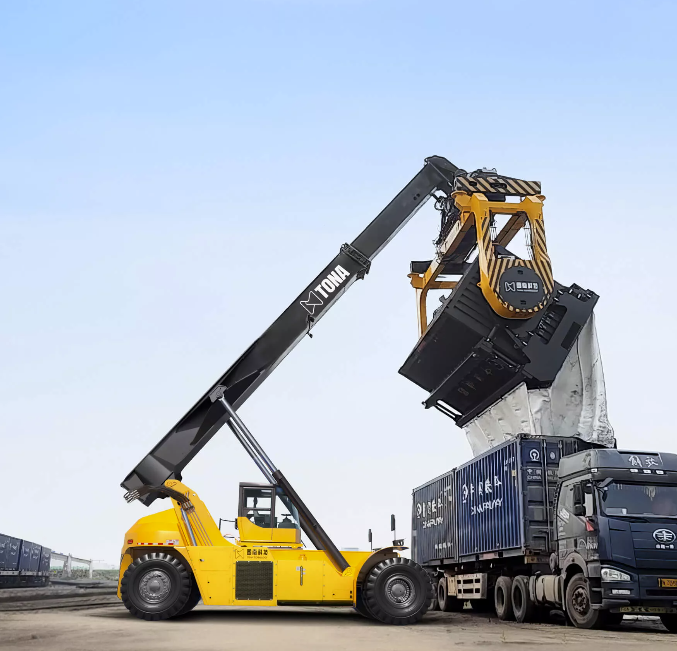
 A reach stacker is a powerful vehicle that lifts, moves, and stacks shipping containers. You often see these machines working at ports, terminals, and busy logistics centers. Understanding how a reach stacker operates helps you achieve efficient container handling, especially as demand grows.hot blog
 -
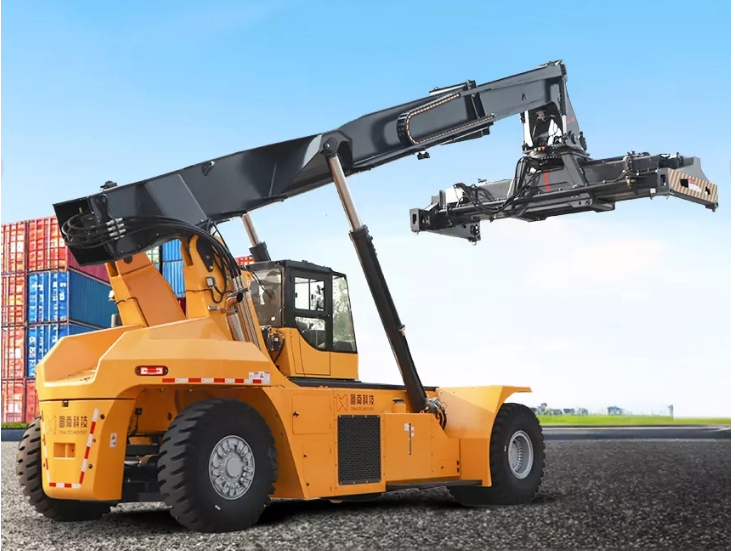
 You can operate a container reach stacker safely and efficiently by following proven safety protocols, using advanced technology, and choosing reliable equipment. Safety protects you and your team while efficient operation boosts productivity and lowers costs.hot blog
 -
 A walkie reach stacker helps you move and lift pallets in your warehouse with ease. This electric machine combines the lifting ability of a forklift and the compact control of a pallet truck.hot blog