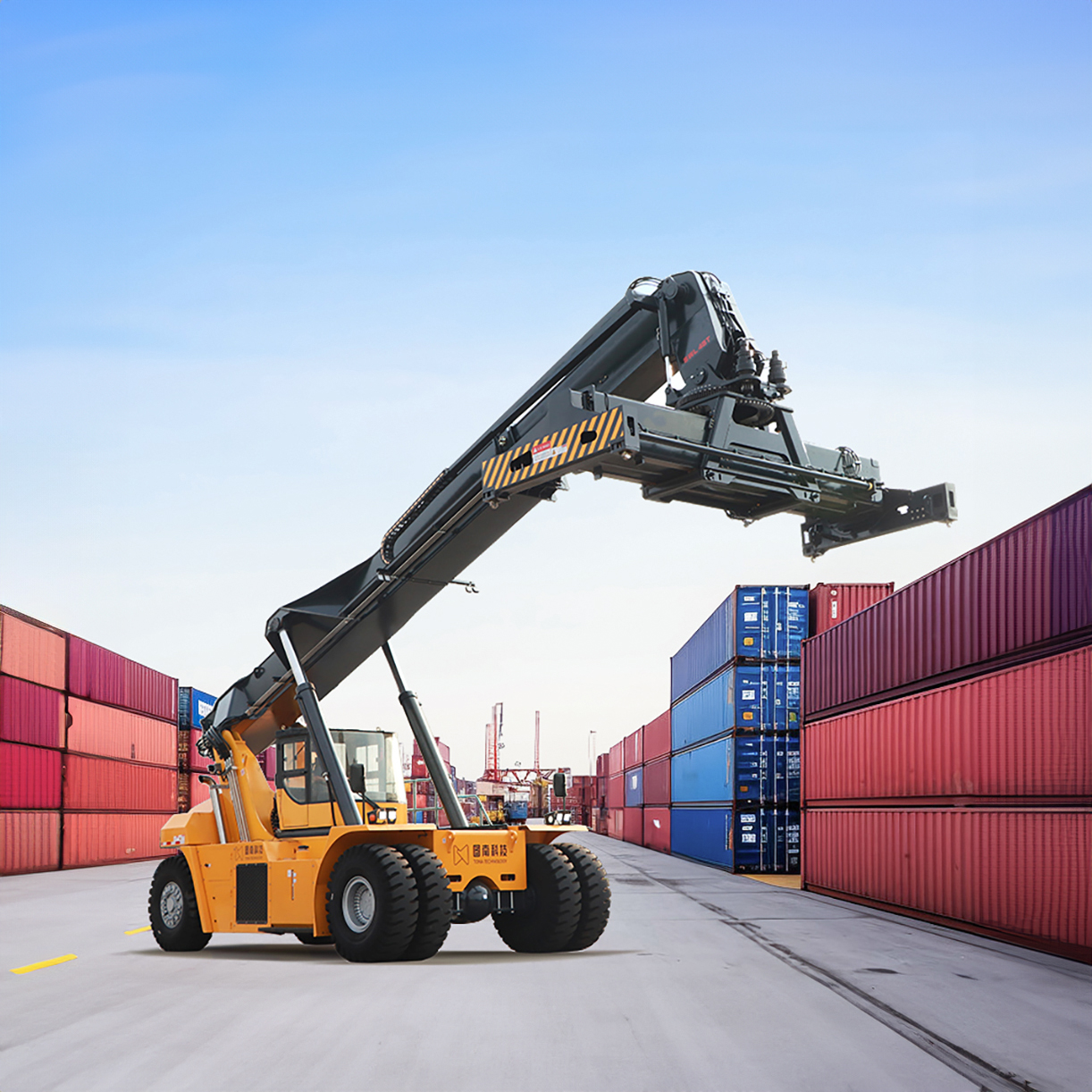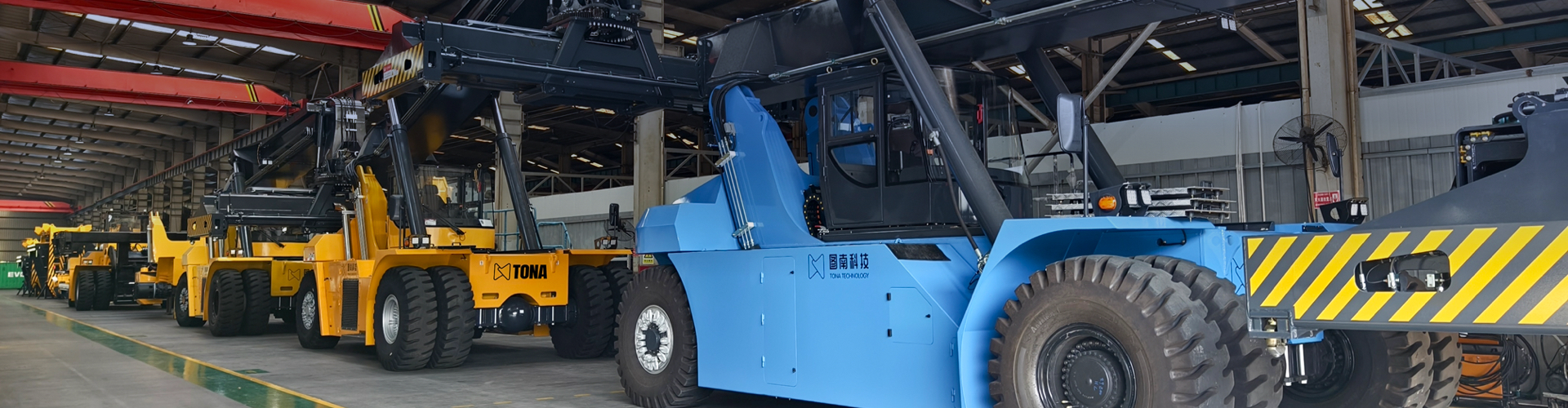

A reach stacker forklift works under heavy loads every day. It lifts containers, moves through busy yards, handles repeated braking and turning, and often operates for long shifts in ports, terminals, depots, and logistics centers. If maintenance is ignored, even a small fault can quickly become a serious breakdown.
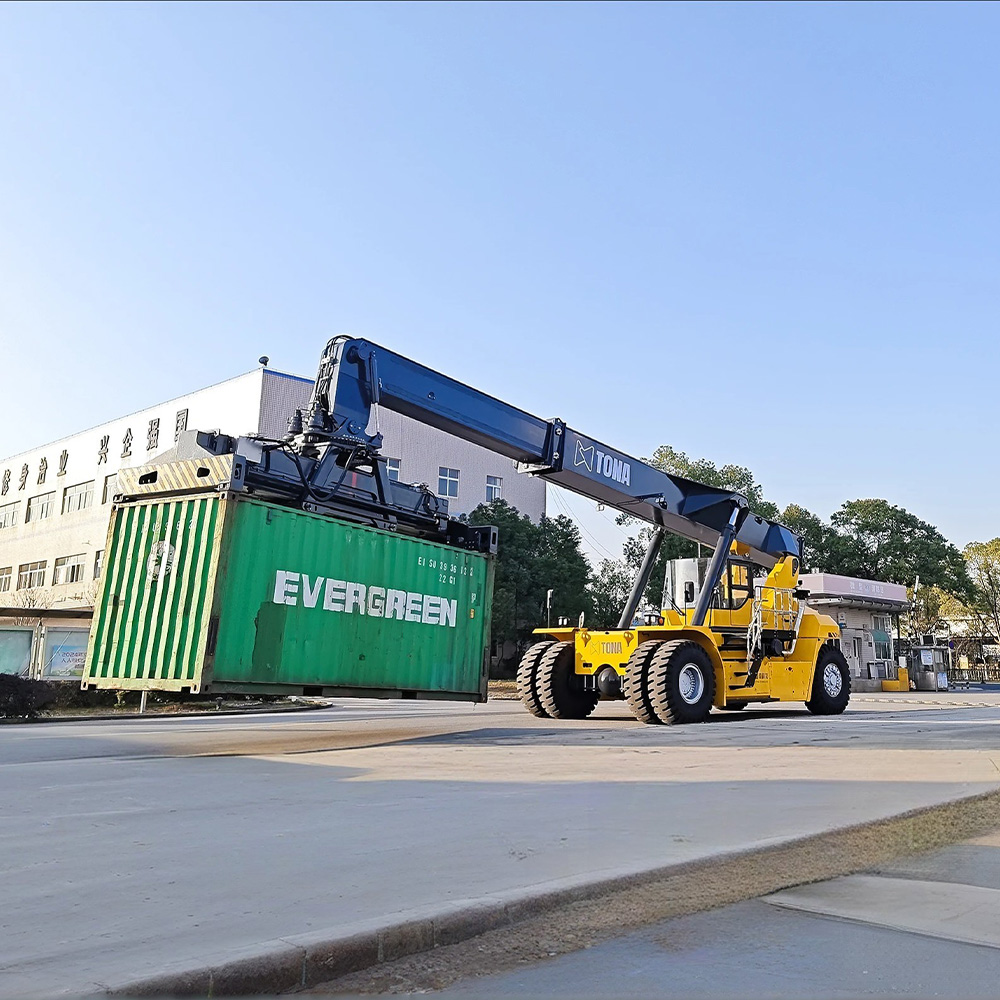
The main purpose of maintaining a reach stacker forklift is not only to repair problems after they happen. Good maintenance helps prevent downtime, reduce repair costs, improve safety, and extend the service life of the machine. For container handling businesses, a well-maintained reach stacker means more stable daily operation and fewer unexpected delays.
In this post, we’ll discuss how to maintain a reach stacker forklift in a practical way. You’ll learn what to check before operation, how to maintain the hydraulic system, engine, boom, spreader, tires, brakes, electrical system, and how to build a regular maintenance schedule for long-term use.
Why Proper Reach Stacker Maintenance Is Important
A reach stacker forklift is different from a normal forklift because it handles much heavier loads and works with containers at height and distance. This means every major system must stay in good condition, including the hydraulic system, boom structure, spreader, brakes, tires, steering, and engine.
Poor maintenance may cause slow lifting, hydraulic leakage, weak braking, tire damage, engine overheating, or spreader locking failure. These problems not only reduce working efficiency but also increase safety risks. When a reach stacker is lifting a loaded container, any failure can affect the operator, nearby workers, trucks, containers, and other yard equipment.
Regular maintenance helps operators find problems early. For example, a small oil leak may be repaired by replacing a seal or hose. But if it is ignored, it may damage the pump, cylinder, or valve system. Preventive maintenance is always cheaper and safer than emergency repair.
Daily Inspection Before Operating a Reach Stacker
Daily inspection is the first step in reach stacker maintenance. The operator should check the machine before each shift, especially in ports or container yards where the equipment works for long hours.
Inspection Item | What to Check | Maintenance Purpose |
Engine oil and coolant | Oil level, coolant level, visible leakage | Prevent engine overheating and wear |
Hydraulic system | Oil level, hoses, cylinders, fittings, leakage | Ensure smooth lifting and boom movement |
Tires | Pressure, cracks, cuts, abnormal wear | Maintain stability and safe movement |
Brakes | Brake response, pedal feel, abnormal noise | Ensure safe stopping under heavy load |
Steering | Steering response, vibration, hydraulic leakage | Keep accurate control in yard operation |
Boom | Cracks, deformation, loose bolts, lubrication | Prevent structural failure |
Spreader | Twist locks, sensors, locking indicators | Ensure safe container lifting |
Electrical system | Lights, horn, alarm, camera, display panel | Improve visibility and warning function |
After starting the reach stacker, the operator should also listen for abnormal noise and observe whether there are warning lights on the display. If lifting is slow, braking feels weak, steering is unstable, or the spreader does not lock correctly, the machine should not continue working until the problem is checked.
Engine Maintenance for a Reach Stacker Forklift
The engine provides the main power for many reach stacker forklifts. Because the machine often works under heavy load, engine maintenance must be done carefully and regularly.
First, check the engine oil level every day. Low oil level or dirty oil can increase engine wear. Engine oil and oil filters should be replaced according to the manufacturer’s maintenance schedule. If the reach stacker works in dusty yards or high-temperature environments, the oil and filter may need to be checked more often.
Second, maintain the air filter. A blocked air filter reduces engine power and increases fuel consumption. In container yards, dust and dirt can easily enter the air intake system, so the air filter should be cleaned or replaced in time.
Third, check the cooling system. The radiator, coolant level, fan, belts, and hoses should be inspected regularly. Engine overheating is a common problem when a reach stacker works continuously. Keeping the cooling system clean helps the machine run more reliably.
Fuel quality is also important. Poor-quality fuel may damage injectors and reduce engine performance. Operators should use suitable fuel and keep the fuel system clean.
Hydraulic System Maintenance
The hydraulic system is one of the most important parts of a reach stacker forklift. It controls boom lifting, boom extension, spreader movement, steering assistance, and other key functions. If the hydraulic system fails, the reach stacker cannot handle containers safely.
The hydraulic oil level should be checked before operation. Low hydraulic oil may cause slow lifting, unstable boom movement, overheating, or pump damage. The oil condition should also be checked. If the oil becomes dark, dirty, milky, or has a burnt smell, it may need replacement.
Hydraulic hoses, cylinders, seals, pumps, valves, and fittings should be inspected for leakage or damage. Even a small leak should be repaired quickly because hydraulic systems work under high pressure. A damaged hose can lead to sudden failure during lifting.
Hydraulic filters should be replaced on schedule. Contaminated hydraulic oil is one of the main causes of hydraulic system failure. Clean oil and clean filters help protect pumps, valves, cylinders, and seals.
A properly maintained reach stacker should lift smoothly, lower steadily, and extend the boom without shaking, delay, or abnormal noise.
Boom and Spreader Maintenance
The boom and spreader are directly responsible for container handling. Therefore, they must be checked carefully during reach stacker maintenance.
The boom should be inspected for cracks, deformation, welding damage, loose bolts, worn pins, and abnormal movement. Boom pins, bushings, sliding pads, and lubrication points should be maintained according to the manual. If the boom structure has visible cracks or deformation, the reach stacker should stop working immediately.
The spreader must lock and unlock smoothly. Operators should test the twist locks, locking indicators, sensors, telescopic function, and rotation function before lifting containers. If the spreader fails to lock properly, the container may not be secure.
Spreader cables, hydraulic hoses, electrical connectors, and sensor lines should also be checked. In port and yard environments, dust, vibration, moisture, and impact may affect the spreader system. Regular cleaning and inspection can reduce failure.
For safe operation, the spreader should always match the container size, such as 20-foot or 40-foot containers. Incorrect spreader adjustment can cause container damage or unsafe lifting.
Tire, Brake, and Steering Maintenance
A reach stacker carries heavy containers, so tires, brakes, and steering systems must be kept in excellent condition.
Tires should be checked every day for pressure, cracks, cuts, punctures, sidewall damage, and uneven wear. Uneven tire wear may be caused by poor yard surfaces, wrong tire pressure, overloading, or sharp turning. Damaged tires should be replaced in time because tire failure can affect machine stability.
Brake maintenance is critical. Operators should test the brake response before entering the working area. If braking distance becomes longer, the pedal feels abnormal, or there is noise during braking, the brake system should be inspected immediately. Brake pads, discs, hydraulic lines, and brake fluid should be maintained according to schedule.
The steering system should also be checked regularly. A reach stacker must turn accurately in narrow container yards and near trucks. Steering cylinders, hoses, joints, and hydraulic steering components should be inspected for leakage, looseness, or delayed response.
Electrical System and Safety Device Maintenance
Modern reach stacker forklifts use electrical systems for control, monitoring, alarms, sensors, cameras, lighting, and display functions. Electrical system maintenance helps improve safety and reduce operating errors.
Battery terminals should be clean and tight. Loose or corroded cables may cause starting problems or unstable electrical power. Wires and connectors should be checked for damage, wear, water entry, or corrosion.
Lights, horn, reverse alarm, warning beacon, camera system, and display panel should be tested before operation. In busy container yards, these devices help operators communicate with nearby workers and vehicles.
Safety devices should never be ignored. If warning lights appear frequently, the cause should be diagnosed instead of only resetting the system. Warning signals may indicate problems with the engine, transmission, hydraulic system, brakes, or spreader.
Lubrication and Cleaning
Lubrication is a basic but important part of reach stacker maintenance. It reduces friction, prevents abnormal wear, and helps moving parts work smoothly.
Important lubrication points include boom pins, bushings, steering joints, spreader moving parts, sliding pads, axles, hinges, and other moving components. Operators should follow the lubrication chart provided by the manufacturer. In dusty, rainy, or high-load working conditions, lubrication may need to be performed more frequently.
Cleaning is also necessary. Dirt, salt, dust, oil, and container yard debris can affect the machine over time. The radiator, hydraulic connections, spreader area, steps, cabin glass, lights, and warning devices should be kept clean. A clean reach stacker is easier to inspect and safer to operate.
Recommended Reach Stacker Maintenance Schedule
The exact maintenance schedule should follow the manufacturer’s manual, but the table below can be used as a general reference.
Maintenance Frequency | Main Maintenance Tasks |
Daily / Before Each Shift | Check oil, coolant, hydraulic oil, tires, brakes, steering, lights, alarms, boom, spreader, and leakage |
Weekly | Check lubrication points, battery cables, hoses, bolts, tire wear, cabin controls, and visible structure |
Monthly | Inspect hydraulic system, brake system, steering system, cooling system, electrical connections, and spreader function |
Every 250–500 Hours | Replace or check filters, engine oil, transmission system, key fasteners, and common wear parts |
Every 1,000 Hours or More | Inspect hydraulic oil, boom structure, spreader system, axle, brakes, engine, and major components |
For heavy-duty port operations, the reach stacker may need more frequent maintenance. If the machine works in dusty, hot, wet, or salty environments, inspection intervals should be shortened.
Common Reach Stacker Problems and Maintenance Solutions
Common Problem | Possible Cause | Maintenance Solution |
Hydraulic oil leakage | Worn seals, loose fittings, damaged hoses | Replace seals or hoses and tighten fittings |
Slow lifting | Low hydraulic oil, dirty filter, pump problem | Check oil level, replace filter, inspect pump |
Engine overheating | Low coolant, dirty radiator, blocked air filter | Clean radiator, add coolant, replace air filter |
Weak braking | Worn brake parts, low brake fluid, hydraulic fault | Inspect and repair brake system |
Uneven tire wear | Wrong pressure, rough ground, overloading | Adjust pressure, improve driving habits, replace damaged tires |
Spreader locking failure | Worn twist lock, sensor fault, poor lubrication | Inspect twist locks, sensors, and moving parts |
Electrical warning faults | Loose cable, sensor fault, water or corrosion | Check wiring, connectors, and sensors |
These problems should be handled early. Continuing to operate a faulty reach stacker can cause larger damage and increase repair costs.
Maintenance Tips for Longer Reach Stacker Service Life
To extend the service life of a reach stacker forklift, operators and maintenance teams should follow several practical rules.
First, never overload the machine. Every reach stacker has a rated capacity and load chart. Operators must follow the lifting limits at different boom positions and container rows.
Second, avoid rough operation. Sudden braking, sharp turning, fast driving with heavy loads, and improper stacking can damage tires, brakes, boom components, and hydraulic parts.
Third, keep maintenance records. A written or digital record should include inspection results, service dates, replaced parts, fault history, and operating hours. Good records help maintenance teams find repeated problems and plan service more accurately.
Fourth, use suitable spare parts and fluids. Engine oil, hydraulic oil, filters, seals, tires, and brake parts should meet the manufacturer’s requirements. Unsuitable parts may reduce performance or damage the machine.
Fifth, train operators properly. A trained operator can notice early signs of trouble, such as abnormal noise, slow lifting, weak braking, warning lights, or vibration. Good operation habits are part of good maintenance.
When Should You Contact a Professional Service Team?
Some basic reach stacker maintenance can be done by operators, such as visual inspection, cleaning, fluid checks, and reporting problems. However, major repair work should be handled by trained technicians.
You should contact a professional service team if the reach stacker has repeated hydraulic problems, unstable lifting, engine overheating, weak brakes, electrical faults, spreader locking failure, abnormal boom movement, structural cracks, or serious oil leakage.
Hydraulic repair, electrical diagnosis, brake repair, boom inspection, and spreader adjustment require professional tools and experience. Incorrect repair may create safety risks or cause further equipment damage.
For equipment owners who need technical support, Hunan Tona Machinery Technology Co., Ltd. can provide suitable reach stacker solutions, maintenance guidance, and service advice according to different working conditions.
Conclusion
Maintaining a reach stacker forklift is essential for safe and efficient container handling. A good maintenance plan should include daily inspection, engine care, hydraulic system maintenance, boom and spreader checks, tire service, brake inspection, electrical system testing, lubrication, cleaning, and scheduled service.
A well-maintained reach stacker can reduce downtime, lower repair costs, improve safety, and extend equipment service life. For ports, container yards, railway terminals, and logistics centers, preventive maintenance is not optional. It is the key to stable and long-term operation.
The best way to maintain a reach stacker forklift is to combine operator inspection, scheduled service, correct spare parts, professional repair, and complete maintenance records. When maintenance is done properly, the machine can deliver reliable performance in demanding container handling environments.
FAQs
1. How often should a reach stacker forklift be maintained?
A reach stacker forklift should be inspected before each shift and serviced regularly according to working hours and the manufacturer’s maintenance schedule. Machines used in heavy-duty port or container yard operations may require more frequent maintenance.
2. What should be checked daily on a reach stacker?
Daily checks should include engine oil, coolant, hydraulic oil, tires, brakes, steering, lights, alarms, boom, spreader, twist locks, hydraulic leakage, and safety devices. Any abnormal condition should be reported before the reach stacker starts work.
3. Why is hydraulic system maintenance important for a reach stacker?
The hydraulic system controls lifting, boom extension, spreader movement, and steering assistance. If the hydraulic system fails, the reach stacker may not lift or position containers safely. Regular oil checks, filter replacement, and leak inspection are necessary.
4. What are common signs that a reach stacker needs repair?
Common signs include hydraulic leakage, slow lifting, abnormal noise, weak braking, engine overheating, uneven tire wear, warning lights, unstable steering, or spreader locking failure. These problems should be checked immediately.
5. Can operators maintain a reach stacker by themselves?
Operators can perform basic inspections, cleaning, fluid checks, and simple lubrication checks. However, hydraulic repair, electrical diagnosis, brake repair, structural inspection, and major component maintenance should be done by trained technicians.
Related Blogs
-
 Port operations depend on speed, space, safety, and equipment flexibility. When containers need to be moved between storage yards, trucks, rail wagons, inspection areas, and loading zones, the right handling machine can directly affect terminal efficiency.blogs
 -
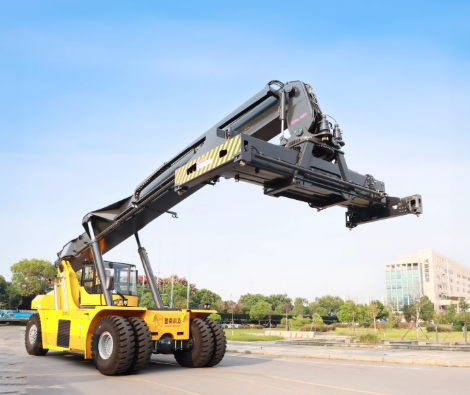 Space is tight in many yards. Forklifts often struggle there.A walkie reach stacker solves this problem. It moves pallets in narrow aisles.But choosing the right walkie reach stacker is not easy. In this article, you will learn key selection factors.blogs
 -
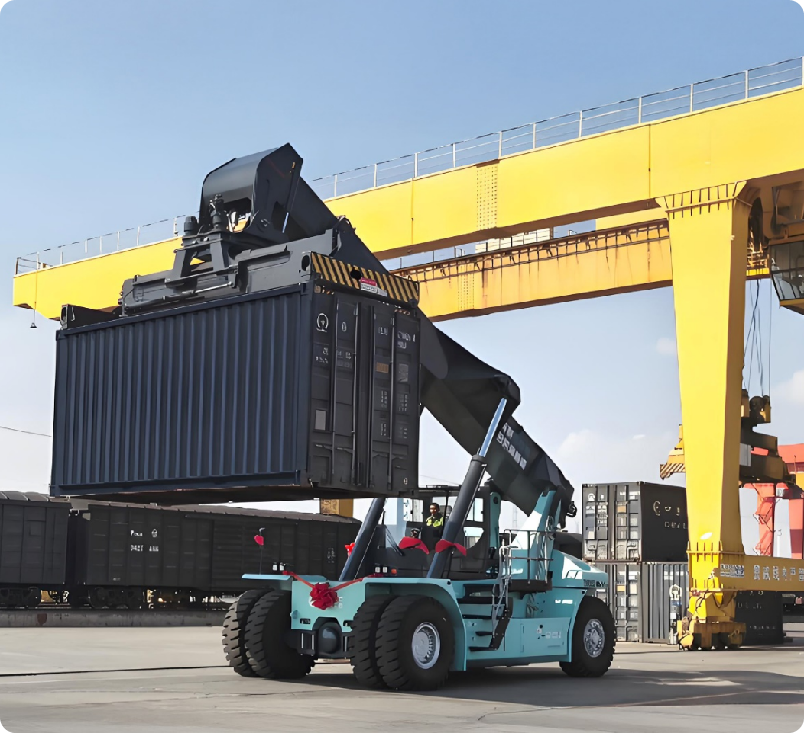 Heavy machines move huge containers daily. But who controls them safely?Operators need professional reach stacker training. It teaches safe lifting and machine control.But how long does training take? Does experience change the timeline?In this article, you will learn typical reach stacker training duration and key learning stages.blogs
 -
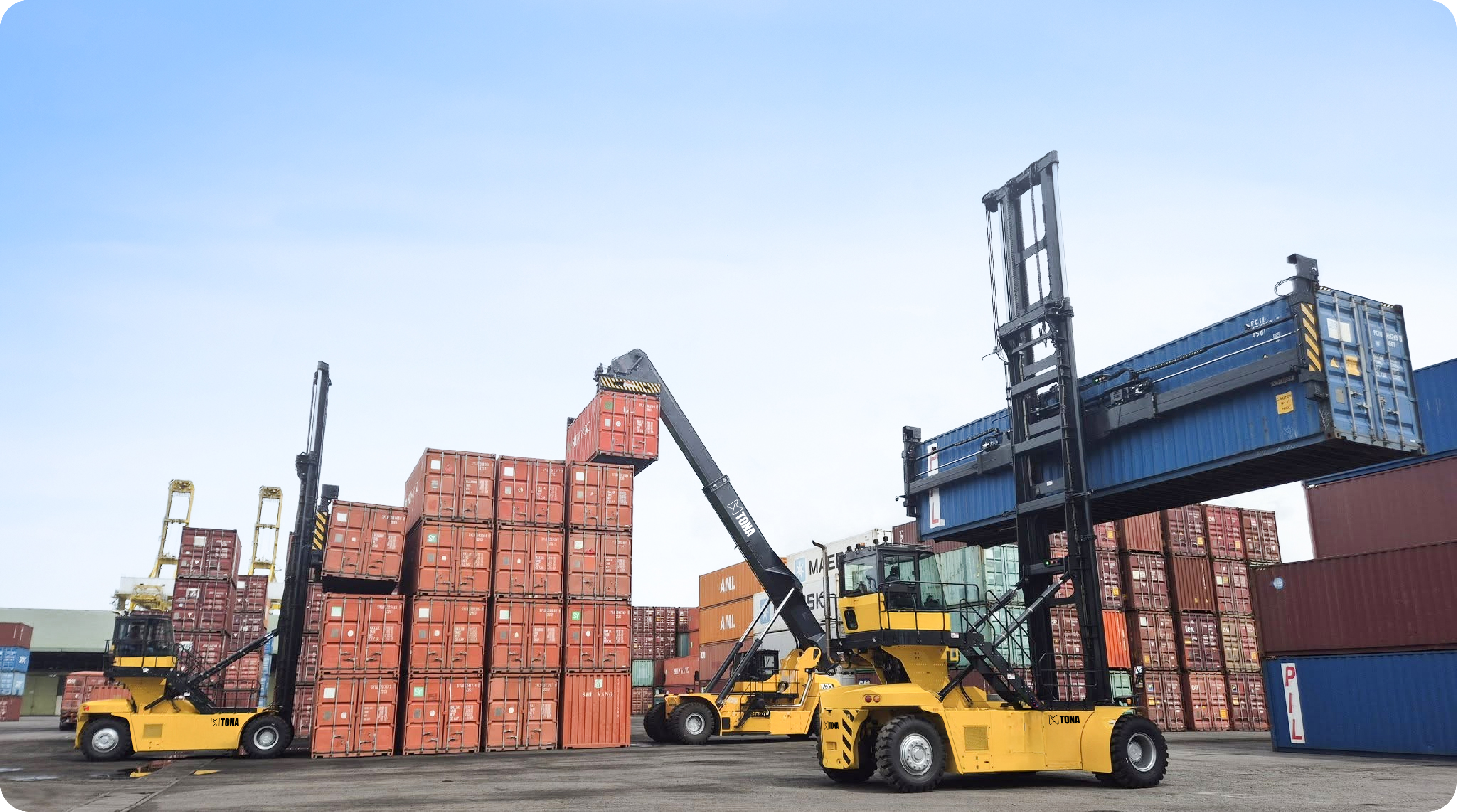 Ports move thousands of containers daily. Handling them requires powerful machines.A container reach stacker lifts and stacks heavy containers. It works efficiently across busy port yards.But how do ports choose the right machine? Capacity, reach, and layout all matter.In this article, you will learn how to select the best container reach stacker for port operations.blogs