

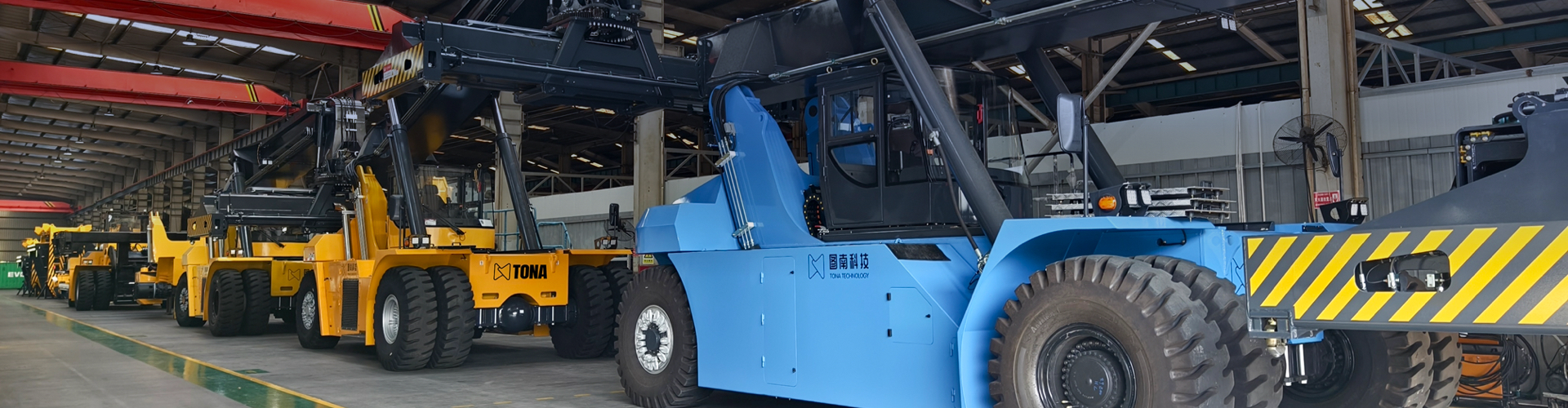

Port operations depend on speed, space, safety, and equipment flexibility. When containers need to be moved between storage yards, trucks, rail wagons, inspection areas, and loading zones, the right handling machine can directly affect terminal efficiency. This is why many buyers ask an important question: is a reach stacker forklift suitable for port operations?
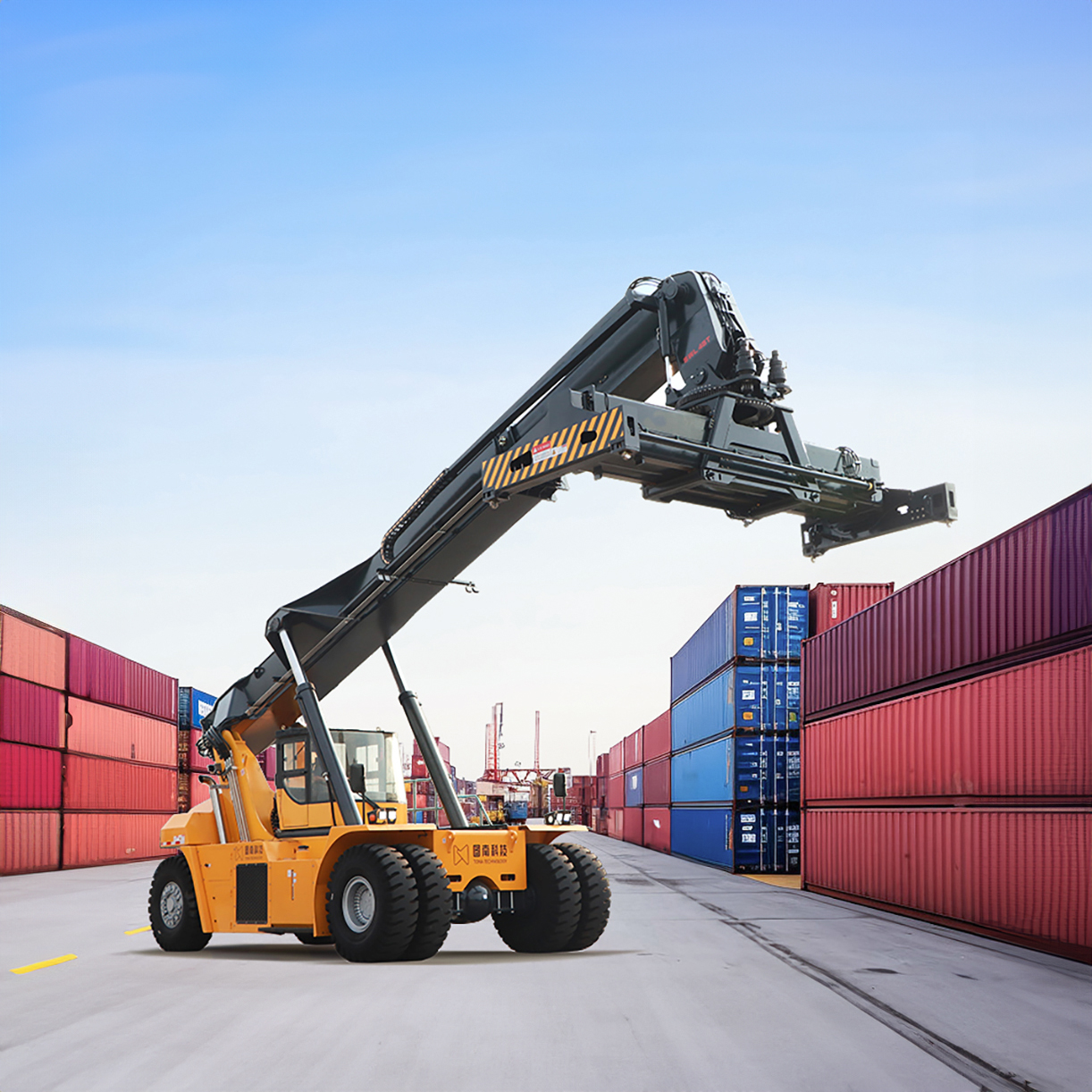
The short answer is yes. A reach stacker forklift is highly suitable for many port operations, especially container yard handling, truck loading and unloading, rail transfer, empty container stacking, and flexible terminal support. However, it is not the best solution for every port environment. Its suitability depends on container volume, yard layout, stacking height, ground conditions, operating frequency, and budget.
In this article, we will explain what a reach stacker does in port operations, where it performs best, what advantages and limitations it has, and how it compares with other port handling equipment. This will help port operators, logistics companies, and equipment buyers decide whether a reach stacker forklift is the right choice for their container handling needs.
What Is a Reach Stacker Forklift?
A reach stacker forklift is a heavy-duty container handling machine used to lift, move, stack, and load containers in ports, terminals, depots, and logistics yards. Unlike a standard forklift that uses forks to lift pallets or general cargo, a reach stacker uses a telescopic boom and container spreader to lift containers from the top. The spreader locks onto the container corner castings, allowing the machine to handle containers safely and accurately.
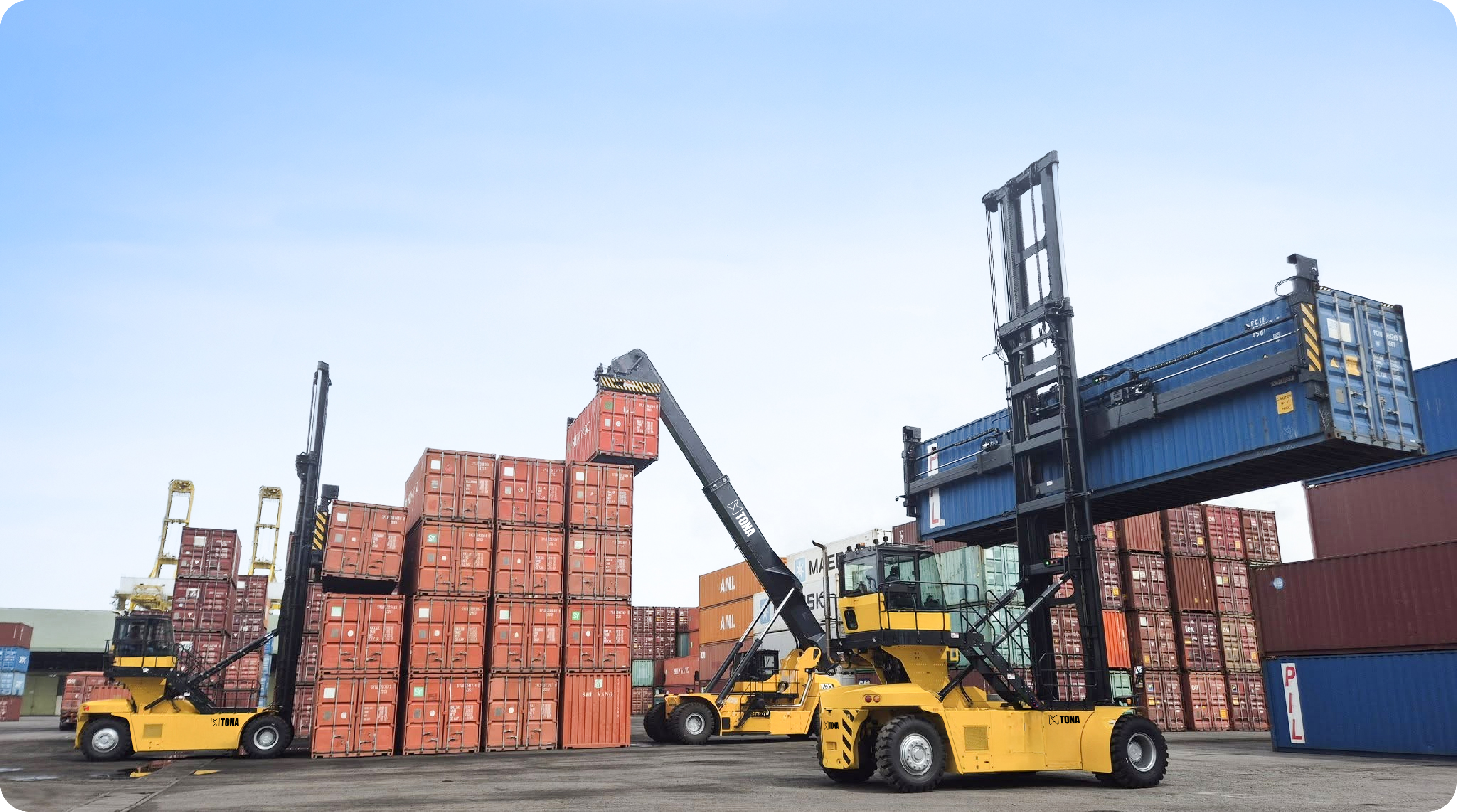
In port operations, a reach stacker is mainly used after containers are unloaded from vessels or before they are loaded for export. It can move containers from one yard position to another, load containers onto trucks, unload containers from trailers, support rail transfer, and handle containers in inspection or temporary storage areas. Because the machine can travel freely around the yard, a reach stacker is often considered one of the most flexible pieces of container handling equipment.
Although many buyers call it a “reach stacker forklift,” it is much more specialized than a normal forklift. A standard forklift is not designed for the same container weight, lifting height, boom reach, and spreader control required in port operations. A reach stacker is built specifically for container handling, making it much more suitable for professional port and terminal environments.
Is a Reach Stacker Forklift Suitable for Port Operations?
Yes, a reach stacker forklift is suitable for port operations when the terminal needs flexible container movement, efficient yard stacking, and reliable loading or unloading between containers, trucks, and rail wagons. It is especially suitable for small and medium-sized ports, inland ports, container depots, intermodal terminals, and mixed cargo yards where container flow may change frequently.
A reach stacker is useful because port operations are not always fixed or predictable. Containers may need to be moved to customs inspection zones, repair areas, weighing areas, export storage blocks, truck loading lanes, or temporary overflow yards. If the terminal only relies on fixed-position equipment, it may be difficult to respond quickly when yard conditions change. A reach stacker solves this problem by providing a mobile and multi-purpose handling solution.
However, for very large container terminals with extremely high throughput, a reach stacker may not be the only main handling machine. Large ports often use quay cranes, rubber-tired gantry cranes, rail-mounted gantry cranes, terminal tractors, and other equipment together. In this type of operation, a reach stacker may work as support equipment for flexible tasks, special containers, overflow areas, maintenance yards, or backup operations.
Therefore, the correct answer is not simply “yes” or “no.” A reach stacker is suitable for port operations when the port needs flexibility, mobility, practical stacking capacity, and fast deployment. It is less suitable as the only main equipment for extremely high-volume automated terminals.
Main Port Applications of a Reach Stacker
A reach stacker can support several important port operation scenarios. Its greatest value is that one machine can handle multiple container movement tasks in different areas of the terminal.
Port Operation Area | How a Reach Stacker Is Used | Why It Is Suitable |
Container yard handling | Moves containers between storage blocks and yard positions | Flexible movement and efficient container placement |
Truck loading and unloading | Transfers containers between ground stacks and trailers | Supports faster gate and transport operations |
Rail terminal handling | Loads and unloads containers from rail wagons | Suitable for intermodal logistics |
Empty container stacking | Stacks and repositions empty containers | Improves storage space utilization |
Customs inspection area | Moves selected containers for checking, scanning, or weighing | Allows quick response without disrupting the whole yard |
Temporary overflow yard | Handles containers during peak seasons or congestion | Easy to deploy and adjust according to workload |
Mixed cargo terminal | Handles containers and some heavy cargo with suitable attachments | Provides multi-purpose value for variable port operations |
From these applications, it is clear that a reach stacker is most suitable for port operations that require flexibility rather than only fixed, repetitive container movement. It can move between different working zones and support several stages of the container handling process.
Advantages of Using a Reach Stacker in Ports
The first major advantage of a reach stacker forklift is flexibility. A port yard changes constantly, and containers often need to be moved according to vessel schedules, truck arrivals, customs requirements, storage plans, and delivery priorities. A reach stacker can move from one area to another and handle different tasks without being fixed to rails or one operating lane.
The second advantage is mobility. Since a reach stacker does not need a fixed track or permanent lifting structure, it can work in different areas of the port as long as the ground conditions and traffic layout are suitable. This makes it useful for terminals that need to expand capacity, adjust container storage zones, or create temporary working areas.
The third advantage is container stacking ability. A reach stacker can stack containers vertically and reach into different rows depending on the machine’s capacity and load position. This helps ports make better use of limited yard space. For small and medium ports, this is especially important because land may be limited and container storage must be organized efficiently.
The fourth advantage is fast deployment. Compared with large fixed crane systems, a reach stacker can usually be introduced into operation more quickly. Ports do not need to build rail foundations or complex fixed structures before using it. This makes the reach stacker suitable for terminals that need to improve container handling capacity within a shorter time.
The fifth advantage is multi-purpose operation. A reach stacker can handle loaded containers, empty containers, truck loading, rail loading, container repositioning, and some special cargo tasks. This allows port operators to improve equipment utilization instead of buying separate machines for every individual task.
Limitations of a Reach Stacker in Port Operations
Although a reach stacker is suitable for many port operations, it also has limitations. Buyers should understand these limitations before making a purchase decision.
First, a reach stacker may not provide the same container moves per hour as a fully optimized gantry crane system in a large automated container terminal. If a port has very high container volume and a fixed yard layout, rubber-tired gantry cranes or rail-mounted gantry cranes may be more efficient for repetitive stacking operations.
Second, a reach stacker needs enough working space. The machine is large and must have enough room to turn, reverse, approach containers, and travel safely with heavy loads. If the yard is too narrow or poorly planned, the reach stacker cannot perform efficiently.
Third, ground conditions are important. A reach stacker carries heavy loads, especially when handling loaded containers. The yard surface must be strong, stable, level, and suitable for repeated heavy-duty operation. Weak or uneven ground can affect safety, tire life, and lifting stability.
Fourth, operator skill directly affects performance. A reach stacker is powerful, but it must be operated correctly. Operators need training in load charts, boom control, spreader locking, stacking procedures, blind spot awareness, and port traffic safety.
Fifth, operating cost should be evaluated carefully. Diesel-powered reach stacker forklifts require fuel, maintenance, and emissions management. Electric models can reduce local emissions, but they need charging infrastructure and suitable shift planning. Buyers should calculate total cost of ownership rather than focusing only on purchase price.
Reach Stacker vs Other Port Handling Equipment
A port buyer often compares a reach stacker with other container handling equipment before making a final decision. Each machine has its own best use case.
Equipment Type | Best Use in Ports | Main Advantage | Main Limitation |
Reach stacker | Flexible yard handling, truck loading, rail transfer | Mobile, versatile, and suitable for changing tasks | Requires enough yard space and trained operators |
Rubber-tired gantry crane | High-volume container stacking in fixed yard blocks | High stacking efficiency and good yard density | Less flexible outside planned lanes |
Rail-mounted gantry crane | Rail terminals and structured container yards | Stable and efficient for fixed routes | Requires rail infrastructure |
Empty container handler | Empty container stacking | Efficient for empty container yards | Not suitable for heavy loaded containers |
Terminal tractor | Moving container trailers inside the port | Fast horizontal transport | Cannot lift or stack containers alone |
Heavy forklift | General cargo handling | Simple for some cargo types | Limited container stacking and reach capability |
This comparison shows that a reach stacker is not always the highest-capacity solution for every container terminal, but it is one of the most flexible. For ports that need one machine to handle several tasks, a reach stacker is often a strong choice. For ports with very high and repetitive container flow, it may work best together with cranes and terminal tractors.
When Is a Reach Stacker the Best Choice for a Port?
A reach stacker forklift is often the best choice when the port handles moderate container volume, has changing container flows, or needs flexible yard equipment. It is also a good choice when the port wants to improve container handling capacity without immediately investing in large fixed crane systems.
A reach stacker is especially suitable for small and medium ports because these ports often need equipment that can perform several jobs. One day the machine may load trucks, while another day it may support rail containers, empty container stacking, customs inspection, or temporary storage. This flexibility makes the reach stacker more valuable than a single-purpose machine.
It is also suitable for inland ports and dry ports. These facilities often connect road, rail, and storage operations. A reach stacker can move containers between trucks, trains, and yard stacks efficiently, making it a practical solution for intermodal logistics.
Container depots can also benefit from a reach stacker. In depots, containers are frequently stacked, sorted, repaired, inspected, and prepared for reuse. Because the working tasks are varied, a reach stacker can improve daily handling efficiency and reduce dependence on multiple machines.
When May a Reach Stacker Not Be the Best Choice?
A reach stacker may not be the best main equipment for a very large terminal with extremely high container throughput and a highly structured yard layout. In such terminals, gantry cranes may provide better productivity for repetitive stacking operations in fixed blocks.
A reach stacker may also be less suitable if the yard is too narrow, the surface is weak, or traffic routes are poorly designed. Since the machine needs space for turning and safe movement, yard design is an important requirement.
If the port mainly handles empty containers, an empty container handler may sometimes be more cost-effective. If the port only needs horizontal transport and already has cranes for lifting, terminal tractors may be more suitable for that specific task. Therefore, buyers should match the machine to the real operation rather than choosing a reach stacker simply because it is powerful.
Key Factors to Consider Before Buying a Reach Stacker for Port Operations
Before buying a reach stacker forklift for port operations, buyers should review the actual working conditions carefully. The first factor is lifting capacity. The selected machine should be able to lift the heaviest containers used in daily operation, including loaded containers at the required row and reach distance.
The second factor is stacking height. If the port needs to stack containers four or five levels high, the reach stacker must support that requirement safely. Stacking height affects stability, visibility, and operating efficiency.
The third factor is yard layout. Buyers should check lane width, turning radius, container block arrangement, truck waiting areas, and traffic flow. A reach stacker performs best when the yard layout supports smooth and safe movement.
The fourth factor is spreader configuration. The spreader should match common container sizes such as 20-foot and 40-foot containers. It should also provide secure locking, accurate positioning, and reliable operation.
The fifth factor is power type. Diesel reach stacker forklifts are common for heavy-duty operation and long shifts. Electric models may be suitable for ports that want lower local emissions and quieter operation. The best choice depends on working hours, charging conditions, maintenance ability, and environmental requirements.
The sixth factor is after-sales support. A port machine must work continuously, so spare parts supply, maintenance service, technical support, and operator training are very important. A reach stacker with poor service support can create expensive downtime.
Final Verdict: Is a Reach Stacker Forklift Suitable for Port Operations?
A reach stacker forklift is suitable for port operations when the port needs flexible container handling, mobile yard operation, efficient truck loading, rail transfer support, and practical stacking capability. It is especially suitable for small and medium ports, inland ports, container depots, intermodal terminals, and mixed cargo yards.
The main strength of a reach stacker is not that it replaces every other port machine. Its real strength is that it can handle many different container tasks with one mobile unit. This makes it valuable for ports that need flexibility, quick deployment, and reliable daily handling performance.
At the same time, a reach stacker should be selected carefully. Buyers need to consider container weight, stacking height, yard space, ground condition, operating hours, power system, operator training, and maintenance support. When these factors match the port’s real needs, a reach stacker can be a highly effective and cost-efficient solution for port operations.
Conclusion
A reach stacker forklift is a practical and suitable machine for many port operations, especially where flexibility and multi-purpose container handling are required. It can move loaded containers, stack empty containers, load trucks, support rail operations, and manage changing yard conditions. For ports that need adaptable equipment rather than only fixed infrastructure, the reach stacker is often a smart investment.
However, it is important to understand both its advantages and its limits. A reach stacker is not always the best main solution for every high-volume automated terminal, but it is extremely useful in ports that need mobile, reliable, and versatile container handling. For buyers looking for suitable container handling equipment, Hunan Tona Machinery Technology Co., Ltd. can provide reach stacker solutions that match different port workloads, yard layouts, safety requirements, and long-term operating plans.
FAQs
1. Is a reach stacker forklift suitable for handling loaded containers in ports?
Yes, a reach stacker forklift is suitable for handling loaded containers in ports if it has the correct lifting capacity, spreader system, and stability performance. Buyers should check the machine’s rated capacity at different reach positions because real port operations often require lifting containers from more than one row.
2. What port operations can a reach stacker perform?
A reach stacker can perform container yard handling, truck loading and unloading, rail container transfer, empty container stacking, customs inspection support, and temporary storage handling. This makes it suitable for many flexible container handling tasks in port environments.
3. Can a reach stacker replace a gantry crane in a port?
A reach stacker can replace a gantry crane in some small or medium port operations, but it may not fully replace gantry cranes in very large terminals with high container throughput. In many ports, the reach stacker works together with cranes as flexible support equipment.
4. What should buyers consider before choosing a reach stacker for port operations?
Buyers should consider lifting capacity, stacking height, container size, yard layout, ground strength, operating hours, power type, spreader configuration, safety systems, maintenance access, and after-sales support. These factors determine whether the reach stacker will perform efficiently in real port conditions.
5. Is a reach stacker better than a normal forklift for port container handling?
Yes, a reach stacker is much better than a normal forklift for port container handling because it is designed specifically for lifting, stacking, and moving containers. A standard forklift is not suitable for the same container weight, height, reach, and spreader control required in professional port operations.
Related Blogs
-
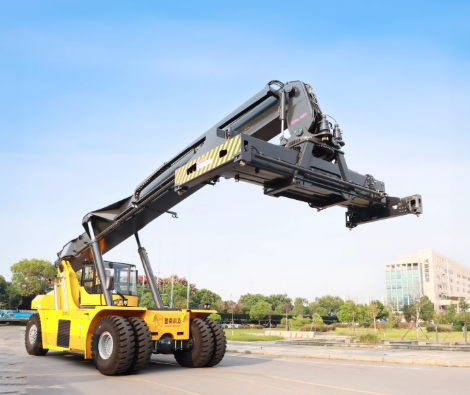 Space is tight in many yards. Forklifts often struggle there.A walkie reach stacker solves this problem. It moves pallets in narrow aisles.But choosing the right walkie reach stacker is not easy. In this article, you will learn key selection factors.blogs
 -
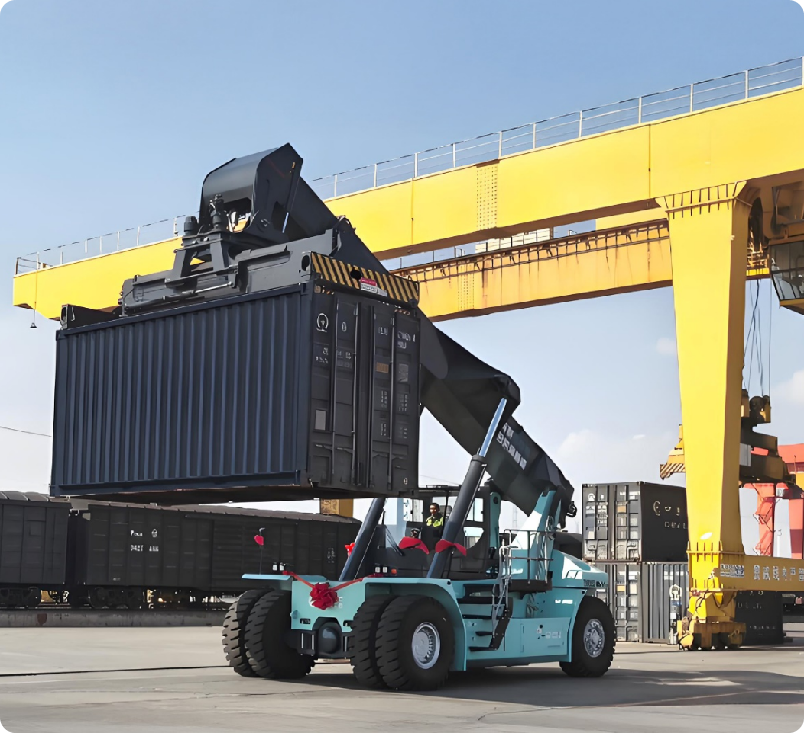 Heavy machines move huge containers daily. But who controls them safely?Operators need professional reach stacker training. It teaches safe lifting and machine control.But how long does training take? Does experience change the timeline?In this article, you will learn typical reach stacker training duration and key learning stages.blogs
 -
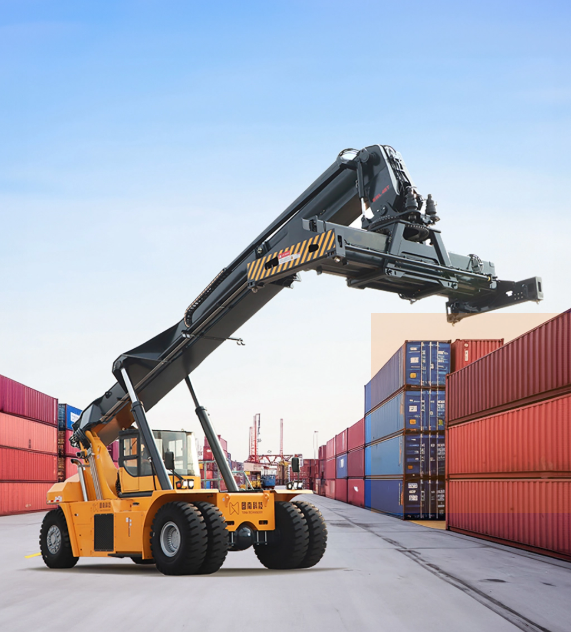
 Ports move thousands of containers daily. Handling them requires powerful machines.A container reach stacker lifts and stacks heavy containers. It works efficiently across busy port yards.But how do ports choose the right machine? Capacity, reach, and layout all matter.In this article, you will learn how to select the best container reach stacker for port operations.blogs
 -
 Reach stacker operators are the backbone of efficient logistics. They ensure smooth cargo movement in busy ports and warehouses. This article explores what it takes to become a reach stacker operator. We’ll cover the key skills, training programs, certifications, and safety measures required.


