

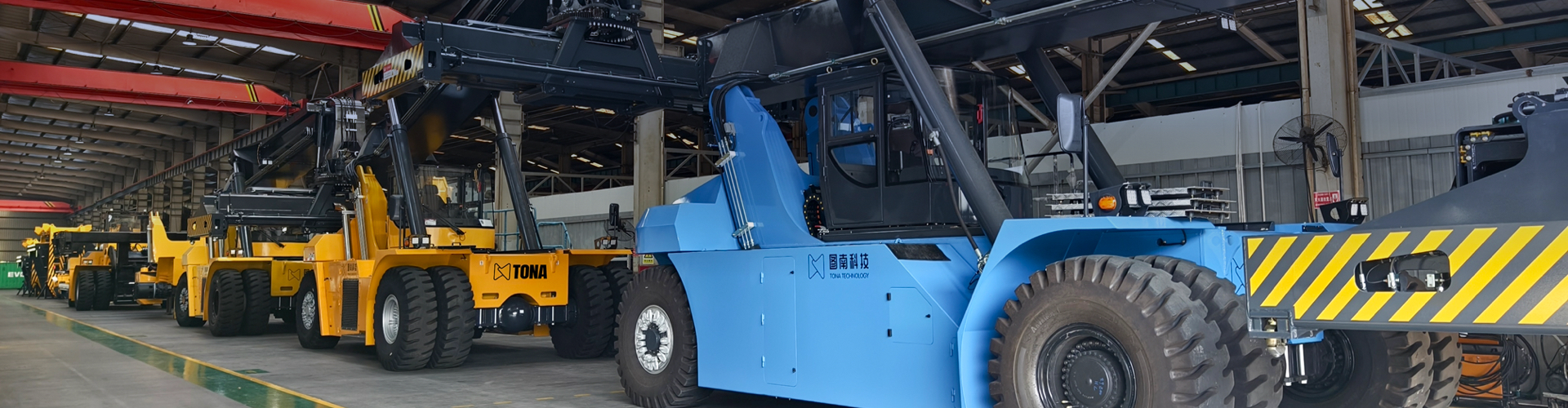

Choosing the wrong container handling equipment can cost more than the machine itself. If the capacity is too low, the equipment may not handle loaded containers safely. If the capacity is too high for the actual workload, the buyer may pay for performance that is not fully needed.
This is why many port operators, container yard managers, and logistics companies ask an important question: what’s the application scenario of a 45-ton reach stacker? A 45-ton reach stacker is not only a large lifting machine. It is a practical solution for heavy-duty container movement where strength, flexibility, stacking capacity, and daily productivity all matter.
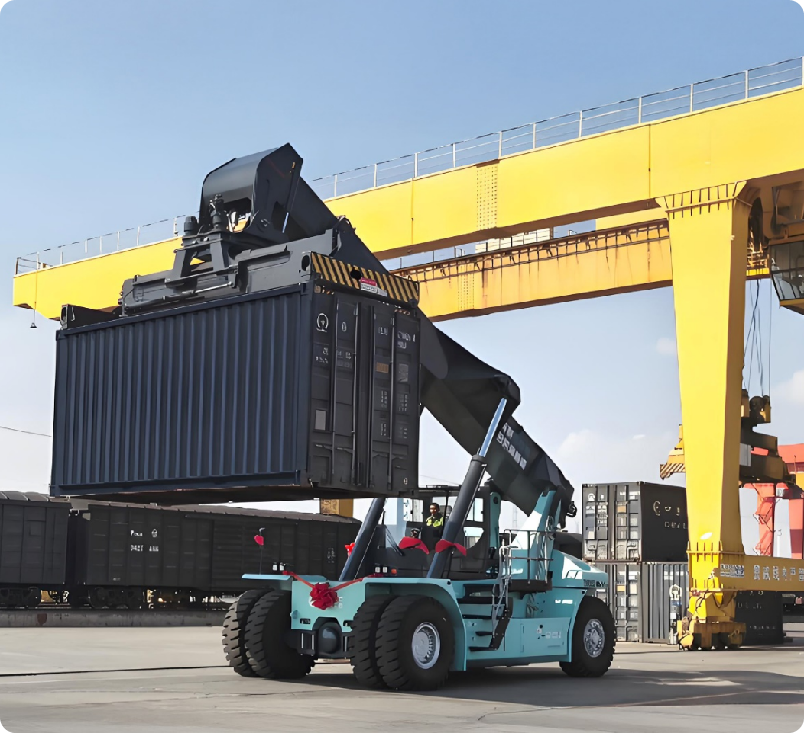
In this post, we’ll discuss where a 45-ton reach stacker is commonly used, what types of container handling tasks it supports, which industries can benefit from it, and how buyers can decide whether this capacity level matches their real working conditions. You’ll also learn when a 45-ton reach stacker is suitable and when a smaller or different machine may be more cost-effective.
What Is a 45-Ton Reach Stacker?
A 45-ton reach stacker is a heavy-duty container handling machine designed to lift, move, stack, and load containers in ports, terminals, depots, railway yards, logistics centers, and industrial sites. The term “45-ton” usually refers to the rated lifting capacity under specific operating conditions, especially when handling loaded containers.
Unlike a standard forklift, a reach stacker uses a telescopic boom and container spreader to lift containers from the top. The spreader locks onto the container corner castings, allowing the machine to handle 20-foot, 40-foot, and sometimes 45-foot containers depending on configuration. This makes a 45-ton reach stacker much more suitable for container handling than a normal heavy forklift.
A 45-ton reach stacker usually includes a strong chassis, powerful hydraulic system, telescopic boom, container spreader, operator cabin, steering system, braking system, and safety monitoring devices. These components work together to support stable lifting, accurate positioning, and safe movement in demanding outdoor environments.
It is important to understand that the rated capacity is not the only factor buyers should check. A 45-ton reach stacker may have different lifting capacities in the first row, second row, and third row. Buyers should always review the load chart, stacking height, boom reach, spreader compatibility, and working environment before choosing a model.
Why Choose a 45-Ton Reach Stacker?
A 45-ton reach stacker is commonly selected because it provides a strong balance between lifting capacity and operational flexibility. It is powerful enough for loaded container handling, but still mobile enough to work across different areas of a yard.
For many container handling operations, 45 tons is a practical capacity level. Loaded containers can be heavy, and the machine must have enough safety margin to lift, travel, and stack them under real working conditions. A 45-ton reach stacker can support daily container handling tasks where smaller machines may not provide enough capacity.
Another reason to choose a 45-ton reach stacker is flexibility. Fixed cranes are efficient in structured operations, but they cannot always move freely across the yard. A reach stacker can move between storage blocks, truck lanes, rail areas, inspection zones, and temporary handling areas. This makes it suitable for terminals where container flow changes frequently.
A 45-ton reach stacker is also useful when one machine needs to perform several tasks. It can load trucks, unload trailers, stack containers, support rail transfer, reposition containers, and assist temporary storage. For buyers who need multi-purpose container handling equipment, this capacity level is often a strong choice.
Main Application Scenarios of a 45-Ton Reach Stacker
A 45-ton reach stacker is mainly used in heavy-duty container handling scenarios. The following table summarizes the most common application areas.
Application Scenario | Typical Use | Why a 45-Ton Reach Stacker Is Suitable |
Port container yard | Moving, stacking, and loading loaded containers | Strong lifting capacity and flexible yard movement |
Inland port or dry port | Connecting road, rail, and storage operations | Suitable for intermodal container transfer |
Railway container terminal | Loading and unloading containers from rail wagons | Mobile and accurate for rail-side handling |
Container depot | Sorting, stacking, inspection, and repositioning containers | Good for frequent container movement |
Logistics park | Loading trucks and managing temporary container storage | Improves container turnover and reduces waiting time |
Heavy industrial site | Moving containers or heavy cargo units | Suitable for outdoor heavy-duty handling |
These scenarios show that a 45-ton reach stacker is most valuable where loaded container handling, flexible movement, and multi-purpose operation are required.
Port Container Handling
Ports are one of the most common application scenarios for a 45-ton reach stacker. In a port container yard, containers need to be moved between unloading areas, storage blocks, truck lanes, inspection zones, and temporary stacking areas. A 45-ton reach stacker can handle these tasks with strong capacity and good flexibility.
In port operations, the reach stacker is often used for moving loaded containers from one yard position to another. It can also load containers onto road trucks, unload containers from trailers, and support yard reorganization when container flow changes. When fixed cranes are busy or not available in a specific area, a 45-ton reach stacker can provide flexible support.
This application is especially useful for small and medium-sized ports. These ports may not always need a large automated crane system for every yard area. A 45-ton reach stacker can help them improve container handling capacity without requiring fixed rail infrastructure.
Even in larger ports, a 45-ton reach stacker may still be useful for backup handling, overflow yards, maintenance areas, special container movement, customs inspection support, and emergency container repositioning. Its value comes from mobility and adaptability.
Inland Ports and Dry Ports
Inland ports and dry ports are also suitable application scenarios for a 45-ton reach stacker. These facilities connect seaports with inland logistics networks. They often handle containers arriving by truck, rail, or both, and they need equipment that can move containers between different transport modes.
A 45-ton reach stacker can load and unload containers from trucks, move containers into storage areas, support customs inspection, and help organize containers by destination or shipping schedule. Because inland ports often need flexible handling rather than fixed-lane operation, the reach stacker is a practical choice.
For dry ports, space planning is important. A 45-ton reach stacker can help improve yard utilization by stacking containers vertically and moving them between different blocks. It can also reduce the need for multiple single-purpose machines, because one reach stacker can support several stages of container movement.
If the inland port handles loaded import and export containers regularly, a 45-ton reach stacker is often more suitable than a smaller machine. It provides the capacity needed for heavy containers while still allowing flexible operation across the yard.
Railway Container Terminals
A 45-ton reach stacker is widely used in railway container terminals because it can load and unload containers from rail wagons efficiently. Rail terminals need accurate positioning, safe lifting, and enough mobility to work along different loading areas.
In this application, the reach stacker can lift containers from rail wagons and place them onto trucks or yard stacks. It can also move containers from storage blocks to rail loading positions. This makes it useful for intermodal operations where containers transfer between road and rail.
Compared with fixed rail-mounted cranes, a 45-ton reach stacker offers more flexibility in many railway yards. It is not limited to one fixed lifting lane and can move to different areas as needed. This is especially useful for terminals with variable workloads or changing rail schedules.
However, buyers should check the railway yard layout carefully. The reach stacker needs enough turning space, suitable ground strength, and clear travel lanes. If the yard is well planned, a 45-ton reach stacker can significantly improve container transfer efficiency.
Container Depots
Container depots are another important application scenario for a 45-ton reach stacker. Depots are used for storing, sorting, inspecting, repairing, and repositioning containers. Container movement in depots is frequent and often less predictable than in highly structured terminals.
A 45-ton reach stacker is suitable for depots that handle both loaded and empty containers. It can move containers by customer, size, condition, destination, or repair status. It can also support container inspection and cleaning areas by moving selected containers quickly.
In a depot, flexibility is often more important than maximum automation. Containers may need to be moved to different zones throughout the day. A reach stacker can respond quickly because it can travel freely across the yard.
For depots that only handle empty containers, a 45-ton reach stacker may not always be necessary. An empty container handler or smaller machine may be more cost-effective. But if the depot handles loaded containers or mixed container types, a 45-ton reach stacker can provide stronger long-term value.
Logistics Parks and Distribution Centers
Large logistics parks and distribution centers may also use a 45-ton reach stacker, especially when they handle containerized cargo directly. These sites often need to load containers onto trailers, unload containers from transport vehicles, and move containers between storage and loading zones.
A 45-ton reach stacker can help reduce truck waiting time by improving container loading and unloading efficiency. It can also support temporary container storage when cargo flow is heavy or when trucks arrive before the next transport stage is ready.
For logistics parks that handle import and export containers, the reach stacker provides a practical bridge between road transport and yard storage. It can support fast movement without requiring fixed crane infrastructure.
This application is especially suitable when the logistics park has outdoor container storage areas, heavy-duty pavement, and regular container flow. If the site only handles pallets or light cargo, a standard forklift may be enough. But for container-level operations, a 45-ton reach stacker is much more suitable.
Heavy Industrial Sites
Some heavy industrial sites also use a 45-ton reach stacker for container and heavy cargo handling. These sites may include steel plants, energy equipment yards, mining logistics areas, construction material yards, large machinery storage sites, and industrial export bases.
In these environments, a reach stacker may be used to move loaded containers, heavy cargo units, equipment containers, or special transport modules. Its outdoor mobility and strong lifting capacity make it useful for large industrial yards.
However, industrial applications may require special attention. If the cargo is not a standard container, buyers may need special attachments, lifting frames, or customized handling solutions. The machine configuration should match the cargo shape, weight, lifting points, and site conditions.
A 45-ton reach stacker can be suitable for industrial sites when the workload includes heavy containerized cargo and flexible yard movement. But for non-container cargo, buyers should consult the manufacturer before selecting the equipment.
What Types of Containers Can a 45-Ton Reach Stacker Handle?
A 45-ton reach stacker can commonly handle standard containers used in ports and logistics operations. These usually include 20-foot containers and 40-foot containers. Depending on spreader configuration, some machines may also handle 45-foot containers.
The machine can be used for loaded containers, empty containers, reefer containers, and certain special containers. However, the real handling ability depends on the load chart, spreader type, lifting position, stacking height, and container weight.
Buyers should confirm several points before choosing a 45-ton reach stacker:
● Maximum container weight
● Container length and type
● Required stacking height
● First-row, second-row, and third-row lifting capacity
● Spreader compatibility
● Ground condition
● Yard layout and turning radius
● Daily working hours
● Safety requirements
A 45-ton reach stacker should not be selected only based on the maximum rated capacity. Real working conditions are more important than a single number on the specification sheet.
45-Ton Reach Stacker vs Smaller Capacity Reach Stacker
A 45-ton reach stacker is not always necessary for every yard. Buyers should compare it with smaller capacity machines based on actual workload.
Comparison Item | Smaller Capacity Reach Stacker | 45-Ton Reach Stacker |
Main use | Light or medium-duty handling | Heavy-duty loaded container handling |
Typical container type | Empty or lighter containers | Loaded 20ft and 40ft containers |
Best application | Small yards, lighter logistics work | Ports, depots, rail terminals, logistics parks |
Initial investment | Lower | Higher |
Flexibility | Good for lighter tasks | Stronger for mixed and heavy-duty tasks |
Long-term value | Suitable for lower workload | Better for regular loaded container handling |
If a site mainly handles empty containers, a smaller machine may be more economical. If the site regularly handles loaded containers, a 45-ton reach stacker provides stronger capacity and better safety margin.
For long-term container handling operations, choosing the right capacity is important. A machine that is too small may work near its limit too often, increasing wear and safety risk. A 45-ton reach stacker is suitable when the workload requires reliable heavy-duty performance.
When Is a 45-Ton Reach Stacker the Right Choice?
A 45-ton reach stacker is the right choice when the operation regularly involves loaded containers, flexible yard movement, and multi-purpose handling tasks. It is especially suitable when the equipment needs to load trucks, unload trailers, stack containers, support rail transfer, and move containers between different working zones.
This machine is also suitable when the yard does not want to rely only on fixed cranes. A 45-ton reach stacker can support container handling in areas where fixed lifting equipment is not available. It can also serve as backup equipment during peak periods or when other equipment is under maintenance.
Buyers should consider a 45-ton reach stacker if they operate in a port, inland terminal, railway yard, container depot, logistics park, or heavy industrial site. These environments often require both capacity and flexibility.
The key question is not only whether the machine can lift 45 tons. The real question is whether the 45-ton reach stacker matches the container weight, stacking height, yard layout, travel distance, operating frequency, and service expectations.
When May a 45-Ton Reach Stacker Not Be Necessary?
A 45-ton reach stacker may not be necessary for every application. If a site only handles empty containers, an empty container handler or smaller machine may be more cost-effective. If the workload is light and container weights are low, a smaller reach stacker may be enough.
It may also not be the best choice if the yard is too narrow or the ground is not strong enough. A 45-ton reach stacker is a large and heavy machine. It needs suitable turning space, stable pavement, and safe traffic planning.
If a terminal already has a highly efficient fixed crane system for all container lifting tasks, a 45-ton reach stacker may only be needed for support work rather than main operation. In such cases, buyers should evaluate whether the machine will be used often enough to justify the investment.
The best equipment choice should always be based on real application conditions, not only maximum capacity.
Key Factors to Consider Before Choosing a 45-Ton Reach Stacker
Before buying a 45-ton reach stacker, buyers should review all major technical and operational factors. These include rated lifting capacity, capacity in different rows, stacking height, boom reach, spreader type, container size compatibility, turning radius, overall dimensions, tire type, ground requirements, and safety systems.
Power system is also important. Diesel models are widely used in heavy-duty outdoor operations. Electric or hybrid options may be considered when the site has emission targets, charging infrastructure, and suitable duty cycles. The right choice depends on actual working hours and site conditions.
Operator visibility and cabin comfort should also be considered. A 45-ton reach stacker may work for long shifts, so good visibility, ergonomic controls, comfortable seating, air conditioning, and clear displays can improve safety and productivity.
Maintenance support is another critical factor. Buyers should confirm spare parts availability, service guidance, warranty policy, and technical support. A 45-ton reach stacker is a long-term investment, so after-sales service should be part of the buying decision.
How a Manufacturer Helps Match the Right Application Scenario
A professional reach stacker manufacturer should not simply recommend a model based on rated capacity. The manufacturer should understand the buyer’s real working conditions before recommending a 45-ton reach stacker.
Important questions include: What containers will be handled? What is the maximum container weight? How many hours will the machine work each day? What stacking height is required? How wide are the yard lanes? What is the ground condition? Will the machine load trucks, rail wagons, or both? What service support does the buyer need?
By answering these questions, the manufacturer can help buyers choose a suitable configuration. This may include spreader type, boom performance, tire specification, safety devices, cabin features, power system, and maintenance plan.
Hunan Tona Machinery Technology Co., Ltd. can provide suitable 45-ton reach stacker solutions according to port, railway terminal, container depot, logistics yard, inland terminal, and industrial handling requirements. Matching the right machine to the right scenario helps improve efficiency, safety, and long-term operating value.
Conclusion
A 45-ton reach stacker is mainly suitable for heavy-duty container handling scenarios where loaded containers, flexible movement, and reliable stacking capacity are required. Its most common application areas include ports, inland terminals, dry ports, railway container yards, container depots, logistics parks, distribution centers, and heavy industrial sites.
The main advantage of a 45-ton reach stacker is that it combines strong lifting capacity with mobile operation. It can move loaded containers, load trucks, support rail transfer, stack containers, organize depot storage, and assist temporary yard operations. For many container handling businesses, this makes it a practical and valuable machine.
However, buyers should not choose a 45-ton reach stacker only because it sounds powerful. The correct decision should be based on container weight, stacking height, yard layout, operating space, ground condition, daily workload, power system, safety requirements, and after-sales support. When the machine is matched to the right application scenario, a 45-ton reach stacker can provide efficient, safe, and long-term container handling performance.
FAQs
1. What is a 45-ton reach stacker mainly used for?
A 45-ton reach stacker is mainly used for handling loaded containers in ports, container yards, railway terminals, inland ports, dry ports, depots, logistics parks, and heavy-duty industrial sites.
2. Can a 45-ton reach stacker handle 40-foot containers?
Yes, a 45-ton reach stacker can commonly handle 40-foot containers when equipped with a suitable spreader and proper lifting capacity. Buyers should confirm container weight, spreader type, and load chart before purchase.
3. Is a 45-ton reach stacker suitable for small container yards?
A 45-ton reach stacker can be suitable for small container yards if the yard handles loaded containers and has enough operating space. If the yard only handles empty containers or light workloads, a smaller machine may be more cost-effective.
4. What should I check before buying a 45-ton reach stacker?
Before buying a 45-ton reach stacker, buyers should check rated capacity, row capacity, stacking height, spreader compatibility, yard turning space, ground condition, power system, safety devices, maintenance support, and spare parts availability.
5. How do I know if my application needs a 45-ton reach stacker?
You may need a 45-ton reach stacker if you regularly handle loaded containers, require flexible yard movement, stack containers, load trucks or rail wagons, and need reliable heavy-duty container handling equipment for long-term operation.
Related Blogs
-
 Containers move across the world daily. Ports must lift heavy loads fast. A 45 ton reach stacker makes this possible. It moves containers across busy yards. It stacks cargo in tight spaces.In this article, we explain where a 45 ton reach stacker works best. You will learn its main logistics applications.blogs


