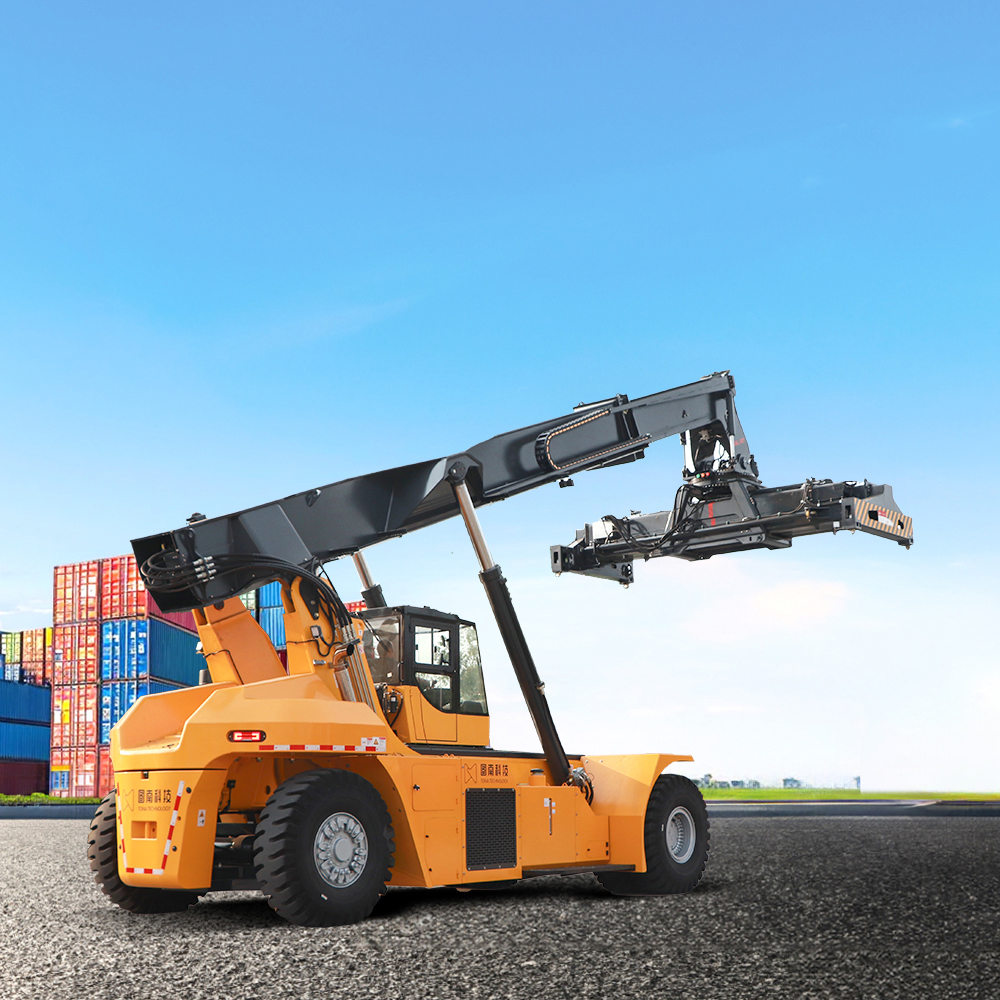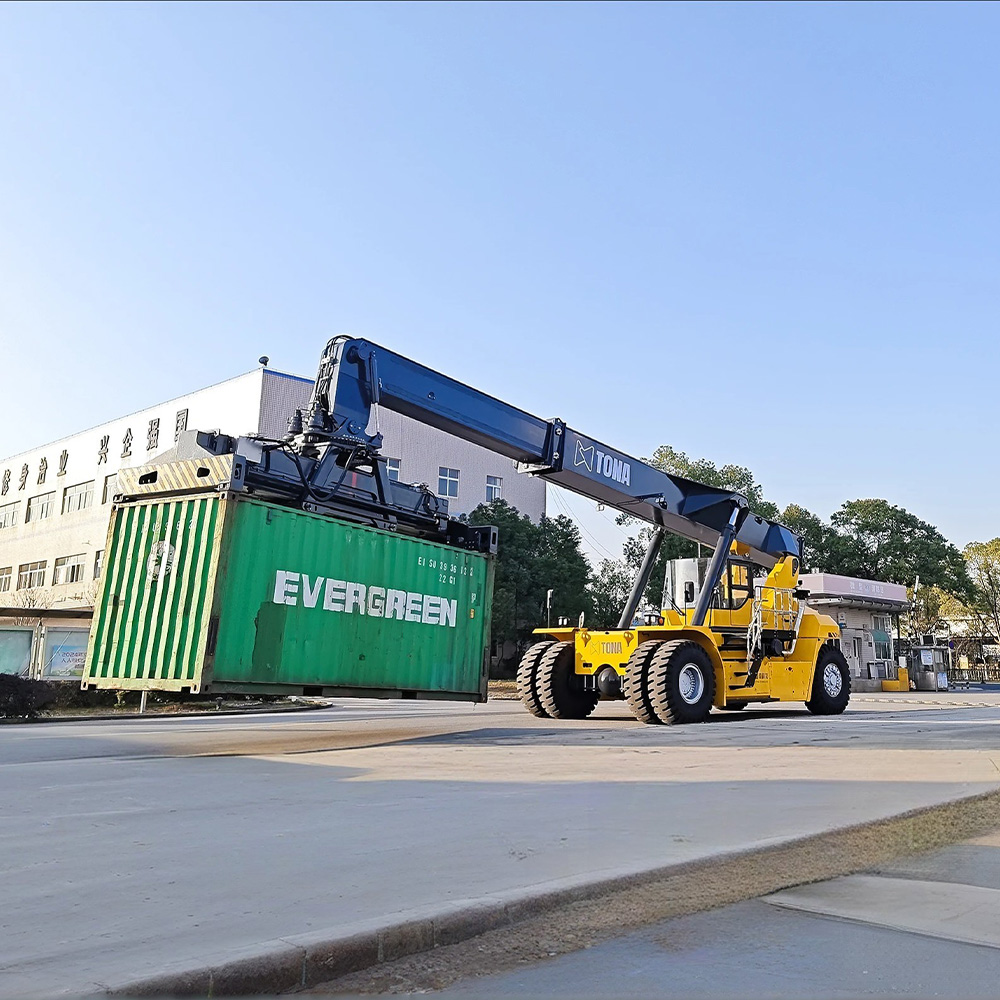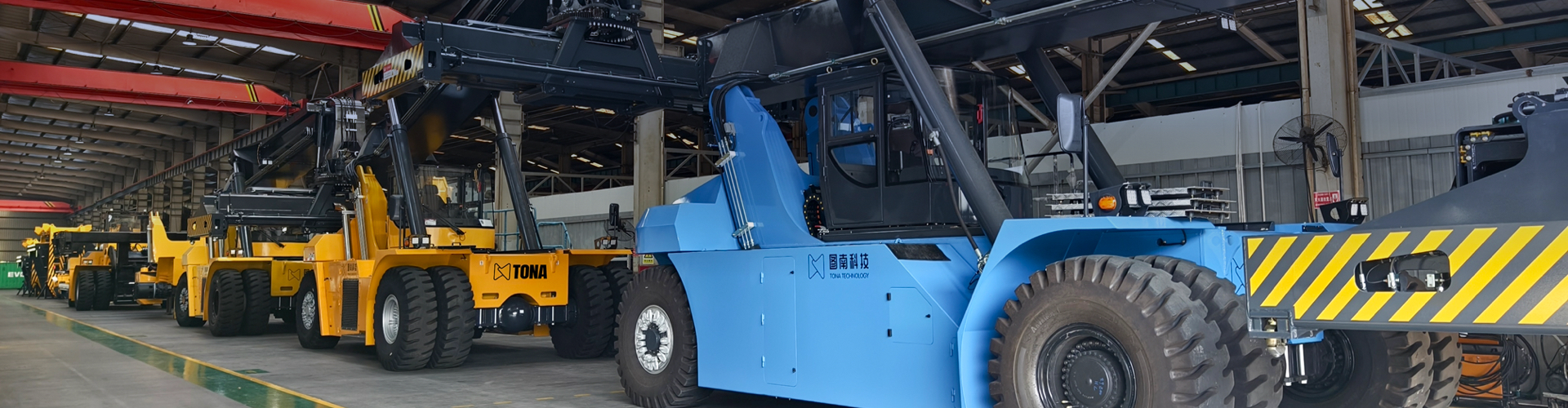

Operating mobile container handling equipment introduces severe spatial and kinetic risks to port terminals. Spatial constraints frequently clash with operational throughput demands, creating hazardous environments for ground personnel and adjacent machinery. Procurement and terminal managers must accurately calculate and enforce operational safety zones before deploying a Reach Stacker to prevent catastrophic collisions, ensure OSHA and ISO compliance, and avoid ground-bearing failures. Establishing these perimeters requires precise engineering data, an understanding of machine kinematics, and a thorough analysis of terminal infrastructure. You cannot rely on guesswork when a 100-ton machine is moving 40-foot boxes. You need hard data on turning radii, boom extension limits, and ground bearing pressure to establish compliant safety zones for various equipment classifications, giving you the exact parameters needed for site planning, yard layout optimization, and heavy equipment risk mitigation.
Key Takeaways
Dynamic vs. Static Zones: Safety perimeters must account for the machine's dynamic footprint, including boom extension, load swing, and turning radius, not just its static dimensions.
Capacity Dictates Space: A heavy duty reach stacker for ports and railways requires significantly larger exclusion zones and higher ground-bearing capacity compared to a lightweight reach stacker for container handling.
Ground Integrity is Critical: Safety zones are voided if ground conditions are compromised; surface flatness, slope gradients, and tire integrity directly impact the machine's center of gravity and tipping threshold.
Technology Integration: Modern safety zones rely on a combination of physical barriers and in-cab telemetry, such as Load Moment Indicators (LMI) and proximity sensors, to maintain safe operational boundaries.
Phased Risk Profiles: The required safety radius shifts dramatically across the three core operational phases: picking the container, traveling with the load, and stacking at maximum height.
The Anatomy of a Reach Stacker Safety Zone
Problem Framing (Success Criteria)
Defining exact spatial requirements isolates the machine's kinetic energy from vulnerable assets and personnel. Port terminals operate under intense pressure to maximize throughput, resulting in congested yards where heavy machinery and ground workers operate in close proximity. Terminal managers must establish clear, enforceable boundaries that accommodate the maximum physical extension and movement of the equipment under full load conditions. If you fail to define these parameters, you invite structural damage, dropped loads, and severe workplace injuries. A successful safety zone accounts for the worst-case scenario, including sudden braking, hydraulic failure, and operator error.
Static Exclusion Zones
A static exclusion zone defines the absolute minimum clearance required around a stationary machine during maintenance, refueling, or idling. Even when parked, the equipment poses risks due to its massive size, residual hydraulic pressure, and blind spots. Maintenance personnel require sufficient space to access hydraulic panels, inspect tires, and perform engine checks without encroaching on active traffic lanes.
Terminals must paint high-visibility lines and install concrete bollards to separate foot traffic from parking areas. The static zone must account for the boom in its fully lowered position and the spreader fully retracted. Unauthorized personnel must never enter this perimeter without explicit radio confirmation from the operator or maintenance supervisor. Ground workers must make eye contact with the operator before crossing any established static boundary.
Static Activity | Minimum Clearance Radius | Required Physical Barriers |
|---|---|---|
Routine Idling / Parking | 3 Meters | Painted floor lines, designated parking blocks. |
Refueling Operations | 5 Meters | Traffic cones, spill containment berms. |
Hydraulic Maintenance | 8 Meters (Front) / 3 Meters (Sides) | Lockout/Tagout (LOTO) stations, hard barricades. |
Dynamic Operating Zones (Phased Approach)
The spatial requirements of the equipment change continuously based on its current task. A dynamic operating zone adapts to the machine's movement, load status, and boom position. You must calculate these zones based on the physics of the machine in motion.
Picking Phase
Mapping the hazard area when engaging the spreader requires accounting for boom extension and initial lift dynamics. As the machine approaches a container, the boom extends forward, shifting the center of gravity toward the front drive axle. The safety zone must encompass the entire area beneath the boom and spreader. Ground personnel must remain entirely clear of the drop zone. The operator must align the twistlocks precisely, requiring a clear line of sight and an unobstructed approach path. If the twistlocks fail to engage fully, the initial lift can cause the container to slip, creating an immediate drop hazard directly in front of the machine.
Traveling Phase
Calculating the swept path relies on the machine's wheelbase, steering angle, and tail swing. These machines utilize rear-wheel steering, which creates a pronounced tail swing. When the operator turns the steering wheel, the heavy rear counterweight swings out in the opposite direction of the turn. The safety zone during transit must be significantly wider than the machine itself to account for this arc. You must enforce the rule of keeping the load level and low during transit. Traveling with a raised container raises the center of gravity, drastically increasing the risk of lateral tip-overs during cornering or sudden braking.
Stacking Phase
Expanding the safety perimeter is necessary to account for load swing, wind exposure, and drop-zone risks when telescoping containers to maximum stack heights. Lifting a container five or six tiers high magnifies the effects of wind and ground irregularities. The safety zone must extend outward to capture potential load shift trajectories. If a twistlock fails or a sudden wind gust destabilizes the load, the resulting drop zone covers a massive area. Adjacent stacks must also be factored into the clearance calculations to prevent domino-effect collisions.
Blind Spot Mapping & Ergonomics
Identifying inherent visibility limitations from the operator's cabin is a primary safety requirement. The sheer size of a fully loaded high-cube container blocks forward visibility, forcing operators to rely on peripheral vision, mirrors, and onboard cameras. The rear counterweight and engine housing also create substantial blind spots directly behind the machine.
Implementing mandatory proximity warning systems and camera integrations mitigates these blind spot risks. Radar and ultrasonic sensors detect obstacles within the exclusion zone, triggering audible alarms in the cabin. High-definition cameras provide real-time feeds of the spreader alignment and rearward path. Operators must verify the functionality of these systems before every shift.
Addressing operator fatigue prevents human error from breaching established safety zones. Cabins equipped with vibration dampening, adjustable seating, and intuitive joystick controls reduce physical strain. Fatigued operators exhibit slower reaction times and poor spatial judgment, making them more likely to clip adjacent containers or enter restricted pedestrian zones.

Calculating Spatial Requirements by Equipment Type
Solution Categories/Approaches
Matching safety zone dimensions to the specific weight class and operational purpose of the equipment ensures accurate site planning. Terminal engineers must categorize their fleet and calculate distinct operating envelopes for each machine type based on axle loads, turning radii, and maximum lifting heights. Applying a universal safety radius to all equipment types wastes yard space and creates dangerous spatial conflicts.
Heavy Duty Reach Stacker for Ports and Railways
Spatial requirements for a standard 45 ton container reach stacker operating at full capacity demand expansive operating aisles. These machines feature massive wheelbases, often exceeding 6 meters, and require substantial room to maneuver. The swept path during a 90-degree intersecting aisle turn requires precise calculation to prevent the rear counterweight from striking stacked containers or terminal infrastructure.
Accommodating the extended boom reach required for second-rail operations requires a specialized safety approach. When reaching across a rail track to pick a container from the second row, the boom extends to its maximum horizontal limit. This configuration places immense stress on the front axle and requires a perfectly level operating surface. A heavy duty reach stacker for ports and railways demands an expanded drop-zone risk area. The kinetic energy transfer of a 40-ton load falling from the second rail or a high stack is catastrophic. The exclusion zone must reflect this worst-case scenario, keeping all non-essential personnel and equipment far beyond the maximum boom reach radius.
Lightweight Reach Stacker for Container Handling
Adjusting safety perimeters for empty container handlers allows for more efficient yard utilization. A lightweight reach stacker for container handling typically features a shorter wheelbase and a tighter turning radius. These machines maneuver easily within narrow aisles, making them ideal for high-density empty container depots where space is at a premium.
Evaluating the trade-offs involves balancing the smaller physical footprint against specific operational risks. While the turning radius is tighter, handling empty containers at height introduces a severe risk of wind-induced tip-overs. Empty containers act like sails, catching wind gusts and transferring massive lateral forces to the machine's boom and chassis. While the ground-level swept path may be smaller, the aerial safety zone and wind-speed operational thresholds must be strictly enforced to prevent the machine from overturning.
Equipment Classification | Typical Load Capacity | Primary Risk Factors | Safety Zone Requirement Focus |
|---|---|---|---|
Heavy Duty (Ports/Railways) | 40 - 45 Tons | High ground bearing pressure, massive tail swing, second-row reach stability. | Wide aisle clearances, reinforced ground zones, extended drop-zone perimeters. |
Lightweight (Empty Handlers) | 8 - 10 Tons | Wind shear on empty containers, lateral instability at maximum stack height. | Strict wind-speed operational limits, aerial clearance monitoring. |
Ground Conditions and Environmental Safety Factors
Evaluation Dimensions (Features-to-Outcomes)
Assessing how terminal infrastructure impacts the effectiveness of designated safety zones is a fundamental engineering task. A perfectly calculated safety radius becomes useless if the ground beneath the machine fails. The structural integrity of the terminal surface directly dictates the machine's stability, braking distance, and steering accuracy.
Surface Flatness and Load Bearing
The critical need for flat, reinforced ground prevents wheel grooves caused by tire slippage and extreme point-loading. When a fully loaded machine lifts a container, the front axle bears the vast majority of the combined weight. This translates to immense ground bearing pressure, often exceeding 1.5 MPa. If the asphalt or concrete lacks sufficient compressive strength, the tires will sink, creating ruts. These ruts trap the wheels, forcing the operator to apply excessive throttle to break free, which causes sudden, uncontrolled lurches that breach the safety zone.
Uneven terrain shifts the center of gravity, effectively expanding the required safety zone due to increased tip-over risk. A slope of just one or two degrees at ground level translates to a significant lateral shift at the top of a five-high container stack. This lateral shift places unequal stress on the boom cylinders and increases the likelihood of the machine tipping sideways. Terminals must conduct regular topographical surveys to identify and repair depressions or uneven gradients within the operating aisles.
Ramp Operations and Slope Gradients
Strict protocols govern operations on inclines. Mandating that ramp operations must proceed up and down in the direction of the slope, never laterally, is a non-negotiable safety rule. Driving across a slope alters the machine's lateral center of gravity, drastically reducing its tipping threshold. When traveling up a ramp, the load must face uphill to maintain traction on the front drive axle. When traveling down, the load must also face uphill, requiring the operator to reverse down the incline.
Adjusting dynamic safety zones when operating near grade changes, terminal edges, or ship-to-shore transition zones is necessary. These transition areas often feature slight elevation changes or expansion joints. Operators must reduce speed and ensure the boom is fully retracted and lowered before crossing these thresholds to prevent dynamic shock loads from destabilizing the equipment.
Environmental Variables & Housekeeping
Wind speed thresholds heavily impact the safe operating zone for suspended loads. High winds create massive lateral forces on containers. Terminals must establish strict wind-speed limits, typically halting high-stacking operations when sustained winds exceed 15 to 20 meters per second. The safety zone must be expanded during moderate wind conditions to account for unpredictable load swing.
Housekeeping standards are equally vital. Maintaining clean work areas free of debris prevents compromised tire traction and steering failures. A discarded twistlock, piece of dunnage, or spilled oil can cause a catastrophic loss of control. If a front tire strikes debris while carrying a heavy load, the sudden jolt can rupture a hydraulic line, cause a tire blowout, or induce a violent load shift that instantly breaches the established safety perimeter.
Operational Safety Protocols and Telemetry Integration
Overall Value Influencing Factors
Onboard technology reduces the reliance on purely physical safety zones and improves operational efficiency. While painted lines and bollards provide visual cues, they cannot actively prevent a machine from tipping over or dropping a load. Integrating advanced telemetry and automated safety overrides transforms the equipment into an active participant in maintaining terminal safety.
In-Cab Safety Systems
The role of Load Moment Indicators (LMI) and load meters is central to keeping the machine within its safe working envelope. These systems utilize pressure transducers in the lift cylinders and angle sensors on the boom to continuously calculate the load moment. The LMI displays real-time data to the operator, indicating the current load weight, boom extension, and remaining capacity.
Automated speed reduction and boom lockout mechanisms activate when the machine approaches the limits of its safe zone or exceeds load capacity. If an operator attempts to extend a heavy container too far forward, the LMI system intercepts the hydraulic command, locking out further extension. If the steering angle is too sharp while carrying a heavy load, the onboard computer automatically limits the travel speed to prevent lateral tip-overs. These electronic safety nets enforce dynamic safety zones regardless of operator experience.
Pre-Operation Checks and Maintenance Reporting
Mandatory tire inspections are the first line of defense. Operators must check for cuts, low pressure, or worn spots that could lead to sudden failure. A tire blowout on a loaded machine causes an immediate and violent shift in the center of gravity, resulting in a rollover. Proper tire inflation is critical for maintaining the calculated ground contact area and ensuring accurate steering response.
Verify tire pressure matches the manufacturer's exact specifications for heavy load handling.
Inspect all hydraulic hoses and fittings on the boom and spreader for signs of abrasion or weeping fluid.
Test the LMI system and proximity alarms before moving the machine out of the parking area.
Check the structural integrity of the twistlocks and ensure the spreader extension mechanism operates smoothly.
Hydraulic system integrity plays a direct role in preventing uncontrolled load drops. Daily inspections must verify that all hoses, fittings, and cylinders are free of leaks. A ruptured lift cylinder hose will cause the boom to collapse, dropping the container directly into the safety zone.
Establishing strict reporting protocols empowers operators to report equipment issues and initiate Lockout/Tagout (LOTO) procedures before safety zones are compromised. If an LMI screen malfunctions or a proximity sensor fails, the machine must be immediately removed from service. Operational safety depends on a culture where operators face no penalty for halting work due to equipment defects.
Implementation Risks and Mitigation Strategies
Implementation Risks
The primary implementation risk is the inherent tension between maximizing terminal storage density and maintaining compliant safety zones. Terminal planners constantly seek to increase TEU (Twenty-foot Equivalent Unit) capacity by narrowing aisles and stacking containers closer together. This spatial compression directly threatens the integrity of equipment safety perimeters, leaving zero margin for operator error or mechanical drift.
Balancing Port Efficiency with Strict Safety Compliance
Shrinking aisle widths to increase container capacity leads to frequent minor collisions and near-misses. When aisles are too narrow, operators must execute multi-point turns, increasing cycle times and elevating the risk of striking adjacent stacks. The tail swing of the counterweight frequently breaches the pedestrian walkways if the central traffic lane is too confined.
Utilizing digital twin simulations or CAD software accurately maps turning radii against proposed yard layouts before implementation. Terminal engineers input the exact wheelbase, steering angle, and boom reach of their specific machines into the software. This allows them to simulate complex maneuvers, verify swept paths, and ensure that the physical yard layout accommodates the dynamic safety zones without conflict.
Positioning the equipment as a strategic asset requires understanding the operational cost of accidents. Enforced safety zones maximize port efficiency by eliminating accident-related downtime, preventing equipment damage, and avoiding costly insurance claims. A single collision shuts down an entire terminal block for hours, destroying any throughput gains achieved by narrowing the aisles.
Training and Enforcement
Establishing strict protocols for operator behavior within the safety zone is mandatory. Rules must dictate smooth acceleration and deceleration, prohibiting jerky joystick movements that induce load swing. Operators must strictly adhere to the rule of maintaining low transit heights, keeping the container just above the ground during travel to maintain a low center of gravity.
Implementing continuous training programs focused on spatial awareness ensures long-term compliance. Operators must be trained to interpret onboard safety telemetry accurately and respond to LMI warnings without hesitation. Emergency response training within the exclusion zone prepares personnel to handle hydraulic failures, sudden load shifts, or tire blowouts safely, minimizing the risk to surrounding infrastructure and personnel.
Conclusion
Conduct a comprehensive site audit to measure existing aisle widths against the manufacturer's published swept path data.
Test ground integrity and bearing capacity in high-traffic zones to identify areas requiring immediate reinforcement.
Request a detailed kinetic footprint diagram from equipment manufacturers before finalizing any new purchase.
Mandate weekly calibration checks for all onboard Load Moment Indicators and proximity warning systems.
Implement strict Lockout/Tagout procedures for any machine exhibiting hydraulic leaks or sensor malfunctions.
FAQ
Q: What is the standard safety radius for a reach stacker?
A: The standard safety radius varies based on the machine's size and load. A static exclusion zone requires at least 3 to 5 meters of clearance around the parked machine. The dynamic safety zone must account for the full turning radius, tail swing, and maximum boom extension, often requiring operating aisles wider than 15 meters for heavy-duty operations.
Q: How do safety zones differ for a 45 ton container reach stacker compared to an empty handler?
A: A 45-ton machine requires significantly wider aisles, reinforced ground to handle massive front-axle loads, and larger drop-zone clearances. An empty handler has a smaller footprint and tighter turning radius, allowing for narrower aisles, but requires strict aerial safety zones due to the high risk of wind-induced tip-overs when lifting empty containers.
Q: What are the ground bearing pressure requirements for heavy duty reach stacker operations?
A: Heavy-duty operations generate extreme point-loading on the front axle, often exceeding 100 tons during a maximum lift. The ground must be engineered with high-strength concrete or heavy-duty asphalt capable of withstanding pressures typically ranging from 1.5 to 2.5 MPa to prevent rutting and maintain machine stability.
Q: How do load meters and LMIs contribute to reach stacker safety?
A: Load Moment Indicators (LMIs) continuously calculate the weight of the load and the extension of the boom using pressure transducers and angle sensors. They provide real-time data to the operator and automatically lock out hydraulic functions or reduce travel speed if the machine approaches its maximum safe lifting capacity.
Q: What are the most common safety hazards during reach stacker ramp operations?
A: The most severe hazards include lateral tip-overs caused by driving across a slope rather than straight up or down. Other risks include loss of traction on wet inclines, dynamic shock loads when crossing grade transitions, and forward tip-overs if a heavy load is carried downhill facing forward.
Q: How does wind speed affect the required safety zone for container handling?
A: High winds exert massive lateral force on suspended containers, causing load swing and destabilizing the machine. As wind speed increases, the safety zone must be expanded to account for unpredictable drop trajectories. Operations are typically halted entirely when sustained winds exceed 15 to 20 meters per second.
Related Blogs
-
 Discover how reach stacker stability systems, physics, and active digital controls prevent catastrophic tip-overs in busy port terminals.
 -
 Maximize terminal TEU capacity without expanding your footprint. Discover how reach stackers solve yard congestion via vertical and block stacking.
 -
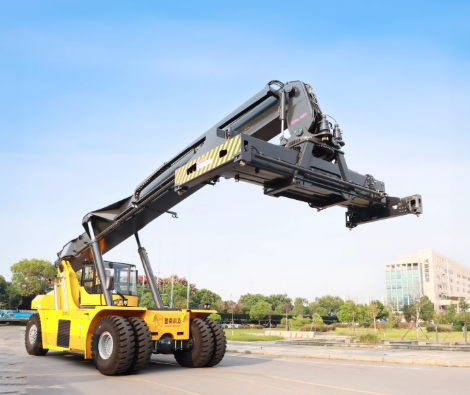 Optimize terminal operations. Learn to analyze duty cycles and select the right diesel reach stacker for high-intensity, continuous container handling.blogs
 -
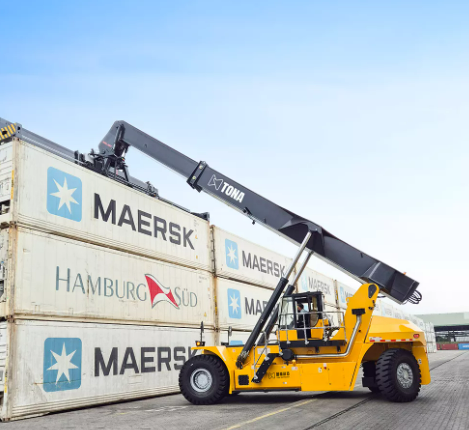 Solve yard congestion with reach stackers. Boost TEU density, cut extra moves, and optimize cycle times for higher port throughput.blogs