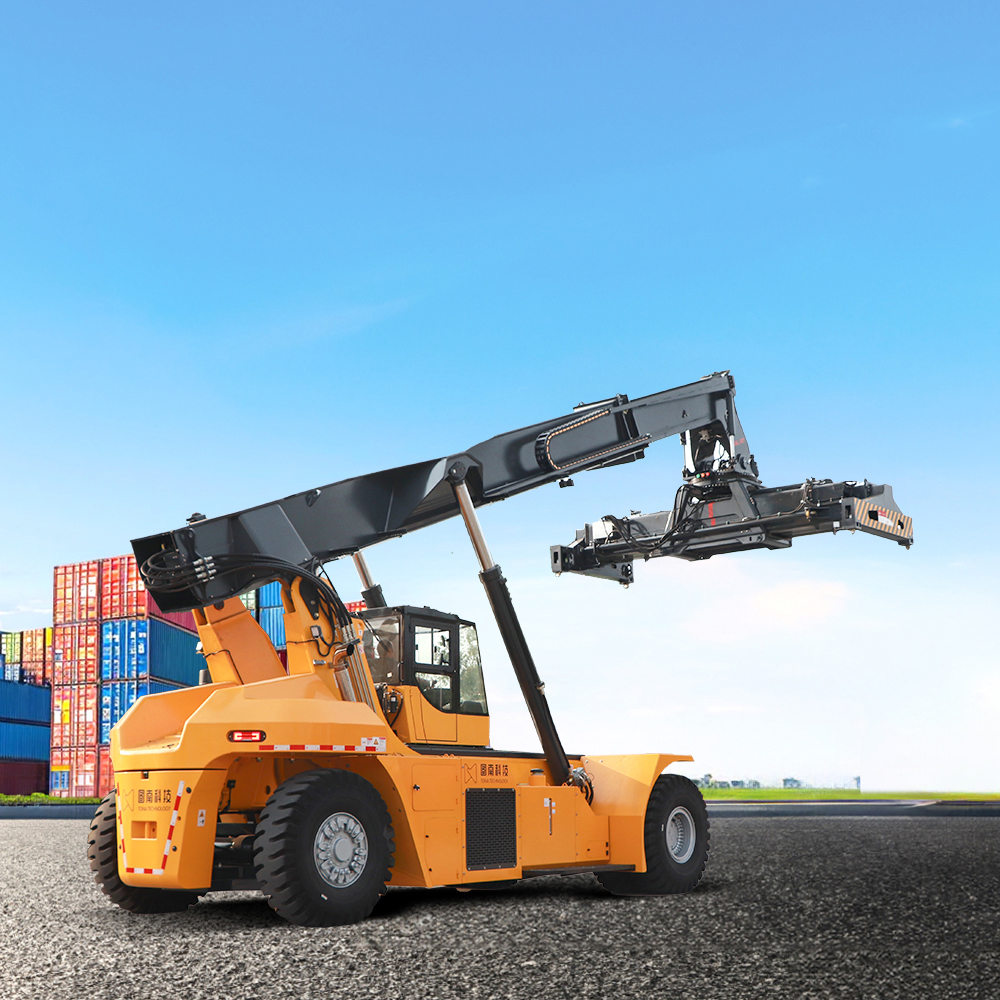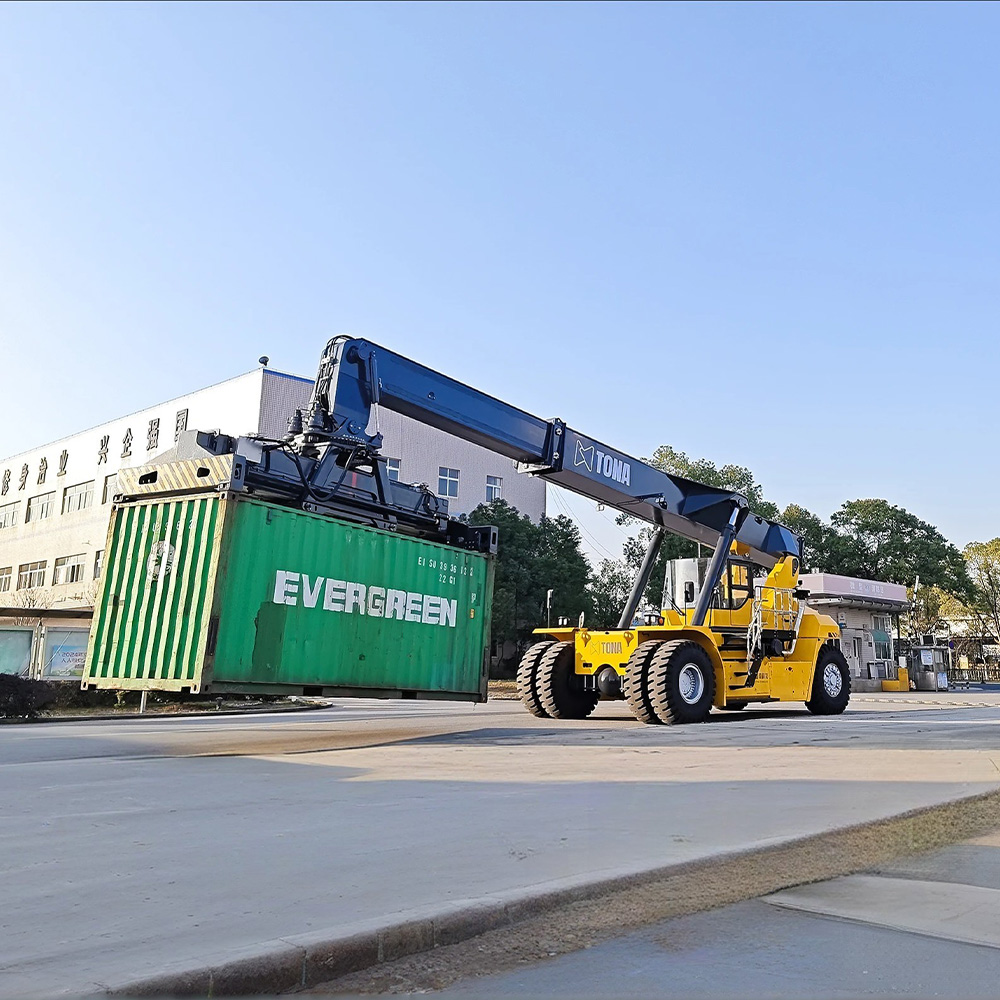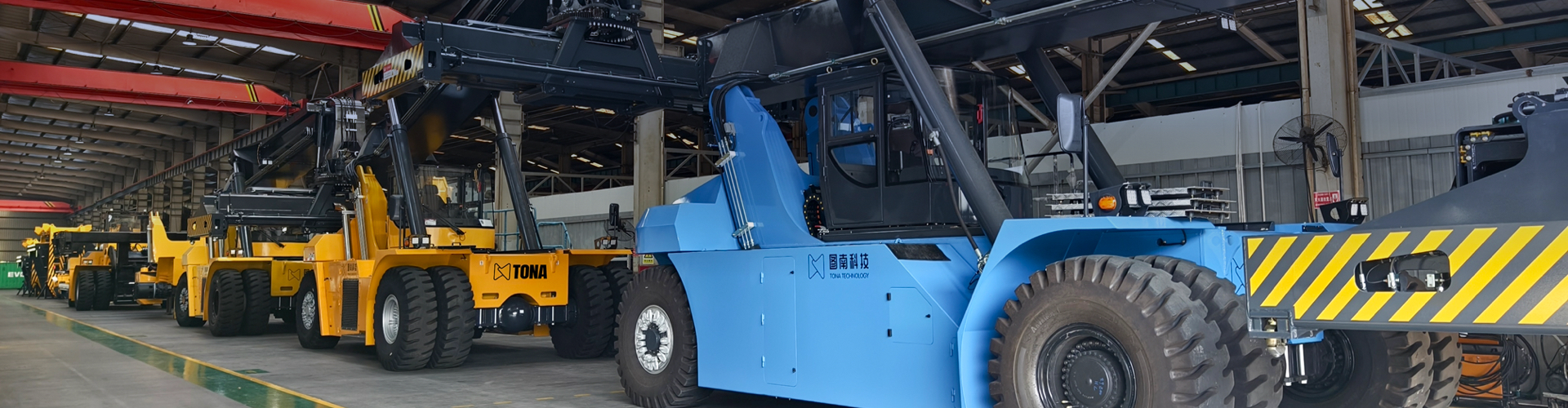

Yard congestion is rarely just a physical space issue. It operates as a compounding operational bottleneck driven by inefficient container density, slow gate turn times, and excessive handling cycles. When static yard footprints clash with growing TEU (Twenty-foot Equivalent Unit) throughput demands, terminal operators face a cascade of inefficiencies. These include mandatory extra moves, delayed truck turn times, and increased fuel burn per container. To resolve these bottlenecks, terminals must look beyond rigid infrastructure like Rail-Mounted Gantry cranes or limited-mobility equipment like standard mast forklifts. A dynamic, scalable alternative is required. By evaluating specific equipment capabilities against yard congestion metrics, operators can deploy targeted machinery to fundamentally alter yard geometry and throughput capacity.
Verticality and Depth: Reach stackers mitigate ground-level congestion by enabling 5-to-6-high vertical stacking and accessing second- or third-row containers without moving the front row.
Targeted Equipment Matching: Selecting between a lightweight reach stacker for container handling (empties) and a 45 ton container reach stacker (laden) is critical for optimizing cycle times and fuel efficiency.
Reduction of Extra Moves: Advanced boom extension capabilities directly reduce the "digging" required to retrieve specific containers, lowering the cost-per-move.
Infrastructure Prerequisites: Successful deployment requires evaluating ground bearing pressure, aisle width thresholds, and operator training to avoid shifting bottlenecks from storage to maintenance.
The Mechanics of Yard Congestion: Why Extra Moves Kill Margins
Terminal bottlenecks stem from a combination of poor yard planning, unpredictable truck arrivals, and the inability to densely stack laden containers. When a yard operates near capacity, the lack of buffer space forces operators into inefficient stacking patterns. This creates a scenario where accessing a specific container requires moving several others first. Ground slots fill up quickly during peak vessel discharge windows, and without the ability to stack high or deep, the terminal footprint simply runs out of usable asphalt.
The financial and operational impact of these extra moves is severe. Every time an unrequired container is shifted to access a target container, the terminal incurs direct costs. This process, known in the field as "digging," destroys operational efficiency. Calculating the cost-per-extra-move involves measuring fuel consumption per cycle, hourly labor rates, tire wear, and engine-hour depreciation. Over a month, thousands of extra moves drain operational budgets and artificially inflate the time required to process a single truck.
To quantify the impact of digging, terminal managers track several specific metrics:
Fuel burn per lift cycle, measured in liters per hour during active hoisting.
Tire degradation rates based on the number of tight-radius turns required to shuffle boxes.
Labor hours wasted on non-productive container shifts.
Wear and tear on spreader twist-locks and hydraulic cylinders from unnecessary engagements.
This inefficiency directly links to the gate-to-yard bottleneck. Slow container retrieval times cascade backward through the terminal. Drayage trucks queue at automated gates, disrupting scheduled appointment systems and causing localized traffic congestion outside the port facility. If the yard equipment cannot retrieve boxes quickly enough, the entire gate system fails to function as designed. A truck waiting 45 minutes for a single import box creates a backlog that takes hours to clear.
Fixed infrastructure often exacerbates this problem. Rail-Mounted Gantry (RMG) cranes and Rubber-Tired Gantry (RTG) cranes operate on rigid pathways. While they offer high density, they lack the agile routing requirements needed to clear sudden, localized congestion. Terminals require mobile equipment that can bypass congested aisles and immediately address bottlenecks where they occur. When a specific block gets overwhelmed by a sudden influx of export drops, mobile machinery can be redirected instantly to absorb the surge.
How a Reach Stacker Optimizes Container Yard Real Estate
Maximizing vertical stacking capabilities is the most direct method for alleviating horizontal ground congestion. A standard Reach Stacker allows operators to stack laden containers up to five high, and empty containers up to six high. Increasing the vertical TEU density per square meter multiplies terminal capacity without requiring physical expansion of the yard footprint. By pushing the stacks upward, terminals free up valuable ground slots for active staging and sorting.
The operational advantage of the telescopic boom fundamentally alters yard planning. Second and third-row access means operators can reach over the first row to pick or place containers. This capability eliminates the need for wide, single-row access aisles between every stack. Terminals can transition to high-density block stacking, drastically reducing the square footage dedicated to empty driving lanes. Instead of a ribbon layout where every box must face an aisle, blocks can be configured three deep, maximizing the use of available pavement.
Furthermore, mobile handling equipment provides dynamic relocation capabilities. Terminals experience fluctuating demands throughout the day. Mobile units can rapidly reconfigure yard layouts, clear sudden bottlenecks at gates, or shift operations between the railhead and the main yard based on real-time throughput data. This fast shuffling ensures that equipment is always deployed where the congestion is highest. If a vessel is delayed, the machinery can be immediately reassigned to rail operations or empty depot consolidation.
The geometry of the yard changes entirely when you introduce deep-reach capabilities. Traditional forklift operations require a massive amount of intersecting aisle space just to maneuver a 40-foot box. By utilizing a boom that extends outward, the machine can sit stationary in the aisle while the spreader does the work of reaching into the stack. This reduces the amount of back-and-forth driving required to position the container, cutting down on cycle times and reducing the risk of collisions in tight spaces.
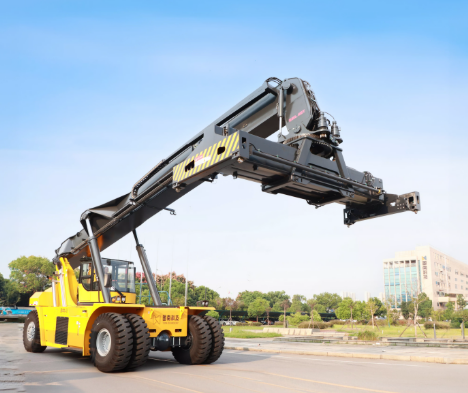
Evaluating Reach Stacker Configurations for Specific Yard Operations
High-volume and fully loaded terminals require robust machinery. A 45 ton container reach stacker provides the specifications necessary for handling heavy, laden containers continuously. These units feature reinforced spreader attachments, massive counterweights, and advanced stability mechanisms. They are engineered to maintain maximum load capacity even when extending the boom into the second row, ensuring high-density ports maintain fast cycle times safely. The structural integrity of the chassis and the lifting cylinders must withstand the immense torsional forces generated when swinging a fully loaded 40-foot box.
Intermodal transfers demand a different structural approach. A heavy duty reach stacker for ports and railways focuses on long wheelbase stability and deep-reach capabilities across multiple rail tracks. Operators must frequently lift containers from double-stack rail cars or reach across buffer lanes. These specialized units utilize heavy-duty chassis designs and specialized attachments, such as piggyback legs, to handle both standard ISO containers and reinforced intermodal trailers without risking tip-overs. The extended wheelbase provides the necessary counter-leverage to safely pick a 30-ton load from the second rail track.
Conversely, empty container depots operate on entirely different metrics. Deploying heavy machinery for empty boxes wastes fuel and slows down operations. A lightweight reach stacker for container handling is designed specifically for these environments. These agile units offer much faster lift and lower speeds, tighter turning radii, and significantly lower fuel consumption. They are built for high-cycle, low-weight operations where speed and maneuverability dictate profitability. Handling empties requires rapid stacking and unstacking to keep up with the flow of drayage trucks returning boxes to the depot.
Matching the machine to the application prevents operational drag. Using an oversized machine for empty handling burns unnecessary diesel and accelerates tire wear due to the heavier axle loads. Using an undersized machine for laden operations risks structural failure and severe safety incidents. Terminal operators must audit their specific TEU weight distributions and yard layouts before selecting a configuration.
Features-to-Outcomes: Assessing Technical Specifications
Understanding how technical specifications translate to operational outcomes is vital for reducing yard congestion. Hydraulic pump capacities and boom extension speeds directly correlate to overall cycle time reductions. Modern units utilize automated lift-and-lower optimization alongside hydraulic energy regeneration systems. These features minimize fuel consumption during high-tier vertical stacking while ensuring the spreader reaches the target container faster. Variable displacement piston pumps ensure that hydraulic flow is only delivered when demanded by the operator's joystick inputs, reducing parasitic engine load.
Turning radius and aisle width requirements dictate yard layout efficiency. The minimum intersecting aisle width required depends heavily on the equipment's wheelbase. Operators must balance the trade-off between equipment size, lifting capacity, and the amount of yard space dedicated to driving lanes versus actual container storage. A shorter wheelbase allows for tighter turns but may sacrifice second-row lifting capacity. A longer wheelbase provides maximum stability for deep reaches but requires wider driving lanes to navigate 90-degree corners with a 40-foot container attached.
Technical Feature | Operational Outcome | Congestion Impact |
|---|---|---|
Telescopic Boom Extension | Enables 2nd and 3rd row container access | Reduces extra moves and allows block stacking |
Hydraulic Energy Regeneration | Captures energy during load lowering | Lowers fuel burn per cycle during high-speed operations |
Short Wheelbase Design | Decreases minimum intersecting aisle width | Frees up ground space for additional TEU storage |
Active Cabin Translation | Slides cabin forward for better visibility | Speeds up spreader alignment and reduces accident risk |
Load Sensing Hydraulics | Adjusts pump flow based on load weight | Improves lifting speeds for lighter containers |
Integration with Yard Management Systems (YMS) and automated gate systems is no longer optional. Modern telematics provide load weighing for VGM (Verified Gross Mass) compliance, real-time GPS container tracking, and remote diagnostics. Route optimization software prevents equipment clustering in specific aisles, ensuring container retrieval times consistently match truck appointment windows. When the YMS communicates directly with the machine's onboard computer, the operator receives exact coordinates for the next pick, eliminating time wasted searching for misplaced boxes.
Implementation Realities and Operational Trade-Offs
Deploying heavy mobile equipment introduces critical infrastructure risks. Ground bearing pressure is a primary concern. The high axle loads of a fully laden machine—often exceeding 100 tons on the front drive axle during a heavy lift—require specific pavement engineering. Terminals must utilize reinforced concrete or heavy-duty asphalt to prevent yard degradation, rutting, and surface failures. Ignoring pavement requirements leads to severe operational delays and costly infrastructure repairs. A yard with failing asphalt will force operators to drive slower, immediately increasing cycle times and causing congestion to build up at the gates.
Operator training and safety protocols must adapt to the equipment. Operating a telescopic boom involves a steeper learning curve compared to a standard mast forklift. Spatial awareness is critical when handling suspended loads at five-high tiers. Terminals must invest in visibility aids, including multi-angle cameras, proximity sensors, and active cabin translation, to prevent accidents in densely packed, congested yards. The operator must understand how to read the load moment indicator to avoid pushing the machine beyond its stability limits when reaching into the second row.
Preventative maintenance schedules dictate fleet availability. Heavy hydraulic systems and drivetrains experience significant wear during continuous operations. Terminals require a strict framework for calculating fleet redundancy. Having backup equipment ensures that yard congestion does not spike uncontrollably during scheduled maintenance intervals or unexpected breakdowns. Routine tasks like greasing the boom wear pads, inspecting spreader twist-locks, and calibrating the steering cylinders must be factored into the weekly operational schedule.
Tire management is another major operational reality. The massive pneumatic or solid tires on these machines bear the brunt of the load and the abrasive yard surface. Terminals must implement strict tire pressure monitoring and rotation schedules to prevent blowouts and uneven wear. A machine down for a tire change in the middle of a busy aisle instantly creates a localized bottleneck that disrupts the entire yard's workflow.
Conclusion
Mobile container handling equipment serves as a strategic asset for redefining yard geometry. By boosting cycle times and eliminating the root causes of congestion—namely poor storage density and excessive extra moves—terminals can significantly increase their TEU throughput without expanding their physical footprint. Matching the specific machine configuration to the terminal's operational profile ensures maximum efficiency and prevents infrastructure damage.
Conduct a comprehensive yard pavement assessment to ensure ground bearing capacities meet heavy axle load requirements before deployment.
Calculate your current cost-per-extra-move to establish a baseline for ROI when upgrading equipment.
Integrate equipment telematics directly with your Yard Management System to optimize routing and prevent clustering.
Request detailed hydraulic efficiency and fuel consumption data from OEMs during the procurement process.
Implement a strict preventative maintenance and tire management schedule to guarantee fleet availability during peak vessel discharge windows.
FAQ
Q: What is the maximum stacking height of a reach stacker?
A: Standard models can stack laden containers up to 5-high in the first row. Specialized lightweight models can stack empty containers up to 6-high. Maximum height depends strictly on the specific model, wheelbase stability, and the weight of the containers being handled.
Q: How does a reach stacker compare to a heavy-duty forklift?
A: A telescopic boom provides multi-row reach and vertical flexibility, allowing operators to access second and third-row containers. A standard heavy-duty forklift is limited by its straight mast, restricting it to single-row access and requiring wider driving aisles.
Q: What aisle width is required for a 45 ton container reach stacker?
A: Operational dimensions typically require intersecting aisles of 15 to 16 meters for the safe rotation and handling of a 40-foot container. The exact width depends on the machine's wheelbase and turning radius specifications.
Q: Can a reach stacker handle both empty and full containers?
A: Yes, heavy-duty models can handle empty containers. However, using a specialized lightweight model for dedicated empty depots is far more fuel-efficient, agile, and cost-effective than using a 45-ton machine for low-weight tasks.
Q: What is the typical fuel consumption of a heavy duty reach stacker for ports and railways?
A: Fuel consumption typically ranges between 12 to 18 liters per hour during standard operations. This figure is heavily influenced by the use of eco-modes, hydraulic energy regeneration systems, and the efficiency of modern drivetrains.
Q: How do reach stackers reduce extra moves in a container yard?
A: The telescopic boom allows operators to reach over the first row of containers to access the second or third row. This bypasses the need to shuffle or "dig" through front-row containers to retrieve a specific target box.
Related Blogs
-
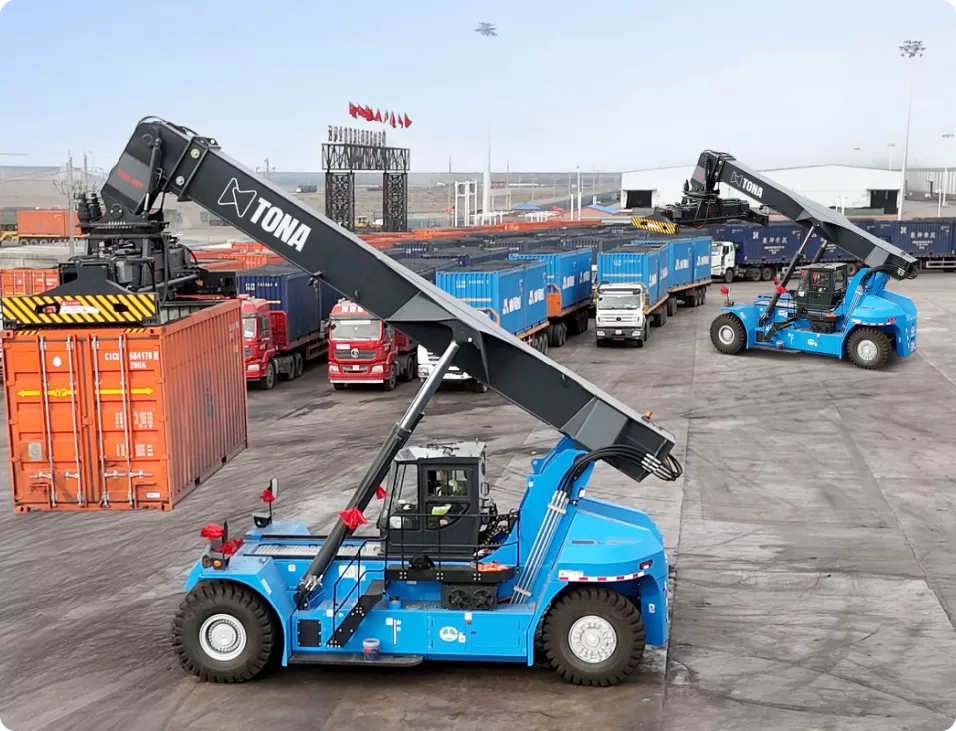 Choosing the wrong container handling equipment can cost more than the machine itself. If the capacity is too low, the equipment may not handle loaded containers safely.blogs
 -
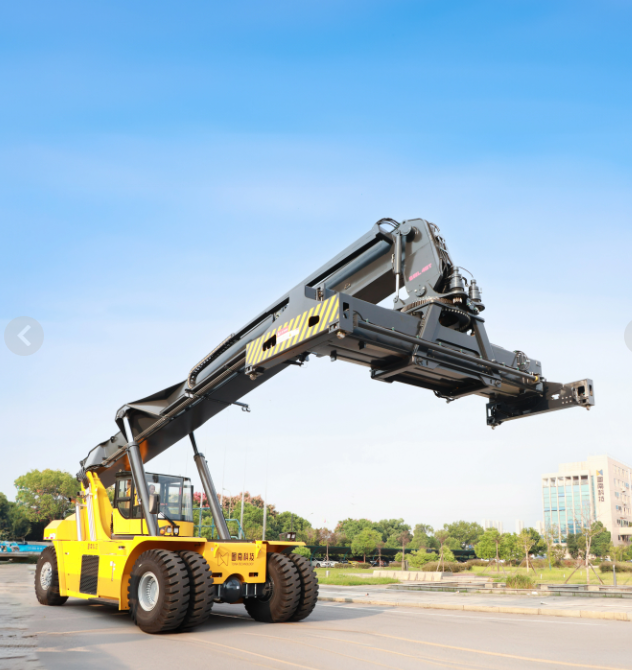 Buying a reach stacker is not like buying ordinary warehouse equipment. It is a major investment that directly affects container handling efficiency, operator safety, maintenance cost, and long-term terminal performance.blogs
 -
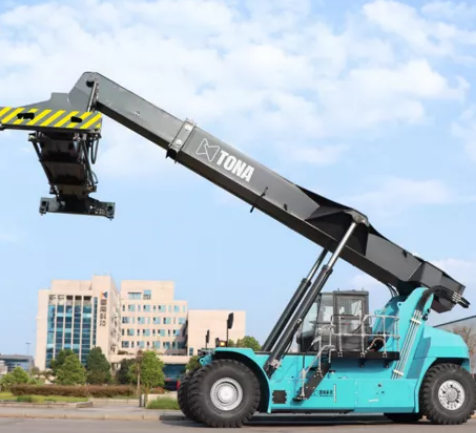 A reach stacker forklift works under heavy loads every day. It lifts containers, moves through busy yards, handles repeated braking and turning, and often operates for long shifts in ports, terminals, depots, and logistics centers.blogs
 -
 Port operations depend on speed, space, safety, and equipment flexibility. When containers need to be moved between storage yards, trucks, rail wagons, inspection areas, and loading zones, the right handling machine can directly affect terminal efficiency.blogs