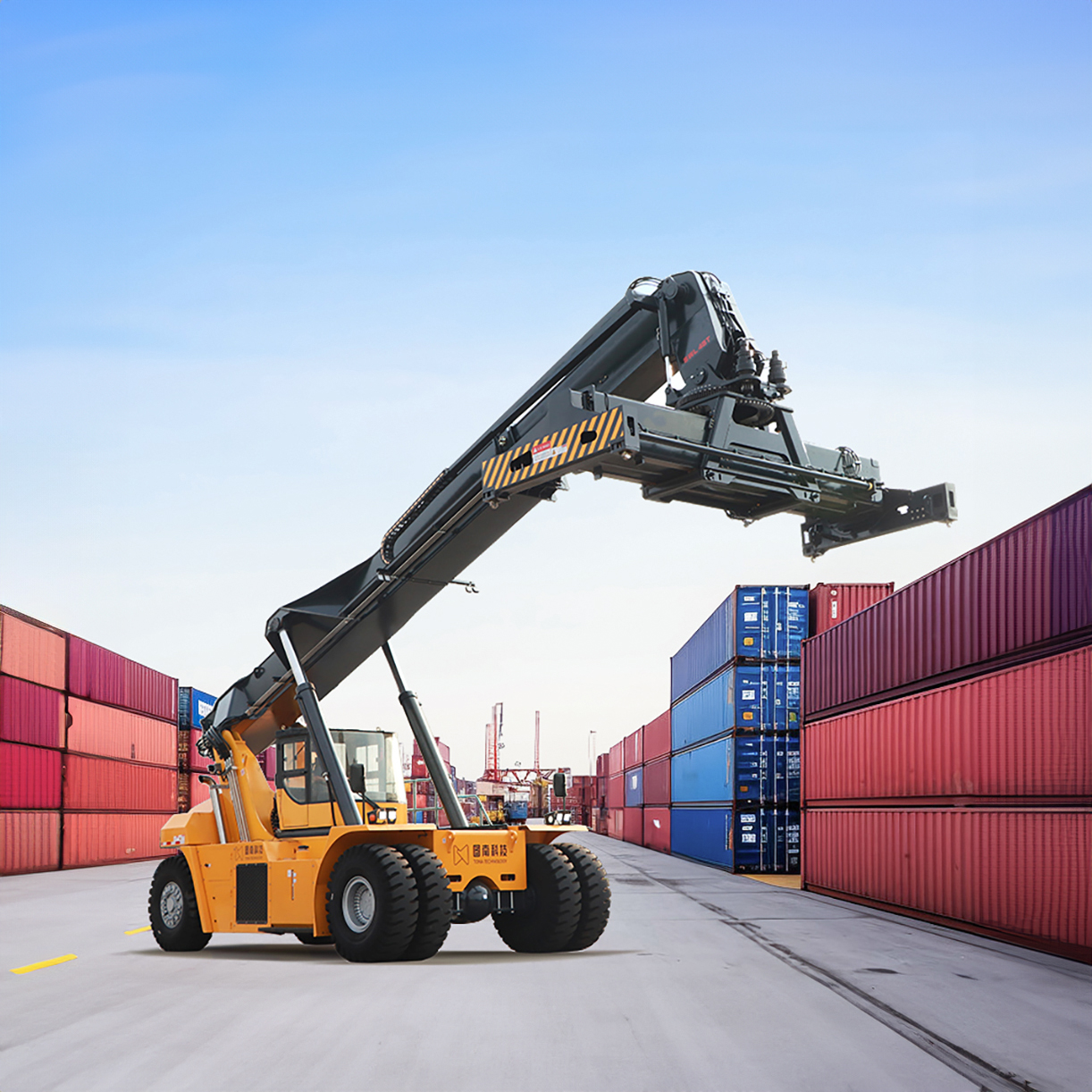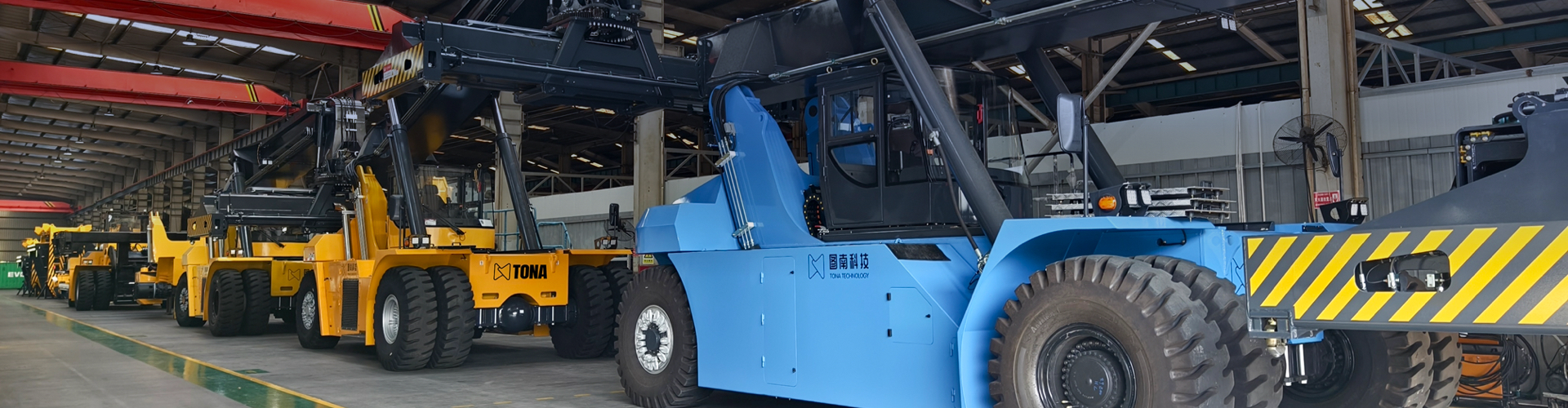

Operating a forklift reach stacker efficiently is not only about moving containers faster. In real port, depot, and container yard operations, the fastest operator is not always the most productive operator. The most efficient operator is the one who moves containers safely, accurately, smoothly, and with the fewest unnecessary actions.
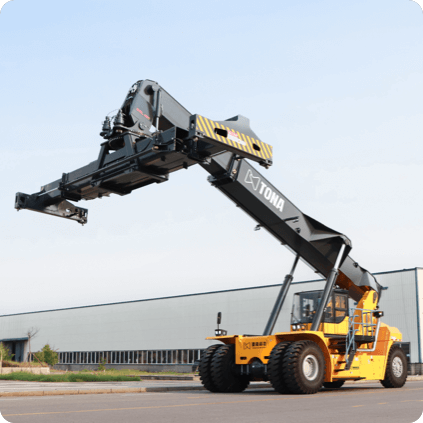
Many delays in container handling are not caused by the lifting capacity of the reach stacker itself. They are often caused by poor route planning, rough driving, weak communication, incorrect container positioning, lack of inspection, or untrained operation. These problems increase fuel consumption, tire wear, brake wear, waiting time, and safety risks.
In this post, we’ll discuss how to operate a forklift reach stacker efficiently. You’ll learn how to prepare before operation, how to plan routes, how to lift and stack containers smoothly, how to reduce idle time, how to improve safety, and how to build better operating habits for long-term productivity.
Why Efficient Reach Stacker Operation Matters
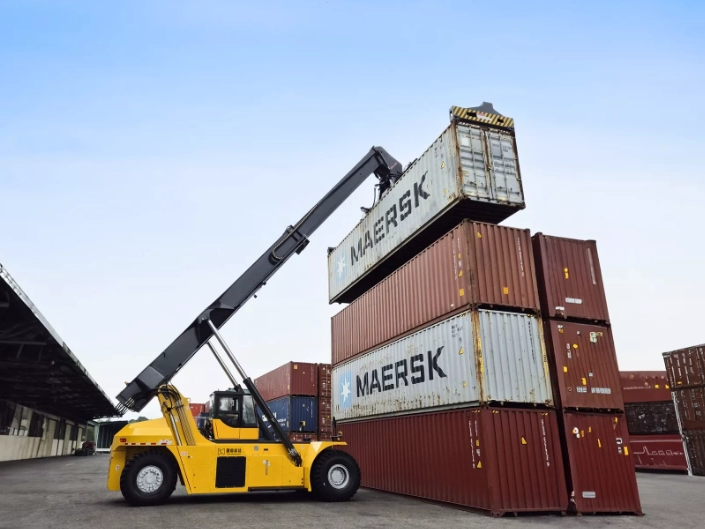
A reach stacker is widely used in ports, railway terminals, container depots, logistics yards, and industrial sites. It is designed to lift, move, stack, and load containers. Because it often works with heavy containers and long operating hours, efficient operation has a direct impact on daily productivity.
Efficient reach stacker operation can reduce container handling cycle time. When the operator knows the route, aligns correctly, lifts smoothly, and places the container accurately the first time, each movement becomes faster and more predictable. Over a full shift, small time savings can become a major productivity improvement.
Efficient operation also reduces operating cost. Rough acceleration, unnecessary reversing, sharp turning, long idling, and poor stacking habits can increase fuel consumption and cause faster wear on tires, brakes, hydraulics, and structural parts. A well-operated reach stacker can help lower maintenance cost and extend equipment service life.
Most importantly, efficiency must always include safety. A reach stacker carries heavy containers at height and distance. True efficiency means safe control, stable movement, correct load handling, and fewer mistakes. Moving too fast without control is not efficient; it is risky.
Understand the Task Before Starting the Reach Stacker
Efficient operation starts before the reach stacker moves. The operator should clearly understand the task, the container, the destination, and the working environment. Poor preparation often leads to repeated movement, wasted travel distance, and unnecessary communication during operation.
Before starting work, the operator should confirm the container size, such as 20ft, 40ft, or 45ft. The operator should also confirm whether the container is loaded or empty, because weight affects lifting behavior, braking distance, boom control, and stacking safety.
The next step is to understand the handling position. Will the reach stacker pick the container from the first row, second row, or third row? Will it load a truck, unload a trailer, stack in the yard, or move a container to an inspection area? Each task requires a different operating approach.
The operator should also check the yard condition. Uneven ground, wet surfaces, narrow lanes, poor lighting, parked trucks, pedestrians, or blocked routes can all reduce efficiency and increase risk. A skilled reach stacker operator studies these conditions before moving.
Complete a Pre-Operation Inspection
A forklift reach stacker cannot operate efficiently if it is not in good condition. Daily inspection helps prevent unexpected breakdowns during container handling. If the machine fails during a busy shift, the delay may affect trucks, cranes, yard planning, and delivery schedules.
Before operation, the operator should check engine oil, coolant, fuel or battery status, hydraulic oil, tires, brakes, steering, boom, spreader, twist locks, lights, horn, camera, reverse alarm, and display panel. Any visible hydraulic leak, loose part, abnormal noise, warning light, or damaged tire should be reported before work begins.
The spreader deserves special attention. A reach stacker relies on the spreader to lock onto the container safely. The operator should confirm that twist locks, locking indicators, sensors, and spreader movement are working properly. If the spreader cannot lock or unlock correctly, the machine should not lift containers.
A proper pre-operation inspection may take a few minutes, but it saves much more time than dealing with a failure in the middle of a handling task.
Inspection Area | What to Check | Efficiency Benefit |
Engine and fluids | Oil, coolant, fuel, visible leaks | Prevents unexpected shutdown |
Hydraulic system | Oil level, hoses, cylinders, fittings | Ensures smooth lifting and boom movement |
Tires | Pressure, cracks, cuts, uneven wear | Improves stability and reduces tire damage |
Brakes and steering | Brake response, steering control, abnormal noise | Supports safe and accurate movement |
Boom and spreader | Boom condition, twist locks, sensors, locking indicators | Prevents lifting errors and delays |
Safety devices | Lights, horn, alarm, camera, mirrors, display | Improves visibility and communication |
Plan the Route Before Moving Containers
Route planning is one of the most practical ways to improve reach stacker efficiency. A skilled operator does not simply drive after picking up a container. The operator chooses the shortest safe route, avoids unnecessary reversing, and keeps movement smooth.
Before moving, the operator should know the container’s destination. If the container must go to a truck lane, rail wagon, yard stack, inspection zone, or temporary storage area, the route should be planned in advance. This reduces hesitation and unnecessary stopping.
The operator should avoid congested lanes when possible. In busy yards, a reach stacker may share space with trucks, trailers, workers, and other machines. Choosing a safer route with fewer conflicts can be more efficient than taking the shortest route through congestion.
Reducing empty travel is also important. Empty travel means the reach stacker is moving without carrying a container or without completing useful work. Yard supervisors can help by arranging tasks in batches, grouping nearby moves, and reducing long-distance repositioning.
Good route planning improves cycle time, reduces fuel use, lowers tire wear, and makes container handling more predictable.
Operate the Boom and Spreader Smoothly
Efficient reach stacker operation depends heavily on boom and spreader control. A rough operator may lift quickly but waste time correcting alignment. A skilled operator approaches accurately, lowers the spreader smoothly, locks the container correctly, and lifts with stable control.
The first step is alignment. The reach stacker should approach the container in a controlled position. Poor alignment causes repeated adjustment and increases handling time. The operator should use mirrors, cameras, visual reference points, and clear judgment to position the machine correctly before lowering the spreader.
After the spreader contacts the container, the operator must confirm that the twist locks are fully engaged. Never lift before confirming the lock. Lifting without proper locking is dangerous and may damage the container or equipment.
During lifting, the boom should move smoothly. Sudden lifting, sudden lowering, or unnecessary boom extension increases stress on the hydraulic system and structural parts. Smooth movement improves control and reduces wear.
When traveling with a container, the load should be kept as low as safely possible. This improves stability and visibility. The operator should avoid traveling with the boom raised unnecessarily high.
Load Trucks and Trailers Efficiently
Truck loading is a common task for a forklift reach stacker. Efficiency depends on correct coordination between the reach stacker operator, truck driver, and yard staff.
Before loading, the truck or trailer should be positioned correctly. If the truck is not aligned, the operator may need repeated adjustments, wasting time and increasing risk. Clear communication helps the truck driver stop in the correct position before the reach stacker begins lifting.
When placing the container onto the trailer, the operator should lower it steadily and accurately. Fast but rough placement may damage the trailer, container, or locking points. Accurate first-time placement is more efficient than repeated correction.
After the container is placed, the operator should confirm safe positioning before releasing the twist locks. Once the container is released, the reach stacker should move away smoothly and prepare for the next task.
For high-volume yards, loading efficiency can be improved by organizing truck waiting areas, keeping lanes clear, and reducing unnecessary crossing between trucks and reach stacker routes.
Stack Containers Safely and Efficiently
Container stacking efficiency depends on both operator skill and yard planning. A reach stacker can stack containers effectively, but poor stacking decisions can create future delays.
Containers should be stacked according to yard rules, weight, destination, pickup priority, and container type. Random stacking may seem faster at the moment, but it often creates extra re-handling later. Every unnecessary re-handling movement reduces total yard efficiency.
Heavier containers should normally be placed in suitable lower positions according to yard rules and safety requirements. Empty containers and loaded containers should be organized properly. If the operator stacks without considering future movement, another reach stacker may need to move several containers just to access one container later.
When stacking, the operator should approach slowly, align carefully, and lower the container steadily. The ground must be stable and level. The operator should avoid sudden boom movement and should make sure the container is placed securely before unlocking.
Efficient stacking is not only about speed. It is about placing containers correctly so that future handling becomes easier.
Control Speed, Braking, and Turning
A common misunderstanding is that efficient reach stacker operation means driving fast. In fact, excessive speed usually reduces efficiency because it increases braking distance, tire wear, fuel consumption, and accident risk.
The operator should drive at a stable and controlled speed. Smooth acceleration reduces fuel use and protects the drivetrain. Smooth braking reduces brake wear and keeps the container stable. Sudden braking should only be used when necessary for safety.
Turning should be controlled carefully, especially when the reach stacker is carrying a loaded container. Sharp turns can reduce stability and increase tire stress. The operator should slow down before turning and avoid turning with the load raised high.
At intersections, near trucks, close to workers, or beside stacked containers, the operator should reduce speed and maintain awareness. A stable operator may appear slower in a single moment, but over a full shift, safe and smooth operation is usually more productive.
Reduce Idle Time and Fuel Consumption
Fuel cost is an important part of reach stacker operation. Efficient operators help reduce fuel consumption by avoiding long idling, unnecessary travel, rough acceleration, and poor task planning.
If the machine will wait for a long time and it is safe to do so according to site rules, the operator should avoid unnecessary idling. Long idling burns fuel, increases engine hours, and adds wear without productive movement.
Task batching is another useful method. If several containers need to be moved in the same area, the operator and supervisor should arrange the sequence to reduce repeated travel. A reach stacker that spends less time traveling empty can complete more useful moves.
Correct tire pressure and regular maintenance also affect fuel efficiency. Underinflated or damaged tires increase rolling resistance. Poor engine or hydraulic condition can also increase fuel use. Efficient operation is connected with good maintenance.
Use Communication to Avoid Delays
Communication is a simple but powerful efficiency tool. A reach stacker operator often works with truck drivers, signal staff, supervisors, crane teams, rail staff, and maintenance teams. Poor communication causes waiting, repeated movement, and unsafe situations.
Before lifting or loading, the operator should confirm signals and instructions. If visibility is limited, ground staff or cameras may be needed. When loading trucks, the driver should know where to stop and when to remain clear.
Yard supervisors should provide clear task orders. The operator should know which container to move, where to move it, and which route to use. Changing instructions during operation can cause confusion and wasted movement.
Good communication also helps identify problems early. If the operator notices a damaged container, blocked lane, weak brake response, or spreader issue, reporting it quickly prevents larger delays.
Train Operators for Efficient Reach Stacker Operation
Operator training is essential for efficient forklift reach stacker operation. Even a high-quality machine cannot perform well if the operator does not understand load control, route planning, safety rules, and smooth handling techniques.
Training should cover load charts, boom control, spreader operation, twist lock confirmation, safe travel speed, braking, turning, stacking methods, emergency response, daily inspection, and communication procedures. Operators should also understand how container weight and boom extension affect stability.
Experienced operators often develop better judgment. They know when to slow down, how to align quickly, how to avoid unnecessary movement, and how to detect abnormal machine behavior. Training and regular evaluation help turn these habits into standard operating practice.
Efficient training should not only focus on safety rules. It should also teach operators how to reduce cycle time without increasing risk. The goal is safe productivity.
Common Mistakes That Reduce Reach Stacker Efficiency
Many efficiency problems come from repeated operating mistakes. These mistakes may seem small, but they can create major losses over time.
Common Mistake | Negative Result | Better Practice |
Starting without inspection | Higher risk of breakdown during work | Complete daily checks before operation |
Poor route planning | Longer cycle time and more fuel use | Plan the safest short route first |
Rough acceleration and braking | Higher fuel use and component wear | Drive smoothly and steadily |
Poor container alignment | Repeated adjustment and slow loading | Align before lowering the spreader |
Random stacking | More future re-handling | Follow yard stacking plan |
Ignoring warning lights | Larger equipment damage | Stop and report faults early |
Excessive idling | Higher fuel cost and engine hours | Shut down during long safe waiting periods |
Weak communication | Delays and safety risks | Confirm instructions and signals clearly |
Avoiding these mistakes can significantly improve the performance of a reach stacker fleet.
How Yard Management Supports Efficient Operation
A reach stacker operator can improve efficiency, but yard management also plays a major role. Even the best operator cannot work efficiently in a poorly organized yard.
Yard managers should keep travel lanes clear, arrange truck waiting areas properly, maintain ground conditions, separate pedestrians from machine routes, and organize container stacks logically. Good yard planning reduces unnecessary travel and re-handling.
Dispatching also matters. If the reach stacker receives clear and well-sequenced tasks, the operator can complete more productive moves. If tasks are given randomly, the machine may waste time traveling back and forth.
Modern yards may also use digital dispatching, telematics, fleet management systems, or equipment monitoring tools. These systems can help managers analyze idle time, fuel use, operating hours, and machine utilization. However, technology works best when basic operating discipline is already strong.
How the Right Reach Stacker Improves Efficiency
Efficient operation also depends on choosing the right reach stacker model. If the machine is too small, too large, poorly configured, or unsuitable for the yard layout, even skilled operators may struggle to work efficiently.
Important factors include lifting capacity, stacking height, boom reach, turning radius, spreader type, visibility, cabin comfort, safety systems, hydraulic response, power system, tire type, and maintenance access. The machine should match the container weight, working area, daily workload, and operator needs.
For example, a narrow yard may need a reach stacker with good maneuverability. A heavy-duty port may need higher lifting capacity and strong hydraulic performance. A yard focused on long shifts may need better cabin comfort and reliable cooling.
Hunan Tona Machinery Technology Co., Ltd. can provide suitable reach stacker solutions according to container handling requirements, yard layout, working conditions, and long-term operation needs.
Practical Checklist for Efficient Reach Stacker Operation
Before operation, check the machine condition, container details, route, weather, visibility, and task order. During picking, align accurately, lower the spreader smoothly, confirm twist lock engagement, and lift steadily. During travel, keep the load low, drive smoothly, avoid sharp turns, and follow the planned route. During loading or stacking, position accurately, lower gently, confirm placement, and avoid repeated adjustment. After operation, park safely, report faults, and record any abnormal condition.
This simple process helps the reach stacker operator work with better rhythm. Efficiency comes from repeating the correct steps consistently.
Conclusion
Operating a forklift reach stacker efficiently requires more than speed. It requires preparation, inspection, route planning, smooth boom control, accurate spreader operation, safe driving, clear communication, proper stacking, operator training, and good yard management.
A well-operated reach stacker can reduce cycle time, lower fuel consumption, reduce tire and brake wear, improve container handling accuracy, and support safer port or yard operations. In daily container handling, efficiency is created by many small correct actions repeated consistently.
For ports, container depots, railway terminals, and logistics yards, the best result comes from combining a suitable reach stacker, trained operators, regular maintenance, and organized yard planning. When these factors work together, the reach stacker becomes a reliable and efficient solution for modern container handling.
FAQs
1. How can operators improve reach stacker efficiency?
Operators can improve reach stacker efficiency by completing daily inspections, planning routes, reducing empty travel, aligning accurately with containers, operating the boom and spreader smoothly, driving steadily, and following proper stacking procedures.
2. What is the most important rule when operating a reach stacker?
The most important rule is to operate the reach stacker safely within its rated capacity. Efficient operation should never sacrifice load stability, braking distance, visibility, or proper container locking.
3. How can fuel consumption be reduced during reach stacker operation?
Fuel consumption can be reduced by avoiding long idling, planning routes carefully, reducing unnecessary travel, maintaining correct tire pressure, driving smoothly, and keeping the engine and hydraulic system in good condition.
4. Why is operator training important for reach stacker efficiency?
Operator training helps improve reach stacker efficiency by teaching safe load handling, smooth boom control, correct spreader operation, route planning, fuel-saving habits, daily inspection, and emergency response.
5. What should be checked before operating a reach stacker?
Before operating a reach stacker, the operator should check engine oil, coolant, hydraulic oil, tires, brakes, steering, boom, spreader, twist locks, lights, horn, alarm, cameras, display panel, and any visible leakage or damage.
Related Blogs
-
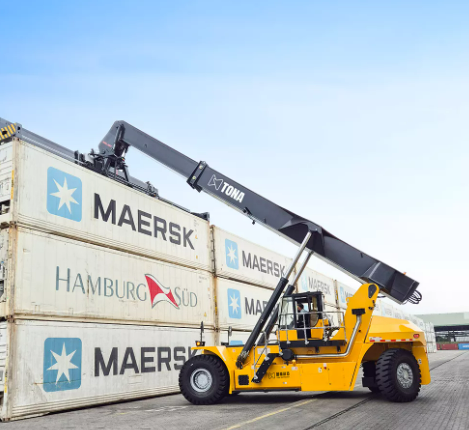 Containers weigh tens of tons. Ports must lift them safely.A forklift reach stacker handles these heavy loads. But how much can it really lift? Load capacity depends on reach and height. It also changes across container rows.In this article, you will learn typical capacity ranges and safe lifting limits.blogs
 -
 When you look for a forklift reach stacker that fits your logistics networks, you want the best mix of power, efficiency, and safety. Top models for 2025 include TONA-TEC RS Series, Kalmar Generation, Toyota Container Handler, Hyster RS46, Taylor Series, and XRS-9972.hot blog