
In the high-stakes world of logistics, port operations, and intermodal terminals, efficiency is the currency of success. The backbone of these operations is the equipment used to move, stack, and transport shipping containers. At the center of this ecosystem sits the container loading machine. Whether you are managing a bustling seaport, a rail freight depot, or a private container yard, selecting the right machinery is not just a purchasing decision—it is a strategic move that dictates your operational throughput, safety record, and bottom line.
With global trade volumes continuing to rise, the demand for reliable material handling equipment has never been higher. However, the market offers a confusing array of options, ranging from heavy-duty forklifts and reach stackers to gantry cranes and side loaders. Each type of container loading machine comes with its own set of advantages, limitations, and ideal use cases. Making the wrong choice can lead to bottlenecks, increased downtime, and inflated maintenance costs.
This comprehensive guide will walk you through everything you need to know to choose a suitable container loading machine. We will explore the different types of equipment available, the critical technical specifications you must evaluate, and why the reach stacker often emerges as the champion of versatility in modern container handling.
Understanding the Different Types of Container Loading Machines
Before diving into technical specifications, it is crucial to understand the landscape of available equipment. A container loading machine is a broad category, and the specific vehicle you choose depends heavily on your facility's layout and volume. Here, we break down the primary contenders.
The Reach Stacker as a Versatile Container Loading Machine
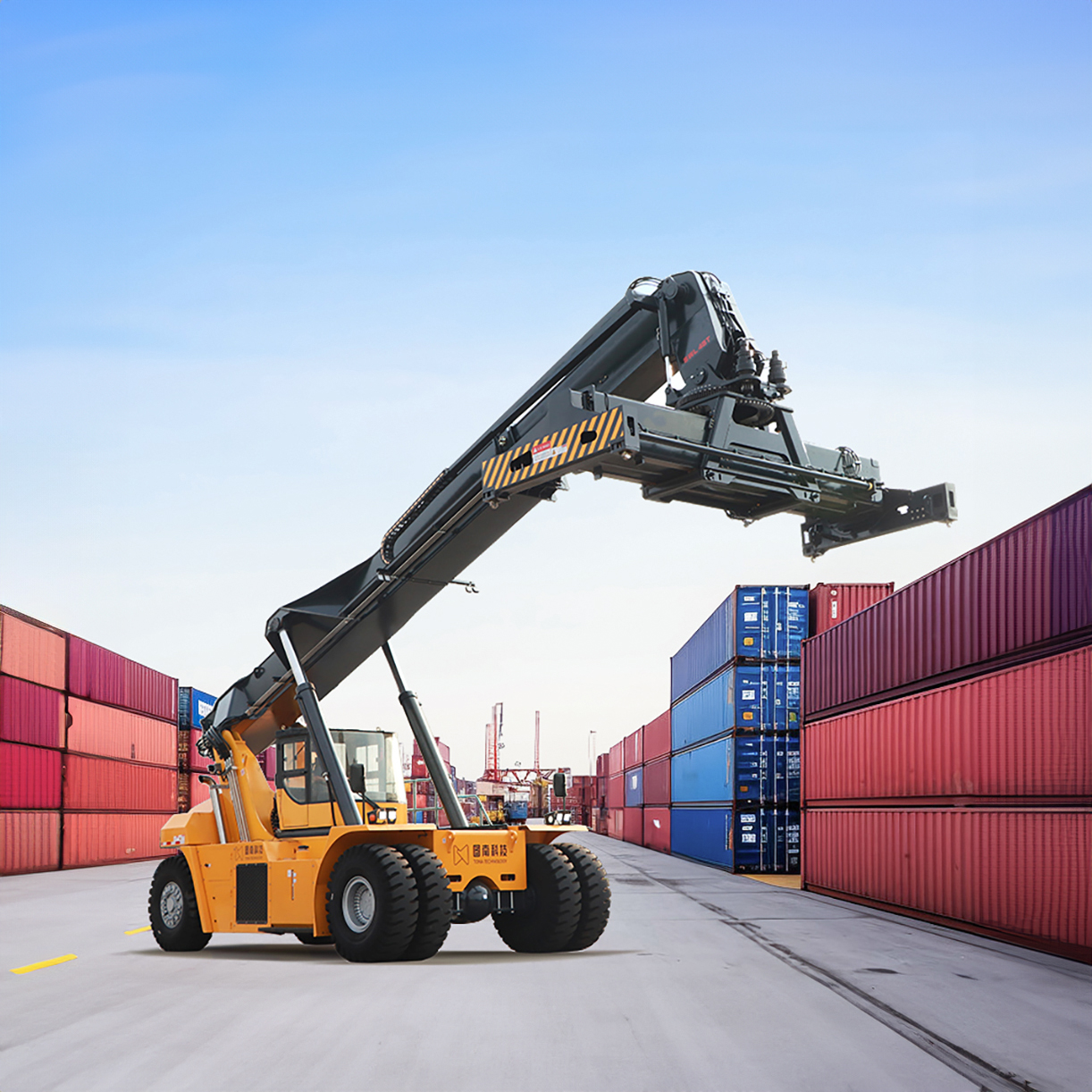
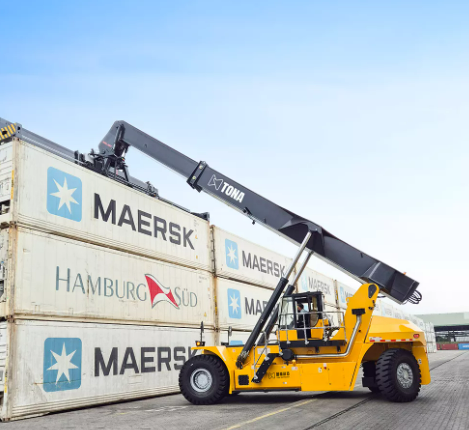
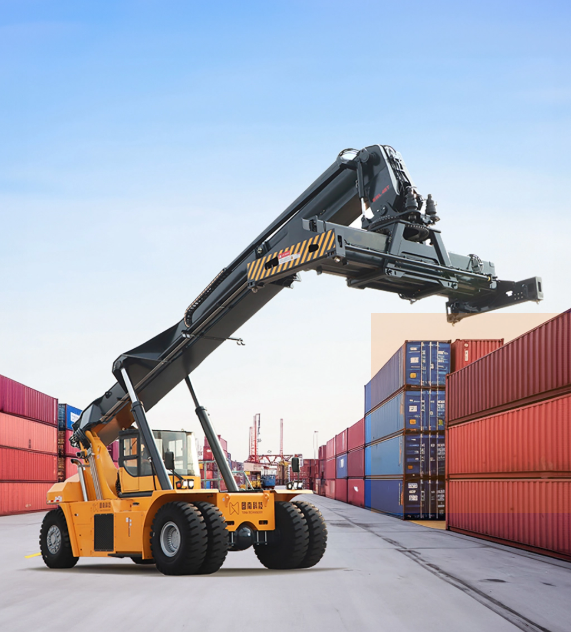
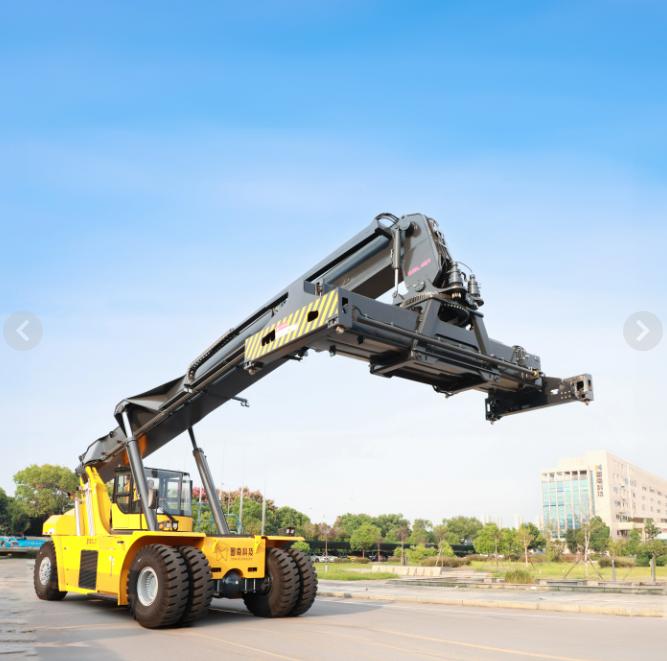
When industry experts discuss a flexible container loading machine, the reach stacker is often the first machine that comes to mind. Unlike fixed cranes, a reach stacker is a vehicle equipped with a telescoping boom and a spreader attachment. This design allows it to lift containers from the top and reach over rows of stacked containers.
The reach stacker is celebrated for its ability to stack containers up to five or six high in the first row and three or four high in the second row. This "reaching" capability is where it gets its name and is its primary advantage over standard forklifts. For terminals that handle a mix of laden (full) and empty containers and require high maneuverability, a reach stacker is often the most suitable container loading machine.
The Heavy-Duty Forklift vs. Dedicated Container Loading Machine
For decades, the heavy-duty forklift was the standard container loading machine. These are massive counterbalanced trucks equipped with forks or a side-lift spreader. While they are powerful, they have distinct limitations compared to modern alternatives. A forklift lifts vertically via a mast. This means it must be directly in front of the container to lift it.
While a forklift is a capable container loading machine for simple operations—such as moving containers from a trailer to the ground—it lacks the stacking density of a reach stacker. It cannot reach over a container to pick up one behind it (second-row access). However, for operations strictly handling empty containers or where vertical stacking density is not a priority, a forklift remains a cost-effective option.
Straddle Carriers and Gantry Cranes as a Container Loading Machine
On the larger end of the spectrum, we find straddle carriers and Rubber Tyred Gantry (RTG) cranes. A straddle carrier is a tall container loading machine that drives over the container to pick it up. They are incredibly fast for horizontal transport but have limited stacking height compared to cranes.
RTGs are massive structures that move on designated paths. While an RTG is technically a container loading machine, it is generally suited only for the largest sea terminals with massive throughput. For most medium-to-large inland ports or intermodal yards, the infrastructure costs of an RTG make it less suitable than a mobile solution like a reach stacker.
Key Factors to Consider When Selecting a Container Loading Machine
Once you understand the types of machines available, you must evaluate your specific operational needs against the machine's capabilities. Choosing a suitable container loading machine requires a deep dive into the following factors.
Assessing Load Capacity for Your Container Loading Machine
Capacity is the most critical specification. ISO shipping containers vary wildly in weight depending on their contents. A standard 20-foot container might weigh 2.3 tons when empty but up to 30 tons when fully laden. A suitable container loading machine must be rated to handle your maximum expected load, plus a safety margin.
When evaluating a container loading machine like a reach stacker, pay attention to the "load center" rating. A machine might be rated for 45 tons, but that capacity decreases as the boom extends. If you need to lift a heavy container from the second row of a stack, you need a machine that maintains high capacity at an extended load center. Under-specifying capacity is a common mistake that leads to equipment failure and safety hazards.
Evaluating Yard Space and Maneuverability of the Container Loading Machine
Your facility's layout dictates which container loading machine you can physically use. You must calculate the aisle width required for the machine to turn and stack. This is known as the "stacking aisle width" or "90-degree stacking aisle."
Reach stackers generally offer excellent maneuverability for their size. Because they have a telescopic boom, they can approach a stack at an angle if necessary, whereas a mast forklift must approach straight on. If your yard is tight on space, a reach stacker is often the most space-efficient container loading machine because it allows for higher density stacking (using the second and third rows) without requiring a wider aisle for a larger crane system.
Stacking Height Requirements for the Container Loading Machine
Real estate is expensive, so vertical storage is essential. How high do you need to stack? A standard forklift container loading machine might stack 3-high. A specialized empty container handler can stack up to 7 or 8 high. A reach stacker typically stacks 5 laden containers high.
If you choose a container loading machine with insufficient stacking height, you waste valuable yard space. Conversely, buying a machine capable of stacking 6-high when your local zoning or ground stability only allows 3-high is a waste of capital. Match the machine’s mast or boom height capabilities to your yard’s vertical storage plan.
Operational Efficiency and Speed of the Container Loading Machine
Time is money in logistics. The cycle time—the time it takes to pick up, move, and place a container—determines your terminal's throughput. A suitable container loading machine must be fast enough to keep up with incoming trucks or trains.
Cycle Times and Throughput of the Container Loading Machine
When analyzing a container loading machine, look at lifting speeds (laden and unladen) and lowering speeds. High-performance hydraulic systems allow for faster boom extension and retraction. For example, a premium reach stacker will feature load-sensing hydraulics that deliver power exactly where it is needed, speeding up the operation without wasting fuel.
Additionally, consider the driving speed. If your yard is large, the container loading machine will spend a significant amount of time traveling between the quayside/rail side and the stack. A machine with a robust powertrain and stable chassis allows operators to drive confidently at higher speeds, significantly improving overall throughput.
Fuel Efficiency and Power Source of the Container Loading Machine
Operating costs over the lifespan of a container loading machine often exceed the initial purchase price. Fuel consumption is a major component of this. Modern diesel engines in these machines should be compliant with the latest emission standards (such as Stage V or Tier 4 Final), which not only helps the environment but often results in better fuel economy.
Electric container loading machine options are also entering the market. While the upfront cost is higher, the reduction in fuel and maintenance costs can be substantial. However, for most heavy-duty applications requiring 24/7 operation, diesel-powered reach stackers remain the industry standard due to the ease of refueling compared to battery charging downtimes.
Safety Features and Ergonomics in a Modern Container Loading Machine
Handling 30-ton boxes is inherently dangerous. The safety features of your chosen container loading machine are non-negotiable. Furthermore, operator comfort plays a direct role in safety; a fatigued operator is a dangerous operator.
Visibility and Operator Comfort in the Container Loading Machine
Visibility is the number one challenge for operators. A suitable container loading machine should offer a cabin with a panoramic view. In a reach stacker, the cabin is often movable—it can slide forward or backward on the chassis to give the operator the best view of the twist-locks engaging with the container corners.
Look for a container loading machine equipped with camera systems (rear-view, boom-tip, and blind-spot cameras). Ergonomic seats, climate control, and intuitive joystick controls reduce physical strain on the driver, ensuring they remain alert throughout their shift.
Stability Systems in the Container Loading Machine
Tip-overs are the nightmare scenario in container handling. Advanced container loading machine models come equipped with electronic overload protection systems. These systems monitor the load weight, boom angle, and extension length in real-time.
If an operator attempts a maneuver that would destabilize the container loading machine—such as extending a heavy load too far out—the system will restrict the movement and warn the operator. Choosing a machine with robust, intelligent stability control is essential for preventing catastrophic accidents.
Maintenance and Total Cost of Ownership for a Container Loading Machine
A machine that is constantly breaking down is a liability. When selecting a container loading machine, you must look beyond the brochure and investigate the reliability and serviceability of the equipment.
Spare Parts Availability for Your Container Loading Machine
Even the best container loading machine will need parts eventually. Hydraulic hoses, filters, tires, and electronic sensors are wear items. Before purchasing, verify the availability of spare parts in your region. Does the manufacturer have a local distributor? Is there a certified service team nearby?
Choose a container loading machine brand that uses standardized, high-quality components (like Volvo or Cummins engines, Dana transmissions, and Kessler axles). These components have global supply chains, ensuring you aren't left waiting weeks for a critical part while your operations grind to a halt.
Ease of Service for the Container Loading Machine
Mechanics appreciate a container loading machine designed with serviceability in mind. Look for features like centralized lubrication systems, easily accessible engine bays, and diagnostic ports. A machine that is difficult to service will result in higher labor costs and longer downtime during scheduled maintenance.
Why the Reach Stacker is Often the Best Container Loading Machine Choice
After weighing all the factors—capacity, flexibility, space, and cost—the reach stacker frequently emerges as the superior container loading machine for a wide variety of applications. Unlike gantry cranes, it requires no special infrastructure. Unlike mast forklifts, it offers container selectivity and density. It is the "Swiss Army Knife" of the terminal.
The reach stacker's ability to rotate the spreader allows it to handle containers that are slightly misaligned, or to carry containers lengthwise through narrow gates. This versatility makes the reach stacker the ideal container loading machine for ports that need to adapt to changing volumes and layout constraints.
Conclusion and Product Recommendations
Choosing a suitable container loading machine is a complex process that requires balancing technical specifications with operational realities. You must consider the weight of your containers, the dimensions of your yard, the skill of your operators, and your long-term budget. While there are many options available, for most dynamic environments, the reach stacker offers the best balance of power, density, and flexibility.
If you are looking for a solution that maximizes throughput while ensuring safety and reliability, we highly recommend considering a high-quality reach stacker. Specifically, our range of container handling equipment is designed to meet the rigorous demands of modern logistics.
Advantages of Our Reach Stacker Container Loading Machine:
Superior Lifting Capacity: Our reach stackers maintain high lifting capacity even at extended load centers, allowing for safe second-row stacking of heavy containers.
Advanced Hydraulic Efficiency: Equipped with load-sensing hydraulics, our container loading machine reduces fuel consumption by delivering power only when needed, lowering your total cost of ownership.
Intelligent Safety Systems: Featuring real-time dynamic stability control and a movable cabin with 360-degree visibility, we prioritize the safety of your cargo and crew.
Global Component Reliability: Built with world-class engines and transmissions, our machines ensure that parts and service are never out of reach, guaranteeing maximum uptime for your business.
Operator-Centric Design: An ergonomic cabin environment reduces fatigue, ensuring your operators can perform at their best throughout the entire shift.
Investing in the right container loading machine is investing in the future of your business. Choose a reach stacker that delivers performance, reliability, and value.
Related Blogs
-
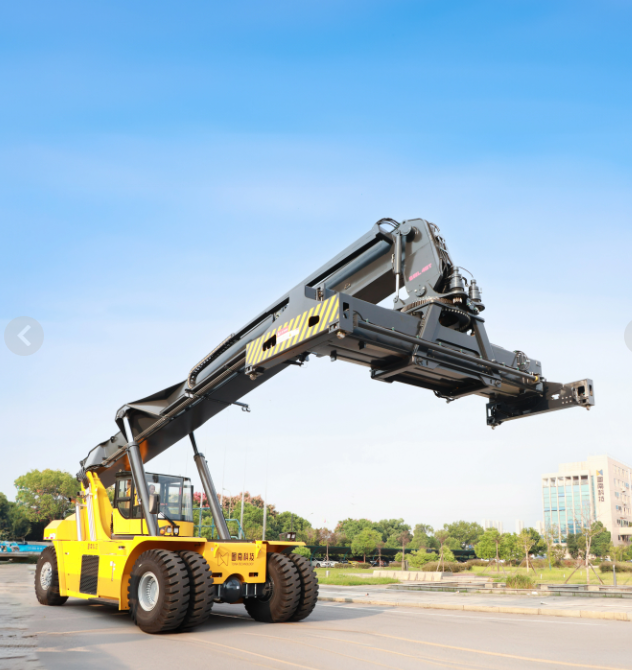 This guide walks through a practical, port-ready workflow—before arrival, on the quay, in the yard, and at the gate—so you can reduce delays, improve handling quality, and choose the right equipment (including the reach stacker) for each step.hot blog
 -
 This guide breaks down the most important factors that affect container unloading service quality, including labor readiness, equipment fit, process discipline, technology, and the role of a reach stacker in yard efficiency. Use it as a practical checklist when comparing providers or improving your internal unloading process.hot blog
 -
 How to Book a Container Unloading Service QuicklyWhen you need a container unloading service fast, “quick booking” is only half the job. The real goal is to secure the right crew, the right time window, and the right site setup so unloading starts on schedule and finishes without delays.hot blog
 -
 If you’re searching for a container unloading service, you’re probably not just paying for “extra hands.” A truly professional team brings a repeatable process that protects your freight, keeps the dock moving, and leaves you with clear receiving records you can trust.hot blog