
Traditional bulk cargo handling forces port operators to choose between throughput speed and environmental compliance. This compromise often results in material loss, severe dust emissions, and operational bottlenecks. Port managers need a method to scale bulk discharge to industrial requirements, such as 1,200 tonnes per hour. At the same time, you must mitigate the risks of open-air dumping, equipment fatigue, and labor-intensive cleanup operations on the dock.
Transitioning from traditional grabs and conveyors to sealed containerized transport solves this problem. Integrating a Container Rotating Spreader shifts bulk handling from a manual, open-air process to a controlled, semi-automated system. The spreader lifts sealed open-top containers, removes the lid, and rotates the container 360 degrees to empty materials directly into a hopper. This guide evaluates the mechanics, operational trade-offs, and infrastructure requirements necessary to determine if rotational discharge fits your terminal's technical capabilities.
Throughput vs. Control: High-tier systems can achieve 20–30 container cycles per hour, but actual yield depends heavily on material flowability and hopper alignment.
Infrastructure Compatibility: Selection hinges on matching the spreader to existing prime movers, dictating the choice between ship-to-shore (STS) crane integration or mobile reach stacker deployment.
Dust and Spillage Mitigation: Semi-automatic lid removal and 360-degree controlled rotation directly into hoppers drastically reduce fugitive dust, aiding in strict environmental compliance.
The Mechanics of Controlled Bulk Discharge
360-Degree Rotational Dynamics
Continuous 360-degree rotation prevents dense materials from bridging or flushing unexpectedly. The rotational drive maintains a steady discharge rate. Engineers design these spreaders to manage complex center-of-gravity shifts. When you invert a heavily loaded 20-foot open-top container, the weight distribution changes rapidly. The spreader compensates for this dynamic load to keep the crane stable during the entire lift and pour sequence.
Variable speed control is mandatory for handling diverse commodities. You must adjust rotation speeds based on bulk densities and moisture contents. Wet concentrates require slower rotation to prevent sudden blockages. Dry, free-flowing grains can handle faster discharge cycles. Operators use joystick controls to feather the rotation speed, matching the flow rate to the receiving hopper's capacity. This prevents overfilling and subsequent spillage on the deck.
Advanced spreaders offer high positioning tolerance. They allow controlled unloading even when positioned perpendicular to the receiving hatch. You can execute off-angle product discharge without repositioning the entire crane. This flexibility saves minutes during vessel loading operations. The spreader's slewing ring absorbs the torsional forces generated during these off-angle pours, protecting the main crane hoist ropes from twisting.
Semi-Automatic Lid Removal, Sealing, and Replacement Cycle
The discharge cycle follows a precise mechanical sequence. This automation reduces manual intervention on the ground, keeping personnel away from active lifting zones.
The spreader lowers onto the container and engages the four corner castings using standard twistlocks.
Hydraulic actuators engage the lid lifting points, detaching the sealed lid from the container body.
The spreader hoists the container while holding the lid securely above it.
The unit executes the rotation cycle to empty the cargo into the hopper.
The spreader rotates back to the neutral position, replaces the lid, and locks it before returning the empty container to the chassis.
Minimizing the distance between the container aperture and the receiving hopper controls the dust plume. A tight discharge envelope prevents wind from catching the falling material. By keeping the drop height low, you stop fugitive dust from escaping into the atmosphere. This semi-automatic process ensures strict environmental compliance while maintaining high throughput for the terminal.

Evaluating Equipment Compatibility and Deployment Environments
High Capacity Quay Crane Rotating Spreader Integration
Mounting equipment on ship-to-shore (STS) cranes requires rigorous structural analysis. You must evaluate the safe working load (SWL) limits of your existing infrastructure. Typically, a high capacity quay crane rotating spreader requires an SWL of 45 tonnes or more. Headblock compatibility is essential for seamless integration. The spreader must interface with the crane's existing communication protocols to ensure safety interlocks function correctly.
Managing pendulum effects during high-elevation maritime operations presents a significant challenge. Wind loads exacerbate these swinging motions when handling solid-walled containers. Operators must use advanced anti-sway systems to maintain control. Furthermore, you must identify electrical and hydraulic power feed requirements. The crane's main system must supply adequate power to the spreader's rotational drive without causing voltage drops across other crane functions.
Reach Stacker Rotating Spreader Applications
Inland bulk terminals and intermodal yards prioritize flexibility over raw berth productivity. A reach stacker rotating spreader provides distinct mobility advantages. You can deploy it across different railheads and storage yards without fixed rail constraints. This mobility allows operators to move the discharge operation directly to the stockpile or railcar, eliminating intermediate conveyor transport.
You must evaluate the hydraulic system demands of your mobile equipment. Reach stackers require robust lifting capacity thresholds to safely invert fully loaded bulk containers. Standard 45-tonne limits are generally required. The machine must handle the dynamic forces generated during the 360-degree rotation cycle without tipping. Counterweight configurations on the reach stacker often need adjustment to maintain stability during the maximum outreach of the boom.
Multipurpose Container Rotating Spreader Configurations
Mixed-cargo terminals handle dry bulk, standard containers, and general cargo. A multipurpose container rotating spreader offers maximum operational flexibility. These units handle both specialized bulk containers and standard ISO formats without manual rig changes. The ability to switch between bulk discharge and standard container lifting maximizes equipment utilization rates.
Quick-change mechanisms impact overall cycle times. Reliable automated switching allows operators to transition between cargo types seamlessly. We recommend evaluating the reliability of these mechanisms under continuous heavy-duty use. Dust and grit can foul locking pins, so regular cleaning of the quick-change interface is mandatory.
Equipment Type | Primary Environment | Key Advantage | Typical SWL Requirement |
|---|---|---|---|
Quay Crane Spreader | Seaport Berths | Maximum throughput speed | 45+ Tonnes |
Reach Stacker Spreader | Intermodal Yards | High mobility and flexibility | 45 Tonnes |
Multipurpose Spreader | Mixed-Cargo Terminals | Handles bulk and ISO containers | 40-45 Tonnes |
Performance Metrics: Evaluating Throughput vs. Operational Realities
Cycle Time Analysis
The industry benchmark of 20 to 30 containers per hour requires optimal conditions. We must deconstruct this metric into distinct operational phases. The cycle includes engagement, lift, lid removal, rotation, lid replacement, and return. Perpendicular adjustments during the rotation phase can add seconds to the cycle. Operators must practice fluid movements to overlap these phases where safety protocols allow.
Real-world cycle times fluctuate based on several variables. Operator skill heavily influences the speed of engagement and positioning. Automation levels streamline the lid removal and replacement phases. Additionally, vessel hatch dimensions dictate how quickly the spreader can enter and exit the hold. Tight clearances require slower hoist speeds to prevent collisions with the coaming.
Material Handling Limitations & Flow Control
Discharge speed depends entirely on material characteristics. Highly abrasive materials like clinker or iron ore flow differently than agricultural products. Cohesive materials, such as wet concentrates, often stick to the container walls. These challenging commodities require specialized vibration or tapping mechanisms to ensure complete discharge. Without these aids, carry-back material reduces the payload capacity of subsequent cycles.
Continuous heavy-duty cycles accelerate wear and tear on critical components. Spreader twistlocks endure immense stress during rotation. Corner castings face abrasion from repeated engagements. Rotational drives require constant monitoring to prevent mechanical failure under heavy loads. Implementing a strict inspection routine for the slewing ring gear teeth prevents catastrophic mid-lift failures.
Implementation Risks and Mitigation Strategies
Infrastructure Upgrades
Deploying rotational discharge systems requires a comprehensive infrastructure audit. You must inspect existing receiving hoppers and conveyor feeds. They must accommodate the specific rotational envelope of the spreader. If the hopper opening is too narrow, you will experience severe spillage during the inversion phase. The hopper must also feature adequate dust extraction systems to handle the sudden displacement of air when the bulk material drops.
Vessel hatch clearances demand careful measurement. The spreader needs sufficient room to rotate without striking the ship's structure. Upgrading hopper funnels and installing dust suppression skirts are often necessary steps for successful implementation. You may also need to reinforce the quay deck to support the increased wheel loads of reach stackers operating near the edge.
Operator Training and Safety Protocols
Transitioning from traditional vertical lifts to dynamic rotational maneuvers involves a steep learning curve. Crane operators must master variable speed controls and center-of-gravity management. Simulator training drastically reduces the time needed to reach peak proficiency. Operators must learn to anticipate the shift in weight as the material leaves the container.
Mandatory failsafe mechanisms protect personnel and equipment. Anti-drop interlocks prevent accidental release during inversion. Twistlock sensor redundancies ensure all four corners are securely engaged before lifting. Emergency rotation halts allow operators to stop the discharge instantly if a blockage occurs in the receiving hopper.
Conclusion
Integrating rotational discharge systems requires careful planning and precise execution. You must align your equipment choices with your terminal's specific infrastructure and cargo profiles. Follow these steps to ensure a successful deployment:
Request site-specific cycle time simulations from equipment manufacturers to verify throughput claims based on your exact material types.
Review OEM technical load charts to ensure your current cranes can handle the dynamic rotational forces and shifted centers of gravity.
Conduct a physical compatibility audit of your receiving hoppers, conveyor feeds, and typical vessel hatch clearances.
Establish a predictive maintenance schedule focusing heavily on slewing rings, hydraulic lines, and twistlock mechanisms.
FAQ
Q: What is the maximum load capacity of a container rotating spreader?
A: Most heavy-duty rotating spreaders are engineered with a safe working load (SWL) of up to 45 tonnes. Specialized models can be custom-built for higher capacities depending on the crane's structural limits and the density of the bulk material being handled.
Q: Can a reach stacker rotating spreader handle 40-foot containers?
A: Rotational discharge is predominantly designed for 20-foot open-top containers due to center-of-gravity constraints. Handling fully loaded 40-foot containers requires specialized, oversized equipment that exceeds standard reach stacker capacities and stability limits.
Q: How does a high capacity quay crane rotating spreader control dust emissions?
A: It controls dust by lowering the container deep into the hopper before rotation. The semi-automatic lid removal minimizes open-air exposure, and the tight discharge envelope prevents fugitive dust from escaping into the surrounding environment.
Q: What specific maintenance is required for the 360-degree rotation mechanism?
A: The slewing ring requires regular lubrication and tension checks on the mounting bolts. Hydraulic lines must be inspected for wear, and electrical sensors need frequent calibration and cleaning to survive particulate-heavy environments.
Q: Are multipurpose container rotating spreaders compatible with standard ISO twistlocks?
A: Yes. Multipurpose models are designed to interface seamlessly with standard ISO corner castings. They use quick-change mechanisms to switch between bulk discharge operations and standard container lifting tasks.
Q: What is the realistic average cycle time for bulk discharge using a rotating spreader?
A: Under optimal conditions with skilled operators, you can achieve 20 to 30 containers per hour. However, cohesive materials, tight vessel hatches, or poor hopper alignment will reduce this rate significantly.
Related Blogs
-
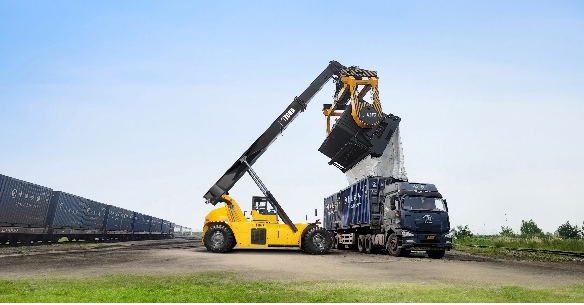 In bulk cargo yards, rail-road intermodal hubs, and other containerized bulk handling scenarios, the unloading efficiency of 20ft open-top containers directly determines the overall workflow pace.blogs
 -
 Selecting the right Container Rotating Spreader starts with a focus on capacity, compatibility, safety, durability, and compliance. You must align the spreader with your terminal’s specific operations, crane types, and container handling needs.
 -
 You keep your Container Rotating Spreader working safely and smoothly when you perform regular maintenance and lubrication. These actions help prevent unexpected breakdowns and extend the life of your equipment. Simple daily checks, proper cleaning, and the right lubricants make a big difference.
 -
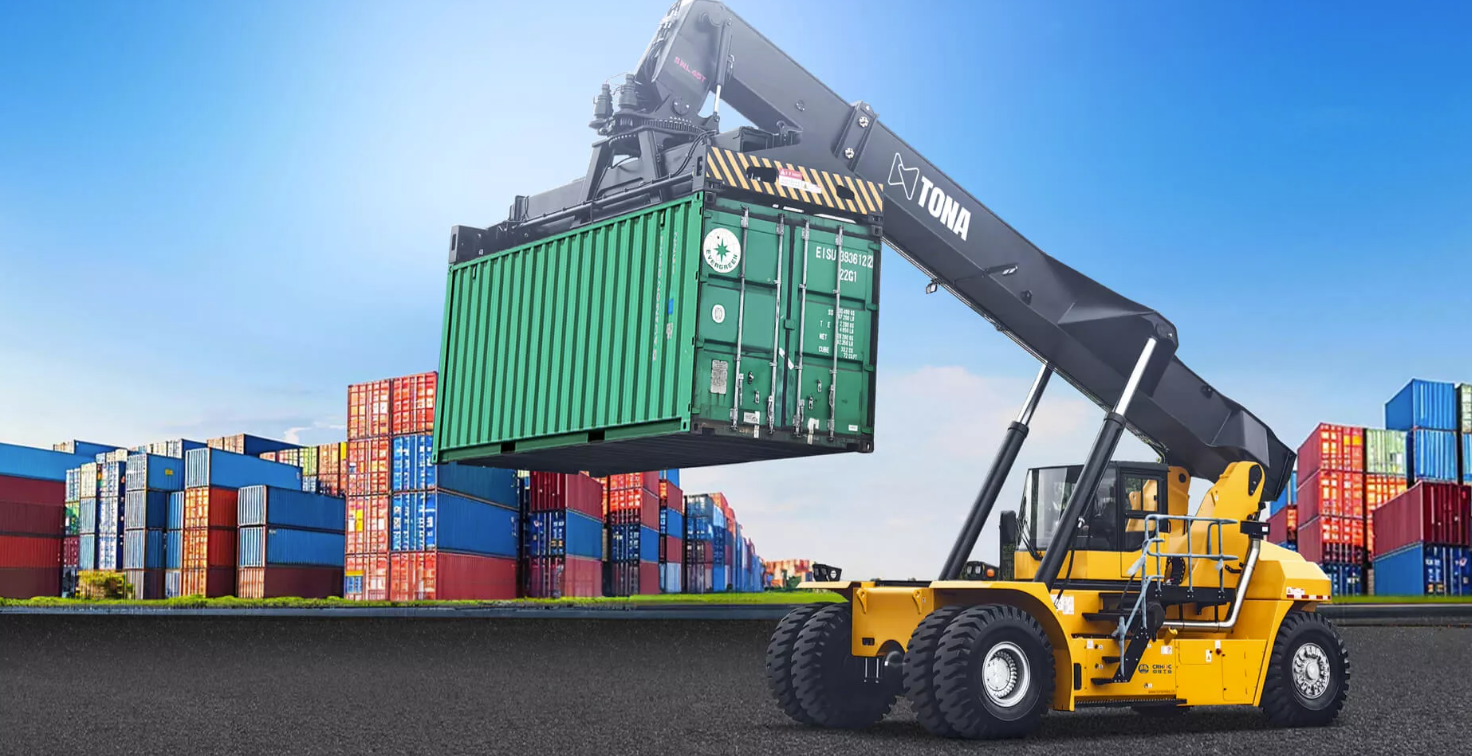 You use a Container Rotating Spreader to lift sealed bulk containers, rotate them to the desired angle, and unload materials efficiently with minimal spillage. After unloading, you re-seal the containers for transport.Common benefits include:Improved efficiency and cost-effectivenessZero loss materi