
Port terminals, intermodal yards, and industrial logistics hubs face compounding pressure to increase throughput without proportionally increasing capital expenditure on heavy machinery. Base machines, such as reach stackers and bridge cranes, are high-value assets. Equipping them with single-purpose, fixed attachments limits operational flexibility, creating severe bottlenecks when handling mixed cargo types like standard ISO containers versus bulk container dumping. Upgrading to a multipurpose container rotating spreader bridges the gap between bulk handling and standard container logistics. This guide evaluates how integrating rotating capabilities into existing lifting equipment drives utilization rates, reduces cycle times, and optimizes operational efficiency. We will examine the mechanical integration, structural requirements, and specific base machine adaptations necessary to deploy these systems effectively across diverse terminal environments.
Key Takeaways
Asset Consolidation: A multipurpose container rotating spreader eliminates the need for separate bulk-dumping and container-lifting machines, directly increasing the utilization hours of existing base equipment.
Cross-Platform Compatibility: Modern rotating spreaders can be engineered for diverse base machines, serving effectively as either a bridge crane rotating spreader or a reach stacker rotating spreader.
Operational ROI: While initial procurement costs are higher than fixed spreaders, the reduction in manual labor, faster intermodal transfer times, and decreased equipment idle time yield a verifiable operational ROI.
Maintenance Realities: The addition of rotational hydraulics and center-of-gravity management systems requires stricter, specialized preventative maintenance protocols compared to standard semi-automatic spreaders.
The Utilization Problem in Modern Container Handling
Establishing baseline metrics for equipment utilization requires tracking cycle times, idle machine hours, and cost-per-move. Terminals often struggle with operational drag caused by switching attachments. Moving containers to specialized bulk-dumping stations wastes valuable time. Single-purpose attachments force machines to sit idle while waiting for specific cargo types. This underutilization limits overall yard capacity and slows down the entire logistics chain.
The shift toward seamless rail-to-truck and ship-to-rail transfers requires highly adaptable equipment. Modern attachments must be capable of dynamic positioning and multi-axis movement. Legacy fixed spreaders and semi-automatic mechanical systems lack this flexibility. Active hydraulic positioning allows operators to handle diverse loads without changing gear. A modern Container Rotating Spreader eliminates these bottlenecks by combining standard lifting with bulk discharge capabilities.
When a terminal relies on separate machines for lifting and dumping, the logistics chain becomes fragmented. A reach stacker might move a container to a designated dumping zone, where a specialized tipping chassis or a stationary tipper takes over. This double-handling increases the risk of container damage and adds unnecessary moves to the operation. By consolidating these functions into a single attachment, terminals can streamline their workflows and reduce the number of touches per container.
Operational Metric | Fixed Spreader Workflow | Rotating Spreader Workflow |
|---|---|---|
Equipment Required | Reach stacker + stationary tipper | Single reach stacker |
Handling Steps | Lift, transport, stage, tip, retrieve | Lift, transport, rotate/dump, return |
Cycle Time (Average) | 12-15 minutes per container | 5-7 minutes per container |
Yard Space Utilization | Requires dedicated tipping zones | Dumping can occur directly into hoppers/vessels |
The data clearly shows the operational advantage of integrating rotational capabilities. Beyond just saving time, it frees up valuable yard space that would otherwise be dedicated to stationary tipping equipment. This spatial efficiency is particularly valuable in crowded port terminals where every square meter of ground space is at a premium.
Core Mechanics and Components of the Multipurpose Container Rotating Spreader
A multipurpose unit transitions seamlessly between standard twist-lock lifting for ISO containers and rotational movement for bulk material discharge. This equipment can execute 360-degree or 180-degree rotation depending on the specific model and operational requirements. The slewing ring and hydraulic drive assembly power high-torque rotation under full load. Motorized expansion mechanisms within the telescopic main beam allow shifting between 20-foot, 40-foot, and 45-foot configurations.
Gathering systems, including flippers and guide arms, direct the spreader onto container corners accurately. Failsafe engagement relies on robust hydraulic or mechanical twistlock locking mechanisms. Advanced spreaders dynamically adjust to shifting loads during the rotation phase. This center of gravity management prevents base machine tipping and reduces structural fatigue. Actuation systems utilize either hydraulic or fully electric rotational drives. Electric drives offer lower power consumption and strict environmental compliance.
Slewing Ring Assembly: The heart of the rotational capability. It must withstand massive torsional forces when a fully loaded container is inverted. Regular lubrication and torque-checking of the mounting bolts are mandatory.
Telescopic Main Beam: Constructed from high-yield steel, this beam houses the extension cylinders or chains. It must remain rigid even when fully extended to 45 feet and subjected to rotational stress.
Twistlock Mechanisms: These are not standard twistlocks. They feature secondary mechanical interlocks to ensure the container cannot disengage when inverted. The pins are forged from specialized alloys to resist shear forces.
Hydraulic Power Pack: Often mounted directly on the spreader to minimize the number of hydraulic lines running down the crane ropes or reach stacker boom. It provides the high-pressure flow needed for the slewing motors and telescopic cylinders.
Center of Gravity Sensors: These sensors feed data back to the base machine's control system, automatically limiting rotation speed or angle if the load shifts dangerously during the dumping process.
The engineering behind these components focuses on redundancy and structural integrity. When you invert a container filled with 30 tons of scrap metal or grain, the dynamic forces are unpredictable. The material inside shifts, changing the center of gravity rapidly. The spreader's frame and slewing ring must absorb these shock loads without transferring excessive stress to the base machine's boom or wire ropes.
Base Machine Integration: Matching Spreaders to Existing Assets
Reach Stacker Rotating Spreader Configurations
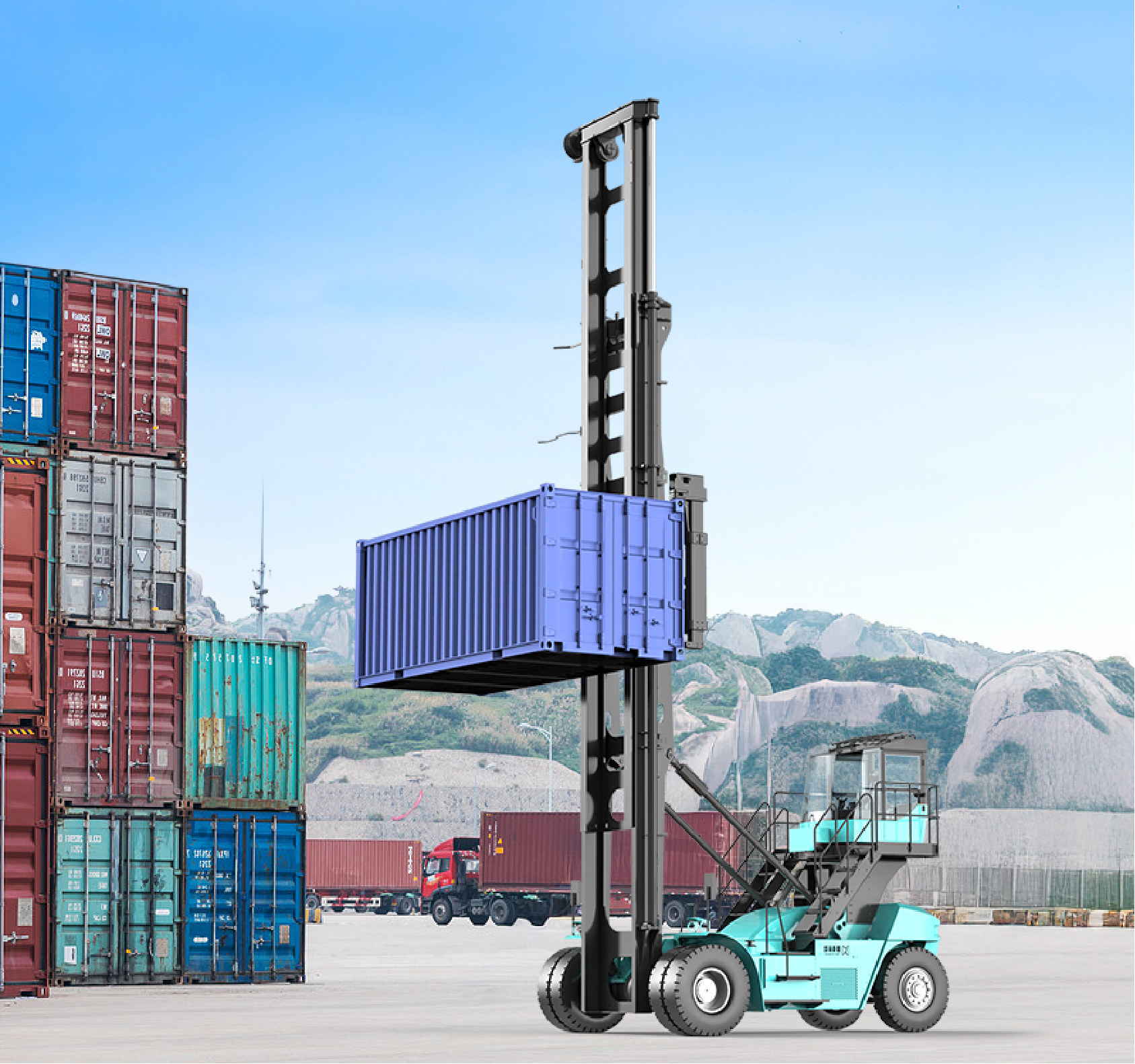
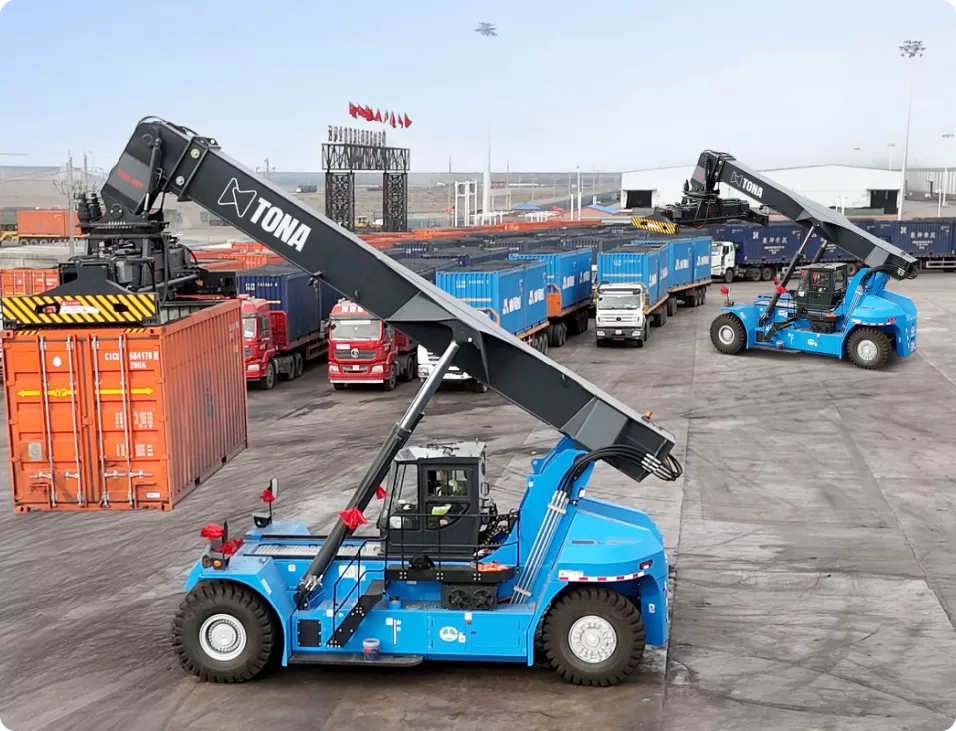
Integrating a reach stacker rotating spreader requires calculating safe working loads accurately. Operators must factor in the added tare weight of the rotating mechanism. Standard reach stackers often need auxiliary hydraulic lines and control system retrofits. This configuration is ideal for mobile yard operations. It excels at bulk loading into hoppers and flexible yard stacking.
The primary challenge with reach stackers is the forward center of gravity. When the boom is extended, the added weight of the rotational unit reduces the machine's lifting capacity at maximum reach. Terminal engineers must consult the manufacturer's load charts and potentially install additional counterweights. The hydraulic system of the reach stacker must also deliver sufficient flow and pressure to operate the slewing motors smoothly without starving the boom lift cylinders.
Operators use these setups extensively in scrap yards and agricultural export terminals. A reach stacker can pick up a container of grain from a truck, drive directly to a bulk vessel or a large hopper, and rotate the container to discharge the cargo. This eliminates the need for conveyor belts or specialized bulk loading facilities, drastically simplifying the export process.
Bridge Crane Rotating Spreader Applications
Gantry and overhead crane setups demand specific engineering considerations. A bridge crane rotating spreader requires advanced wire rope reeving and sway control. Rotational torque management is critical for safe operation. Precise rotation accelerates container transfers to and from freight trains. Operators can align containers with skewed rail cars without repositioning the entire crane. This setup suits high-volume, fixed-path operations like waste-to-energy plants and bulk export facilities.
Unlike a reach stacker, a bridge crane suspends the spreader on wire ropes. When the spreader rotates a heavy load, it generates a counter-rotational torque that tries to twist the wire ropes. To counteract this, bridge crane spreaders utilize specialized reeving patterns, often employing a four-point or eight-point suspension system with active hydraulic anti-sway cylinders. These cylinders absorb the torque and keep the spreader stable during the dumping cycle.
In waste-to-energy facilities, these spreaders handle specialized sealed containers filled with municipal solid waste. The crane lowers the container into the bunker, rotates it 180 degrees to dump the waste, and returns the empty container to the truck. The entire cycle is often semi-automated, requiring the spreader to communicate seamlessly with the crane's programmable logic controller (PLC).
Forklift and Heavy-Duty Truck Custom Mountings
Retrofitting heavy-duty forklifts requires specialized fork-mounted adapters. Engineering criteria must ensure stability during lifting and rotation. Custom configurations handle the swift rotation, sorting, and high-density stacking of empty containers. These setups optimize space in tight terminal footprints.
Fork-mounted systems are generally limited to empty or lightly loaded containers due to the stability constraints of the forklift. The adapter slides onto the forks and locks into place, providing a quick-attach solution for terminals that only occasionally need rotational capabilities. The hydraulic power is drawn from the forklift's auxiliary circuit, requiring quick-disconnect fittings and a modified valve block in the cab.
Features-to-Outcomes: Technical Evaluation Dimensions
Remote-controlled and semi-automatic rotational systems outperform manual ground-crew alignment. Automation reduces manual labor and significantly lowers associated safety hazards. Spreader frames utilize high-tensile steel to withstand continuous torsional stress during bulk dumping. Structural integrity ensures long-term reliability in harsh terminal environments.
Mandatory safety features protect both operators and equipment. Twist-lock interlocks prevent accidental release during handling. Anti-drop valves maintain hydraulic pressure if a line fails. Overload protection systems monitor weight distribution during rotation. These mechanisms ensure compliance with strict industrial safety standards.
The transition from mechanical to smart spreaders introduces a new layer of diagnostic capabilities. Modern units feature CAN bus control systems that monitor every sensor and valve in real-time. If a twistlock fails to engage fully, the system prevents the lift and sends an error code directly to the operator's screen. This immediate feedback loop prevents accidents and speeds up troubleshooting during maintenance shifts.
Metallurgy plays a massive role in the lifespan of these attachments. The main frame and telescopic beams are typically fabricated from Strenx or similar high-strength structural steel. This allows the manufacturer to keep the tare weight down while maintaining the rigidity needed for rotational dumping. Wear pads, usually made from self-lubricating polymers, guide the telescopic beams and require regular inspection to prevent metal-on-metal contact.
Implementation Risks and Mitigation Strategies
Managing shifting loads during rotation presents a distinct learning curve for operators. Mitigating this risk requires comprehensive simulator training and phased rollouts. Retrofitting legacy base machines with modern smart spreaders can introduce software and hardware conflicts. Thorough compatibility testing prevents integration failures.
Site-specific constraints dictate operational safety. Terminals must evaluate overhead clearance and hopper heights. Yard layout analysis ensures rotational maneuvers can be executed safely without colliding with adjacent stacks. Proper planning eliminates spatial conflicts during bulk discharge operations.
When a container full of bulk material is rotated, the material does not always flow out evenly. If a load of damp grain or compacted scrap metal sticks to one side of the container, it creates a massive eccentric load. The operator must be trained to recognize the signs of an unbalanced load and know how to feather the rotational controls to shake the material loose safely. Simulator training is invaluable here, allowing operators to experience these dynamic shifts in a risk-free environment before handling live loads.
Hardware integration often requires upgrading the base machine's electrical slip rings or cable reels to accommodate the extra control wires needed for the rotational functions. If the base machine uses an older analog control system, a digital-to-analog converter or a completely independent remote control system may be necessary to operate the spreader. Terminal managers must work closely with the spreader manufacturer during the procurement phase to identify these integration hurdles early.
Conclusion
A multipurpose container rotating spreader is a critical investment for terminals handling mixed cargo. It offers a proven pathway to maximize the efficiency of existing heavy lift assets. Procurement teams must audit current fleet capacity and calculate the ratio of bulk-to-standard container moves. Determining whether a reach stacker or bridge crane integration serves the primary bottleneck is essential.
Initiate a technical site audit with spreader manufacturers to assess infrastructure limits and overhead clearances.
Request load-chart compatibility assessments for all existing base machines to ensure safe working loads are maintained.
Define clear service level agreement terms for maintenance, software updates, and OEM parts availability.
Implement a phased operator training program using simulators before live deployment to manage shifting load dynamics.
FAQ
Q: What is a container rotating spreader used for?
A: It is primarily used to lift standard ISO containers and rotate them to dump bulk materials directly into hoppers or ships. This eliminates the need for specialized bulk transport vehicles and stationary tipping platforms.
Q: Can a multipurpose container rotating spreader handle both 20ft and 40ft containers?
A: Yes, many multipurpose models feature telescopic frames that expand or retract to accommodate 20-foot, 40-foot, and sometimes 45-foot containers. Rotational capacity may be limited by the maximum weight of larger containers.
Q: What is the difference between a reach stacker rotating spreader and a bridge crane rotating spreader?
A: A reach stacker rotating spreader mounts on a mobile boom, requiring specific hydraulic interfaces and counterweights. A bridge crane rotating spreader is suspended by wire ropes, requiring advanced anti-sway and reeving systems to manage torque.
Q: How does a rotating spreader impact the lifting capacity of the base machine?
A: The rotating mechanism adds significant tare weight to the attachment. Consequently, the safe working load of the base machine is reduced, requiring careful load-chart calculations and potential counterweight adjustments before implementation.
Q: What are the primary maintenance requirements for a container rotating spreader?
A: Routine maintenance focuses on lubricating the slewing ring, inspecting hydraulic cylinders, testing twist-lock interlocks, and performing structural inspections for fatigue cracks caused by the torsional stress of dumping heavy bulk loads.
Q: Are rotating spreaders compatible with semi-automatic and fully automatic control systems?
A: Yes, modern rotating spreaders integrate with advanced terminal operating systems via CAN bus networks. They can be operated via remote control or integrated directly into the base machine’s cabin controls for automated execution.
Related Blogs
-
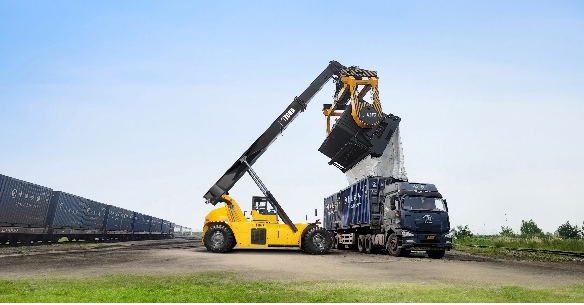 In bulk cargo yards, rail-road intermodal hubs, and other containerized bulk handling scenarios, the unloading efficiency of 20ft open-top containers directly determines the overall workflow pace.blogs
 - Discover how container rotating spreaders revolutionize bulk handling. Achieve high throughput, control dust, and ensure environmental compliance.blogs
-
 Selecting the right Container Rotating Spreader starts with a focus on capacity, compatibility, safety, durability, and compliance. You must align the spreader with your terminal’s specific operations, crane types, and container handling needs.
 -
 You keep your Container Rotating Spreader working safely and smoothly when you perform regular maintenance and lubrication. These actions help prevent unexpected breakdowns and extend the life of your equipment. Simple daily checks, proper cleaning, and the right lubricants make a big difference.