
Global supply chains demand unprecedented efficiency from modern container yards. Operations face a constant balancing act between storage density and retrieval speed. Inefficient handling quickly leads to terminal bottlenecks. You end up paying high demurrage costs and wasting valuable real estate. Managers often struggle to access inner-row containers safely. We call this the dreaded "dead pick" problem.
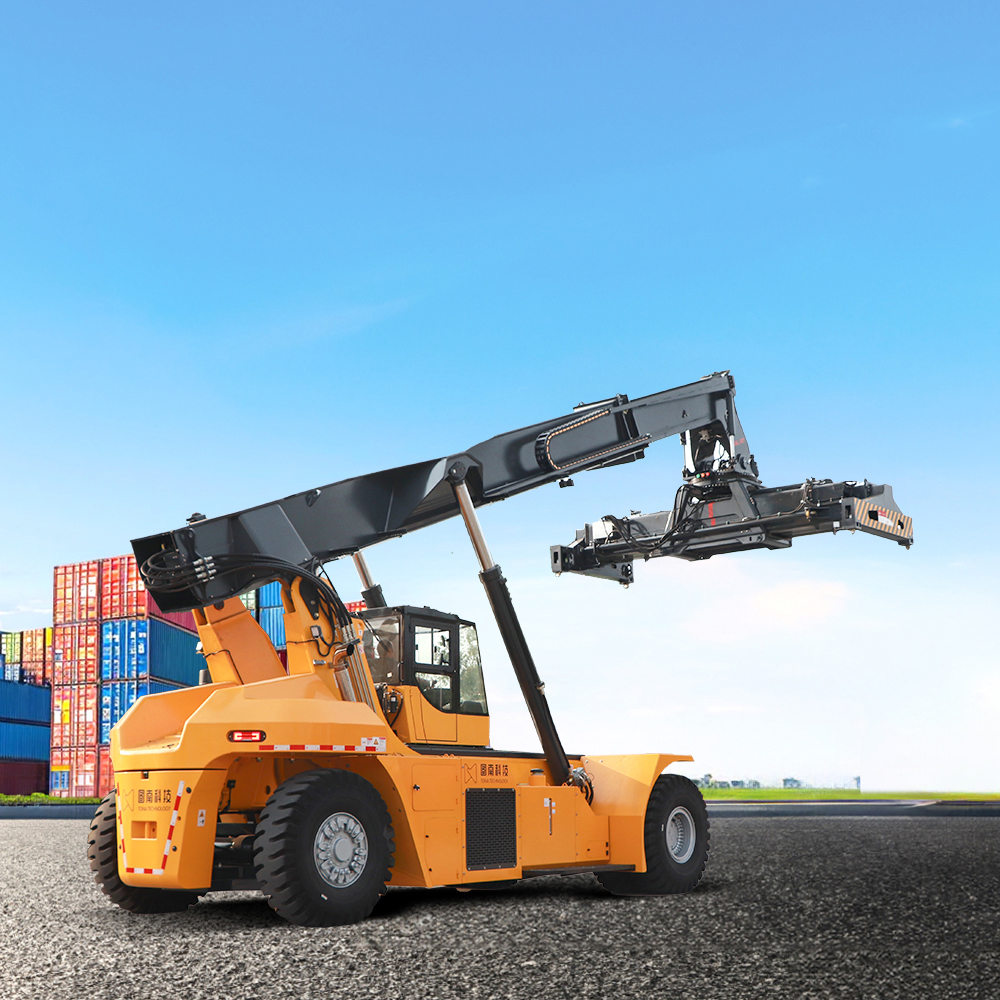
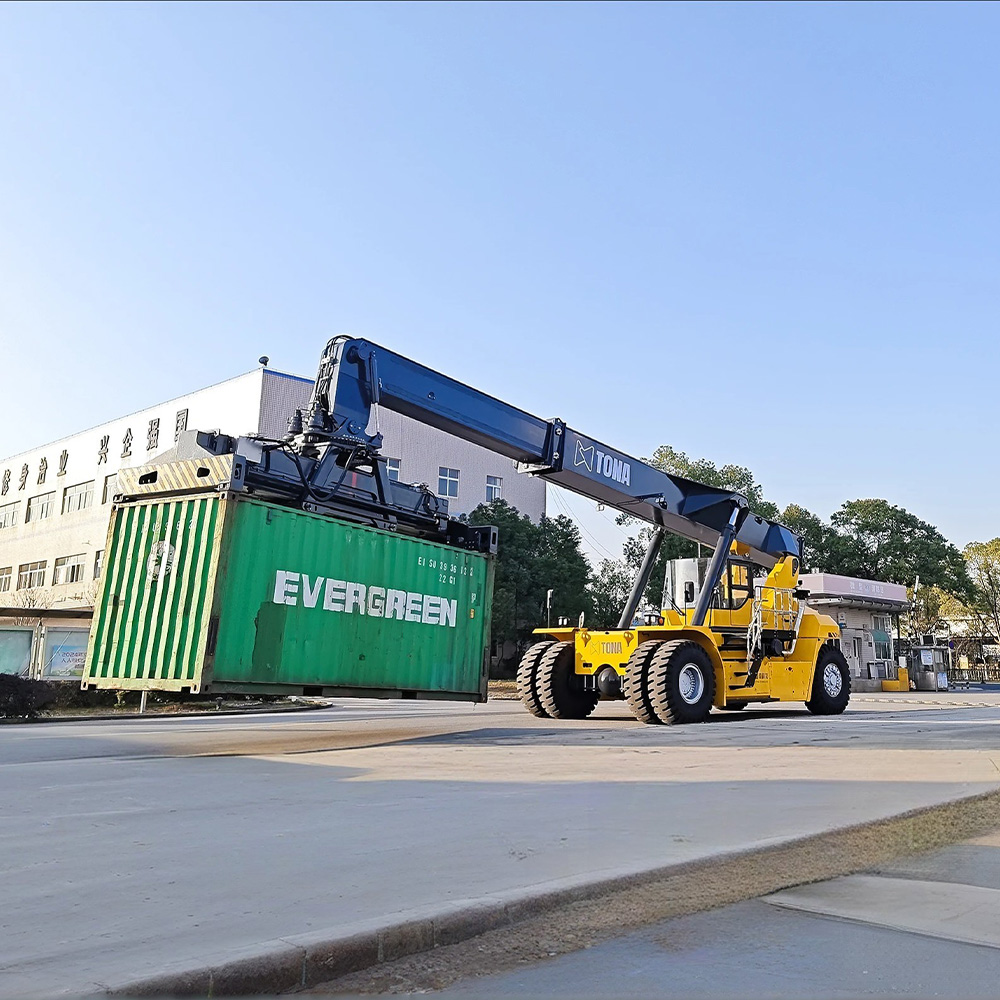
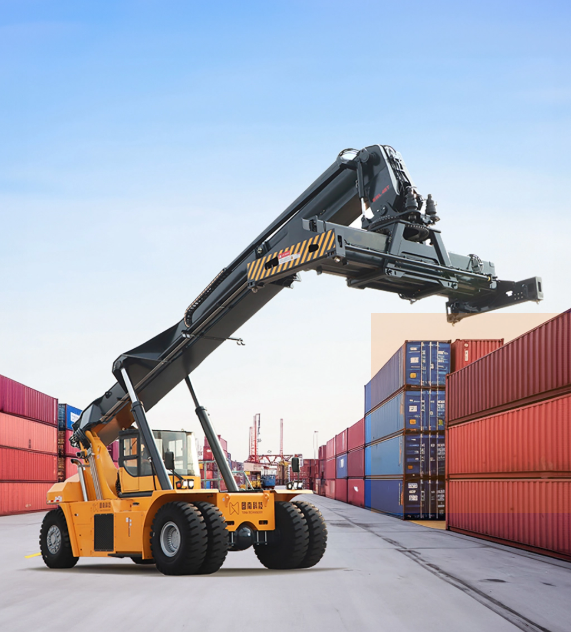
To solve this, facilities rely on specialized heavy-duty mobile lifting vehicles. A reach stacker bypasses the massive infrastructure requirements of rail-mounted gantry cranes entirely. It allows operators to retrieve buried inventory quickly and safely.

This article provides an objective framework for evaluating heavy yard handling equipment. Fleet buyers, yard managers, and procurement engineers will learn how to compare machinery effectively. You will understand key specification requirements. We will also explore essential safety add-ons and fleet sizing strategies to optimize your terminal operations.
Key Takeaways
Reach stackers utilize a telescoping boom to stack containers up to five high and reach across three to four rows, maximizing yard footprint utilization.
Unlike traditional ISO mast container handlers, reach stackers eliminate the need to move front-row containers to access second- or third-row inventory.
Procurement evaluation must factor in load capacity drop-offs at extended reaches, turn radius limits, and compliance with stability standards like ISO 22915-12.
Modern fleet acquisitions increasingly prioritize safety add-ons (twistlock cameras, load moment limiters) and total cost of ownership (TCO) models comparing rental versus capital expenditure.
The Core Functions: How a Reach Stacker Transforms Yard Operations
Land in port terminals and inland intermodal hubs remains incredibly expensive. Expanding your yard footprint outward is rarely a viable financial option. Local zoning laws and high real estate prices restrict physical growth. Operations must instead increase vertical and depth density aggressively. You have to store significantly more boxes in the exact same square footage.
The secret lies within the telescoping boom mechanism. Traditional forklifts rely exclusively on vertical masts. They only move straight up and down. A telescoping boom works entirely differently. It extends diagonally using powerful hydraulic cylinders. This allows operators to reach over outer container rows easily. They can place or retrieve boxes deep inside the stack. The boom provides unparalleled horizontal flexibility across the terminal.
We must clarify the critical distinction between laden and empty handling. Heavy-duty equipment manages laden containers weighing upwards of 45 tons. These machines require massive steel counterweights and robust hydraulic pressure systems. They prioritize stability over raw speed. Conversely, specialized "empty stackers" focus purely on velocity. Facilities use them for fast, lightweight repositioning of unladen boxes. Empty stackers keep the yard organized without burning excess fuel or causing unnecessary ground wear.
The most significant operational benefit remains solving the "dead pick" challenge. A dead pick occurs when outer rows block the exact container you need immediately. Using standard mast handlers forces you to move multiple front-row boxes just to reach the target. We call this unproductive digging. It wastes enormous amounts of time and fuel. The horizontal extension capability eliminates this friction completely. Operators simply extend the boom over the front row. They grab the blocked container directly from the second or third row. This drastically reduces handover time for outbound freight. Truck drivers spend less time waiting at the gate. Overall yard throughput increases seamlessly.
Equipment Evaluation: Reach Stackers vs. Traditional Yard Handlers
You must evaluate multiple solution categories before upgrading your fleet. Comparing a reach stacker against primary alternatives establishes clear shortlisting logic. Every facility possesses unique layout constraints and operational goals.
Let us first compare horizontal boom machines against ISO container handlers. ISO handlers use traditional vertical mast designs. They excel in low-density yards requiring high individual selectivity. However, mast forklifts are strictly limited to one or two rows of depth. They frequently create inaccessible dead picks if yard planners are not careful. You gain excellent narrow-aisle maneuverability but sacrifice deep storage capability entirely. Boom-equipped machines offer superior horizontal flexibility. You lose some tight-corner agility due to the longer chassis. In return, you gain massive improvements in three-to-four-deep storage density.
Next, we compare mobile vehicles against large yard cranes. Rubber-tired gantry cranes (RTGs) and rail-mounted gantry cranes (RMGs) provide maximum storage density. They stack boxes incredibly high and span many rows wide. However, cranes require massive upfront capital expenditure. You must install fixed rails, heavy electrical grids, and reinforced concrete infrastructure. They lack agility outside their designated operational zones.
Mobile boom loaders provide unrestricted mobility across the facility. Operators can drive them across uneven terrain and transition rapidly between different yard zones. Deployment happens much faster than crane installation. You also benefit from modular scaling. You can buy one unit at a time as your business naturally grows. Building a new crane matrix takes years and disrupts daily operations severely.
To clarify these equipment differences, review the comparison chart below.
Equipment Capability Comparison Chart
Feature | ISO Mast Handlers | Reach Stackers | Yard Cranes (RTG/RMG) |
|---|---|---|---|
Stacking Depth | 1 to 2 rows maximum | Up to 3 or 4 rows deep | 6+ rows depending on bridge span |
Mobility & Agility | High (Best for narrow aisles) | High (Unrestricted yard-wide travel) | Low (Strictly fixed to designated paths) |
Infrastructure Needs | Standard industrial paving | Heavy-duty reinforced paving | Massive civil works and embedded rails |
Dead Pick Resolution | Poor (Requires digging) | Excellent (Direct overhead access) | Excellent (Total vertical accessibility) |
Key Engineering and Specification Criteria for Procurement
Procurement requires careful attention to rigid engineering limits. You cannot simply assume a machine handles its maximum rated weight everywhere in the yard. Lifting capacity decreases significantly as the telescopic boom extends outward.
We call this principle the load versus reach drop-off. You must transparently evaluate this fundamental physics constraint. A machine rated for 45 tons in the first row operates very differently deeper in the stack. It may only safely handle 25 to 30 tons in the second row. Third-row lifting capacity drops even further due to leverage mechanics. You must match the manufacturer capacity chart against your terminal's average loaded container weights. If you frequently handle 35-ton boxes in the second row, you definitely need an oversized chassis model.
Dimensional constraints dictate whether the machine actually fits your yard aisles. Conduct a rigorous site audit before issuing any purchase orders. Measure your facility's minimum turning radius carefully. These machines are enormously long. Wheelbase requirements often exceed 275 inches on heavy-duty models. Ensure your existing aisle widths easily accommodate 90-degree container insertions. If the aisle is too narrow, the operator cannot pivot a 40-foot box safely without striking adjacent stacks.
Do not overlook crucial international safety standards. Compliance ensures physical stability and operational legality across jurisdictions. Procurement teams must verify strict adherence to BS ISO 3874. This particular standard dictates approved engineering methods for lifting heavy freight containers. Additionally, mandate compliance with ISO 22915-12. This specific regulation covers rigorous stability verification testing for variable-reach trucks. Adhering to these global frameworks protects your ground personnel and your clients' cargo. It also strongly shields your company from negligence liability during potential workplace accidents.
Risk Mitigation: Safety Systems and Technology Integrations
Heavy load handling naturally introduces serious operational risks. Lifting 45 tons at high boom extensions creates immediate tip-over hazards. Operators also face massive blind spots when navigating tight yard corridors. Evaluating heavy yard equipment requires deeply evaluating its integrated safety suite.
Load moment limiters form the most critical baseline safety feature. These automated onboard systems continuously monitor payload weight and extension torque. They calculate the machine's physical stability limits in real-time. If an operator tries to push the boom too far with a severely heavy load, the system intervenes autonomously. It actively prevents the machine from exceeding its safe operating threshold. The hydraulics simply stop extending. This failsafe mechanism actively prevents catastrophic tipping accidents.
Visibility enhancements are equally vital for safe daily operations. Drivers sit low and relatively far back from the lifting spreader. Ground-level blind spots remain notoriously dangerous. You should carefully review the following critical visibility upgrades:
Twistlock Snapshot Cameras: These specialized cameras provide precise spreader engagement verification. The operator sees exactly how the corner twistlocks align via a high-definition cabin monitor.
4-Corner Radar Detection: This proximity system uses advanced sensors to protect vulnerable ground personnel. It alerts the driver instantly via loud cabin alarms if someone walks into a dangerous blind spot.
Ergonomic Sliding Cabins: Some premium models feature hydraulically sliding cabins. The operator can move the entire cabin forward to look directly down at the target container.
Modern handling units heavily rely on telematics and digital diagnostics. Fleet managers now use onboard touchscreens, such as advanced MD4 digital displays. These screens track fuel efficiency, tire pressure, and engine idle time down to the exact minute. Telematics also enable predictive maintenance strategies. The machine instantly alerts mechanics about minor hydraulic pressure drops long before a hose actually blows out. You minimize unexpected downtime and keep the yard moving efficiently.
Making the Acquisition Decision: Fleet Sizing, Renting vs. Buying
Deciding how to properly acquire fleet assets heavily impacts long-term terminal profitability. You must calculate a clear return on investment logically. Focus closely on container throughput volume and physical space rent savings. Consider how many extra revenue-generating boxes you can store simply by stacking deeper. Compare that projected revenue directly against the operating cost of the new machinery. A precise cost-to-serve framework reveals exactly when the hardware investment pays for itself.
To maximize terminal profitability, follow these three steps for your acquisition strategy:
Calculate Return on Investment: Focus heavily on container throughput volume and space rent savings before making any large capital commitments. Let the data drive your budget.
Determine When to Rent: Choose flexible rental agreements for high seasonal volume spikes. Renting also helps when testing a proof-of-concept for new yard layouts. It maintains predictable operating expenses without long-term maintenance liabilities.
Determine When to Buy: Purchase units outright for established intermodal hubs with highly consistent throughput. You can depreciate the physical asset over a standard 7-10 year lifecycle while controlling maintenance schedules.
Finally, evaluate facility future-proofing and sustainability trends. The global logistics industry is rapidly shifting toward greener, cleaner operations. Fleet managers must anticipate impending local emissions regulations proactively. Evaluate whether strict environmental rules justify higher initial procurement costs today. Electric battery-powered or hydrogen-hybrid engines cost significantly more upfront than traditional diesel engines. However, zero-emission models protect your operation from future regulatory fines completely. They also drastically reduce your terminal's carbon footprint, helping you win environmentally conscious shipping contracts.
Conclusion
A heavy-duty boom handler is far more than just a mobile lifting vehicle. It serves as a highly strategic tool for maximizing yard density and completely eliminating retrieval bottlenecks. Transitioning away from basic vertical mast forklifts enables deeper storage and significantly faster outbound freight handovers.
Procurement teams must take proactive next steps before upgrading. Conduct a rigorous site footprint audit immediately. Measure your specific aisle widths and track your terminal's average loaded container weights over a thirty-day period. Compile this exact data before requesting load-capacity charts from equipment manufacturers or regional dealers. Careful preparation guarantees you select heavy machinery matched perfectly to your daily operational realities.
FAQ
Q: How high can a reach stacker lift a container?
A: Standard models typically stack up to 5 laden containers high in the first row. This capacity drops to 4 or 3 containers high as you move into deeper second and third rows.
Q: Can reach stackers handle different sizes of containers?
A: Yes, hydraulic spreaders can adjust to accommodate standard 20-foot, 40-foot, and sometimes specialized 53-foot intermodal containers quickly.
Q: What type of surface is required for reach stacker operation?
A: While more versatile than rail-bound cranes, their massive ground pressure requires reinforced, graded concrete or heavy-duty asphalt to prevent surface degradation.
Related Blogs
-
 If you’re wondering what is reach stacker, it’s a powerful vehicle designed to lift, move, and stack large shipping containers. You’ll often spot a reach stacker at ports, container terminals, and storage yards.hot blog
 -
 In warehouses and distribution centers, choosing the right equipment is crucial for efficient material handling. Stackers and reach stackers are both essential, but they serve different needs. While stackers excel in tight spaces,
 -
 Reach stacker operators are the backbone of efficient logistics. They ensure smooth cargo movement in busy ports and warehouses. This article explores what it takes to become a reach stacker operator. We’ll cover the key skills, training programs, certifications, and safety measures required.
 -
 What Class is a Reach Stacker?Have you ever wondered how material handling in narrow spaces is so efficient? A reach stacker, a specialized type of forklift, plays a crucial role in warehouse and distribution center operations. It is designed to lift and move pallets in tight spaces,