
Intermodal terminals operate with a relentless pace, demanding equipment that remains both robust and highly reliable. The heartbeat of any efficient port or railway hub is the machinery actively moving cargo. But what exactly can these heavy-duty vehicles lift safely? Load limits are rarely static, as they depend heavily on cargo type, stacking height, and the specific row depth required.
In this comprehensive guide, you will discover the precise load capacities of an intermodal reach stacker. We will explore everything from standard first-row limits to specialized yard solutions and the attachments that make these machines incredibly versatile.
Key Takeaways
- Standard Capacity: A typical heavy-duty unit can lift up to 45 tons in the first row.
- Row Depth Matters: Load capacity decreases significantly as the boom extends. Second-row handling usually manages 30 to 35 tons, while third-row capacities drop to roughly 15 tons.
- Versatility: Beyond standard ISO containers, operators can handle swap bodies, intermodal trailers, and industrial breakbulk cargo.
- Space Solutions: A compact model offers a shorter wheelbase for tight spaces without heavily compromising initial lifting power.
- Attachments Dictate Function: The type of load handled safely is heavily influenced by the specific spreader or specialized attachment used.
The Role of a Reach Stacker in Intermodal Freight Transport
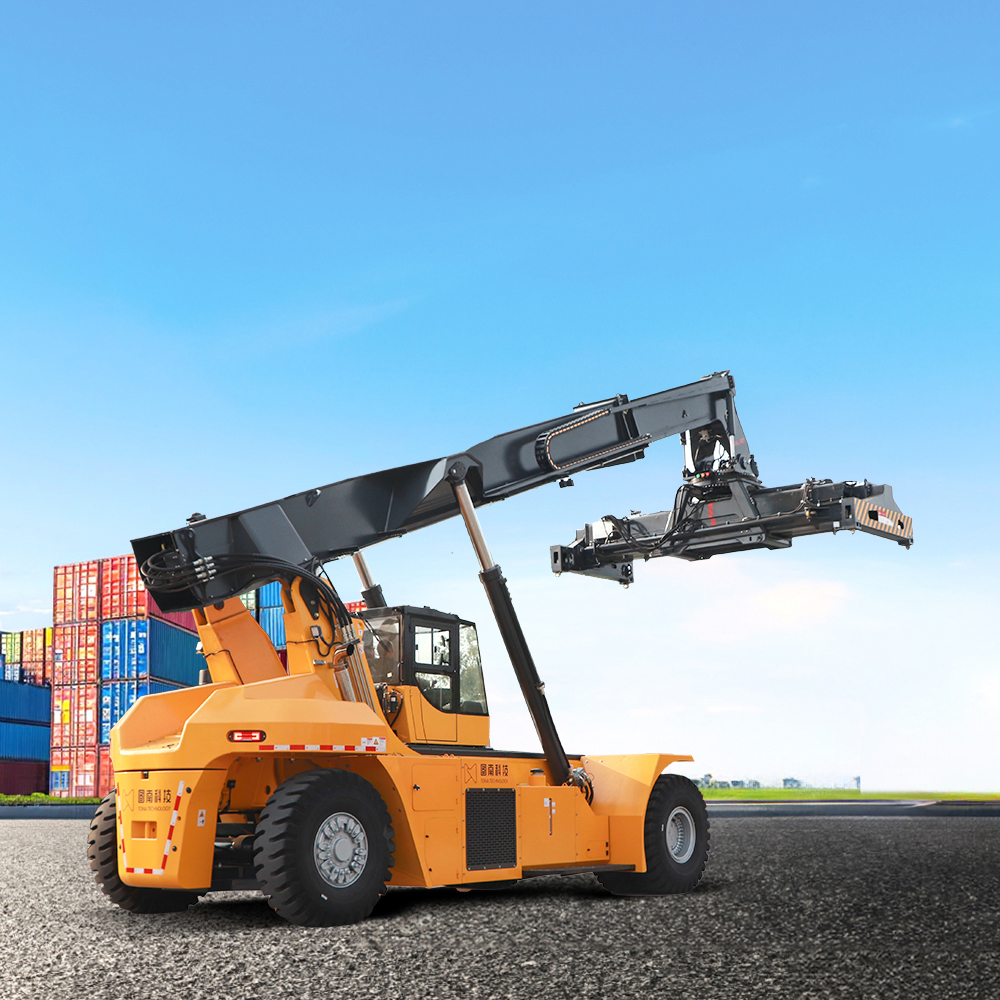
Unlike a standard industrial forklift that relies on a vertical mast and horizontal forks to lift loads straight from the bottom, this specialized piece of material handling equipment utilizes a robust telescopic boom. This boom extends both outward and upward, allowing the machine to seamlessly reach over obstacles like chassis or other stacked containers.
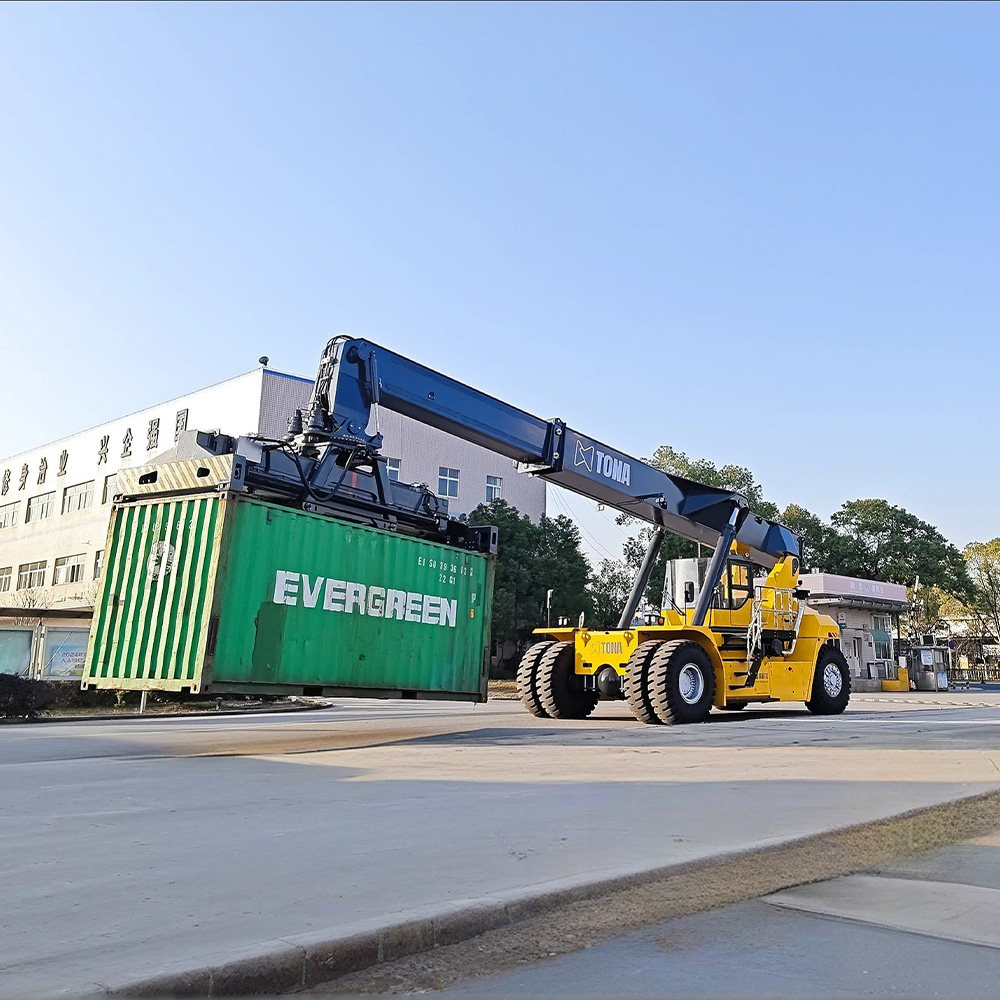
Equipped with a top-lift spreader, the unit engages directly with the corner castings of standard ISO containers. This intelligent design allows operators to stack containers up to six tiers high and reach three rows deep into a block. Such three-dimensional handling capability makes the equipment an indispensable asset in small to medium-sized ports, railway terminals, and inland distribution hubs where spatial efficiency is the top priority.
Matching machine capacity to daily load requirements forms the foundation of logistical planning. If a terminal frequently processes heavy export containers using equipment with insufficient load charts, operational bottlenecks will inevitably form. Consistently pushing a machine to its maximum safe working load accelerates wear on the boom, hydraulic systems, and tires. By respecting exact load capacities, terminal managers prevent equipment failure, reduce maintenance downtime, and improve overall occupational safety.
Maximum Weight Limits: The 45 Ton Container Reach Stacker
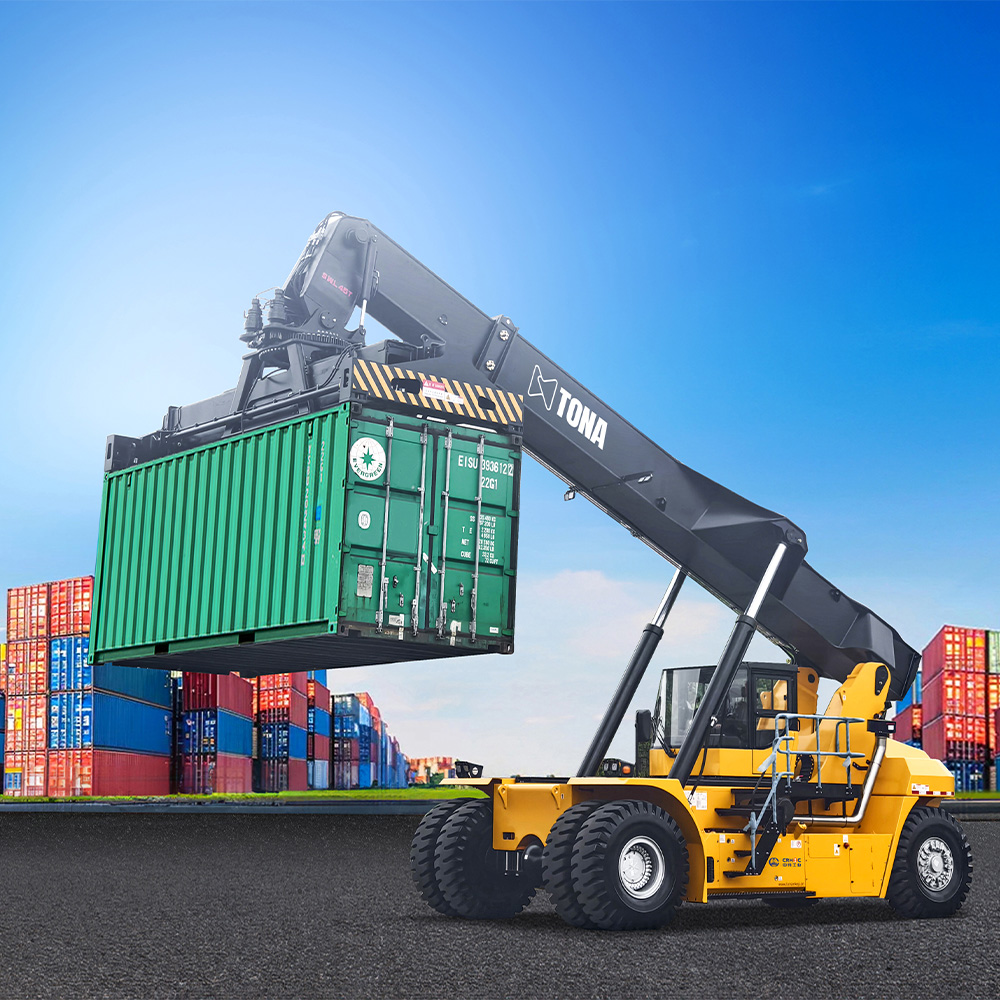
In the world of intermodal freight, the industry benchmark for heavy lifting is the 45 ton container reach stacker. For standard operations, 45 metric tons represents the maximum safe working load when lifting from the first row, which is the area immediately adjacent to the vehicle's front tires.
This 45-ton limit aligns with international shipping standards. Most fully loaded ISO containers rarely exceed 36 tons due to strict road and rail weight regulations. Therefore, a 45-ton capacity provides a necessary safety margin, ensuring the machine remains stable and the hydraulics are never overstressed during routine lifts. Whether the spreader is set to 20 feet or extended to 40 feet, the structural integrity of the boom and the heavy counterweight allow the machine to maintain its full rating in the first row. This flexibility ensures operators can handle mixed streams of inbound and outbound freight without swapping attachments.
Extended Outreach: Second Row Container Reach Stacker Capacities
Understanding a machine's capabilities requires a grasp of physics, specifically the center of gravity. These heavy lifters operate on the principle of leverage, using a massive counterweight at the rear to balance the payload at the front.
As the telescopic boom extends outward to reach over a first row of containers, the load's center of gravity moves further away from the front axle, which acts as the fulcrum point. According to the laws of mechanics, this shift increases the tipping moment. To maintain stability, the safe lifting capacity must be mathematically reduced as the outreach increases. Terminal planners rely on manufacturer-provided load charts to determine how much weight can be safely lifted at various boom angles.
Because of this shifting center of gravity, a second row container reach stacker cannot lift the same 45 tons it manages up front. Typically, a standard 45-ton model sees a capacity drop-off across row depths. In the second row, roughly 3.8 to 4.0 meters from the front axle, capacity generally falls to between 30 and 35 tons. By the time the boom reaches the third row, roughly 6.3 to 6.5 meters out, capacities plummet to about 15 tons. Consequently, managers must ensure that the heaviest export containers are staged in the first row, leaving deeper positions for lighter or empty boxes.
Beyond Standard Containers: Versatile Handling Solutions
While primarily designed for ISO containers, these machines are highly adaptable to non-containerized units. In bustling rail terminals, handling swap bodies and semi-trailers that cannot be lifted from the top is a daily routine. To manage these loads, the equipment often utilizes folding grapple arms, or "piggyback" attachments. These arms clamp onto designated lifting points at the bottom of the trailer chassis. Since intermodal trailers vary in weight and structural integrity, operators must adhere strictly to the load chart specific to the piggyback attachment, which carries a lower capacity than standard top-lifting.
The versatility of these machines extends deep into the industrial sector, where they frequently manage breakbulk cargo—oversized goods that do not fit into standard shipping boxes. By using specialized tool carriers, the vehicle transforms into a mobile crane. It can safely transport steel coils, large concrete pipes, and heavy machinery. A robust hydraulic system makes this an ideal solution for stevedoring companies dealing with mixed-cargo vessels, effectively turning a container handler into a multi-purpose industrial workhorse.
Space Constraints: Using a Compact Reach Stacker for Container Yards
Not all intermodal terminals have the luxury of expansive space. For facilities struggling with narrow aisles, tight corners, and older infrastructure, a compact reach stacker for container yards provides a necessary compromise between physical footprint and lifting power.
Standard models typically feature a wheelbase ranging from 6.5 to 7 meters. By contrast, compact versions are engineered with a shorter wheelbase of around 6 meters or less. This design significantly reduces the machine's turning radius, allowing it to maneuver efficiently in restricted areas. Despite the smaller chassis, these units utilize high-density counterweights to maintain robust lifting capabilities in the first row. They are the preferred choice for inland distribution centers and smaller rail yards where expanding driving lanes is geographically impossible.
However, buyers must be aware of the trade-offs. Because the shorter wheelbase provides less longitudinal leverage, load capacities in the second and third rows drop much more sharply than on full-sized models. These compact units are most effective in yards where deep block stacking is not the primary operational requirement.
Critical Factors Influencing Operational Safety
Operators must account for the internal distribution of cargo within a container. If a container is loaded unevenly, with heavy machinery shifted to one side, the center of gravity will be offset. This eccentric loading causes the spreader to tilt, placing uneven stress on the boom's hydraulic cylinders and the front tires. An uneven load reduces the safe lifting capacity and drastically increases the risk of tipping, necessitating extreme caution during every lift.
Furthermore, when consulting a load chart, operators must remember that the boom's total capacity includes the weight of the attachment itself. A standard top-lift spreader weighs several tons; if an operator switches to a more complex piggyback attachment, that additional dead weight must be subtracted from the maximum gross weight. Failing to account for attachment weight is a leading cause of dangerous overloading.
Yard conditions play an equally vital role. A fully loaded unit can exert immense ground bearing pressure—often exceeding 100 tons of localized force on the front axle. If the yard consists of unpaved dirt or poorly compacted gravel, the ground may collapse under the tires during a lift. Soft ground compromises vehicle stability, drastically increasing the risk of a catastrophic tip-over, regardless of the machine's rated capacity.
Industry Trends and Future Outlook
The logistics sector is undergoing a rapid technological shift. Recent trends highlight an increasing demand for smart, data-driven material handling equipment. To meet environmental regulations and reduce carbon footprints, there is a clear move toward hybrid and fully electric power trains in heavy handling machinery.
Additionally, the integration of IoT telemetry is revolutionizing how terminal managers approach load handling. Real-time sensors now monitor dynamic load moments, hydraulic stress, and tire wear as they happen. This shift not only enhances operational safety but also allows fleet managers to optimize throughput dynamically. By ensuring machinery is utilized efficiently without being pushed past structural limits, terminal operators can significantly extend the lifespan of their equipment while maintaining high productivity levels.
Conclusion
An intermodal reach stacker is an incredibly powerful yard tool, typically capable of lifting up to 45 tons in its primary row. However, these capacities decrease significantly when reaching into deeper rows. Fully understanding your specific load charts, assessing your available yard space, and acknowledging the physical demands of your cargo are essential for maintaining a safe and efficient operation.
Whether your facility requires a compact model to navigate tight corners or a heavy-duty extended wheelbase for deep rail operations, always match your cargo requirements to the appropriate attachment. We encourage terminal operators to consult with industry specialists to review exact load charts and select the optimal model tailored to their unique logistical demands. For more detailed information on specific models and configurations, feel free to contact us at Tona-tec.
What is the maximum lifting capacity of a standard reach stacker?
The industry benchmark for standard heavy-duty models is a maximum safe working load of 45 tons in the first row. This capacity is calculated based on lifting a standard ISO container with a top-lift spreader while the machine is stationary on flat, solid ground. While specialized industrial models can occasionally lift up to 50 tons, 45 tons remains the universal standard for intermodal container handling.
Can a reach stacker lift a container from the second row?
Yes, these machines are engineered with telescopic booms to access the second and third rows of a stack. However, the capacity is dependent on the load moment. As the boom extends, the center of gravity shifts, reducing the safe lifting capacity. A machine rated for 45 tons in the first row will typically see its capacity drop to between 30 and 35 tons in the second row, depending on the wheelbase.
How high can a reach stacker stack 45-ton containers?
Most standard units are designed to stack fully loaded 45-ton containers up to four or five tiers high in the first row. Stacking to a sixth tier is mechanically possible with high-mast models, but the safe working load is often reduced at that height to maintain vehicle stability. Furthermore, environmental factors like high winds can create dangerous lateral forces on containers stacked at the maximum height.
What is the difference between a forklift and a reach stacker for heavy loads?
A heavy-duty forklift utilizes a vertical mast and horizontal forks, requiring direct, unobstructed frontal access to the load. In contrast, a reach stacker uses a telescopic boom and top-lifting spreader, allowing it to reach over railcars or rows of containers. This makes the reach stacker far more versatile for high-density block stacking and intermodal terminal environments.
Are there reach stackers designed for small container yards?
Yes, manufacturers produce compact models engineered for facilities with severe space constraints. These units feature a shorter wheelbase, typically around 6.0 meters, allowing for a tighter turning radius in narrow aisles. While they maintain high lifting capabilities in the first row, their capacity drops more rapidly when reaching into the second or third rows due to the reduced longitudinal footprint.
Related Blogs
-
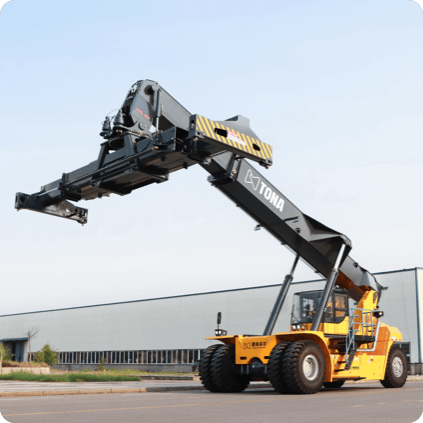 Operating heavy reach stackers requires robust ground to handle massive axle loads. This guide details essential pavement and safety standards to prevent equipment rollovers.
-
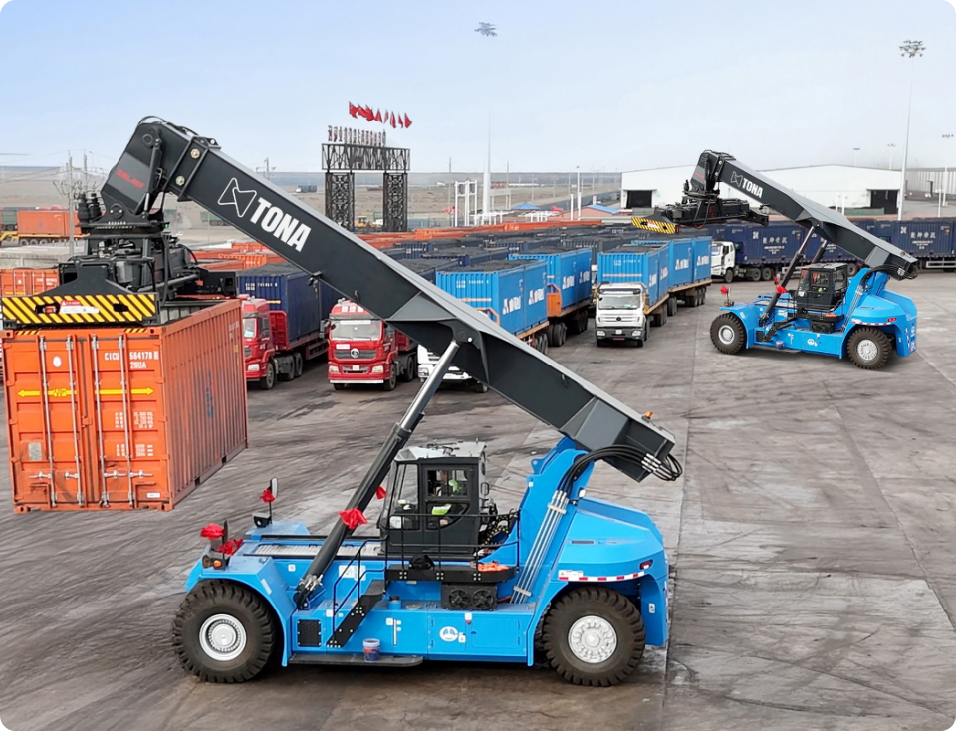 Prevent terminal collisions. Learn to calculate dynamic reach stacker safety zones, assess ground conditions, and safely optimize yard layouts.