

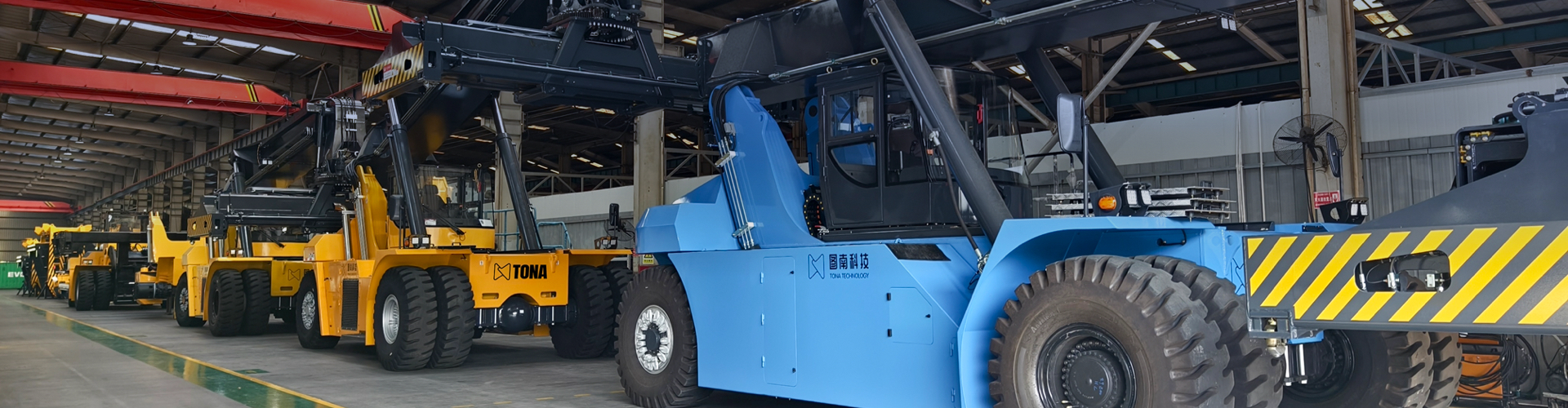

Operating a high-density container depot is not just a logistical task. It is a strict spatial puzzle. Physical real estate is capped, and operational time translates directly into financial margins. As global trade volumes rise, supply chain volatility forces terminal operators to adopt high-density stacking as a standard baseline. Facilities are forced to stack higher and pack boxes significantly tighter. In these constrained environments, inefficient equipment movement leads to severe traffic bottlenecks. It elevates accident risks and drives up entirely avoidable operational costs.
Looking at recent industry shifts, port authorities globally face unprecedented land scarcity. This limitation drives a massive transition toward vertical yard expansion and digitized fleet management. Modern depots are rapidly moving away from manual dispatching. Instead, they are integrating predictive routing algorithms and AI-driven telemetry. This evolution ensures that every single machine movement is calculated for maximum yield.
The objective solution to these logistical hurdles lies in strategic fleet routing. By optimizing how massive machines navigate the yard, facilities unlock their maximum potential throughput. This guide explores established routing best practices, examines the critical impact of Terminal Operating Systems, outlines safety protocols in tight spaces, and analyzes how choosing between fuel and battery power structurally impacts your long-term yard strategy.
Key Takeaways
- Strategic routing directly reduces operational costs: Systematically minimizing travel distances and engine idle time leads to measurable reductions in fuel consumption, electrical energy use, and mechanical tire wear.
- Equipment type dictates routing infrastructure: A battery-operated machine requires a routing framework factoring in decentralized charging stations. In contrast, combustion models rely on routing access to centralized refueling zones.
- Technology integration is non-negotiable: Synchronizing handling equipment with a robust Terminal Operating System and GPS telematics enables dynamic routing adjustments based on live gate traffic.
- Safety and efficiency function interdependently: Enforcing one-way traffic flows and designating specific operational zones structurally prevents equipment collisions and mitigates bottlenecks.
The Unique Challenges of High-Density Container Depots
Spatial constraints and vertical storage strategies define modern high-density depots. You are not operating in an expansive open field. You are navigating extremely narrow aisles with minimal clearance margins. Imagine driving a massive steel machine through a canyon of eight-high container stacks. This verticality demands specialized extended masts. It also severely restricts your turnaround space at the end of storage blocks. Absolute precision is mandatory here. A single deviation from an optimized route disrupts multiple workflows simultaneously.
When routing protocols are poorly designed or entirely absent, the immediate consequence is the bottleneck effect. Two large handling machines meeting in a narrow, two-way aisle results in instant equipment gridlock. One machine is forced to reverse. This is a slow, blind, and hazardous maneuver that stalls subsequent operations across that sector. This internal gridlock cascades outward. Ultimately, it delays truck turnaround times at the entry and exit gates. Extended gate queues frustrate logistics partners and drastically reduce the facility's overall daily handling capacity.
The financial impact of this inefficiency extends far beyond simple time delays. Unnecessary travel, commonly referred to in the industry as deadheading, generates compounding operational expenses. Every meter traveled without a payload contributes to accelerated drivetrain wear, excessive tire degradation, and wasted energy reserves. Consequently, increased engine hours trigger preventative maintenance schedules prematurely. This leads to higher labor costs and reduced fleet availability.
Why Smart Routing for Your Fleet Matters
In depot management, the ultimate Key Performance Indicator is the number of container moves completed per hour. Optimized routing directly targets this metric. It calculates the shortest and safest path between the gate, the washing station, the repair depot, and the storage stack. By minimizing transit times, operators execute a higher volume of cycles within a standard shift. Empirical operational audits consistently demonstrate that intelligent routing protocols can increase moves per hour by double-digit percentages. This fundamentally improves the facility's revenue potential.
Addressing the issue of deadheading is equally critical. In a chaotic yard, an operator might drop an empty box at the far north end of the facility, only to be dispatched to the far south end for their next pickup. Smart routing algorithms utilize spatial awareness to pair drop-offs with geographically adjacent pick-ups. Chaining tasks based on proximity nearly eliminates empty travel. This ensures that the empty container handler performs revenue-generating work during the vast majority of its active movement.
Beyond simple logistics, the physical stress placed on heavy port equipment is immense. Smart routing actively preserves the mechanical integrity of the machinery. Designing routes that prioritize straight-line travel and wide-radius turns reduces the friction and lateral stress exerted on the tires and the mast. Reducing unnecessary sharp turns and abrupt braking events preserves the drivetrain. Ultimately, this extends the operational lifespan of the equipment and lowers your total cost of ownership over the long term.
Choosing the Right Equipment: Electric vs. Fuel Powered Handlers
The power source of your machinery fundamentally alters how you must design your yard traffic flow and operational pit stops. Recent industry trends indicate a rapid acceleration toward electrification driven by global Environmental, Social, and Governance mandates. However, traditional combustion models remain dominant in legacy ports lacking robust grid infrastructure. Depot managers must align their routing strategies with the specific mechanical requirements of their chosen fleet.
The Fuel Powered Empty Container Handler
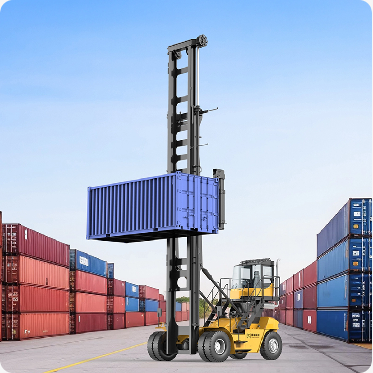
Internal combustion engine models have long served as the traditional workhorse of the maritime and logistics sectors. When integrating a fuel powered empty container handler into a high-density depot, routing considerations primarily revolve around centralized infrastructure. From an engineering standpoint, machines equipped with high-torque turbocharged engines and reinforced masts designed for 7-high stacking demand sustained operational flow. These machines must be periodically routed to designated, highly regulated fueling stations. Because refueling takes only a matter of minutes, their longer operational range allows for continuous, multi-shift routing without prolonged stationary periods. Intelligent routing software can schedule these brief refueling deviations during natural lulls in gate traffic. This ensures the primary operational flow remains uninterrupted.
The Electric Empty Container Handler
As the logistics industry rapidly shifts toward green port operations and zero-emission targets, battery-powered equipment is becoming increasingly prevalent. Deploying an electric empty container handler requires a paradigm shift in routing strategy. This shift centers around the concept of opportunity charging. Modern electric units utilizing high-capacity lithium iron phosphate battery packs and dual AC traction motors deliver massive torque but require strategic energy management. Unlike centralized fuel tanks, charging infrastructure can be decentralized across the yard. Routing must be strategically planned so the machine reaches these charging stations during driver breaks, shift changes, or idle periods. The routing algorithm must factor in state-of-charge telemetry. This ensures the equipment is routed to a charger before depletion, all without disrupting the high-density yard flow.
| Routing Variable | Fuel-Powered Equipment | Electric Equipment |
|---|---|---|
| Downtime Event | Refueling in Minutes | Variable Opportunity Charging |
| Infrastructure | Centralized Fuel Tanks | Decentralized Charging Stations |
| Routing Flexibility | High due to longer range | Moderate based on charge monitoring |
| Shift Continuity | Continuous multi-shift | Requires staggered charging schedules |
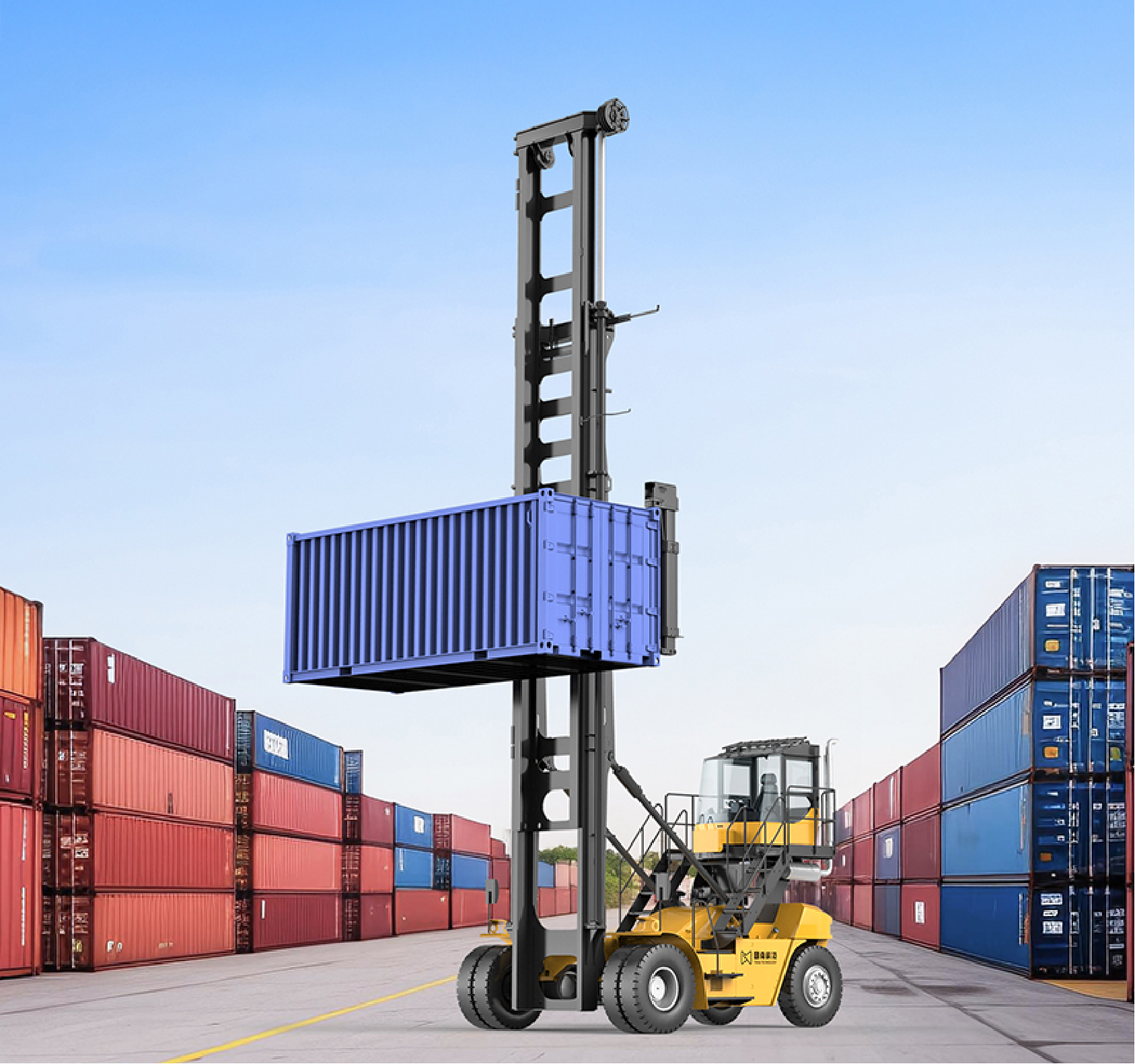
Core Strategies for Handler Routing
Implementing strict one-way aisles is arguably the most effective structural strategy for high-density areas. Instead of operators playing a guessing game at blind intersections, forcing all equipment to move in a uniform direction within specific corridors eliminates the risk of head-on standoffs. This keeps handlers moving smoothly and predictably. Furthermore, one-way systems simplify the cognitive load on operators. They can focus entirely on load stability and stacking precision rather than navigating oncoming heavy machinery.
Building on this spatial organization, the zone defense or sectoring strategy proves highly effective. Rather than allowing equipment to roam the entire facility freely, this method assigns a specific machine to a designated block or zone. For example, one handler exclusively manages imports in Sector A, while another manages exports in Sector B. Transfer points are established at the borders of these zones for containers needing to cross the yard. Specifically, this strategy drastically reduces the overall travel distance per machine. It prevents localized congestion and ensures operators become intimately familiar with the specific spatial constraints of their assigned sector.
In addition, terminal managers must evaluate dynamic versus static routing. Static routing relies on pre-planned daily routes based on anticipated manifests. While stable, it lacks the flexibility to adapt to late truck arrivals or sudden operational changes. Dynamic routing utilizes real-time data to adapt paths continuously. If a specific aisle becomes temporarily blocked by a maintenance event, dynamic routing protocols instantly redirect the fleet through alternative corridors. This guarantees throughput is maintained despite unforeseen yard disruptions.
Leveraging Technology and TOS for Optimal Routing
A modern Terminal Operating System acts as the central nervous system of the depot. It maintains a live, three-dimensional digital twin of the yard inventory. Advanced industry trends show a shift toward AI-driven heuristic algorithms within Terminal Operating System platforms. These systems can predict gate arrivals before a truck even enters the terminal. When a truck arrives, the system calculates the most efficient path for the container move by analyzing current stack heights, equipment locations, and pending job queues. By removing human guesswork from the equation, routing decisions are based on objective, real-time spatial mathematics.
Installing real-time tracking hardware provides management with granular visibility into fleet performance. Telematics systems monitor idle time, route deviations, and operator behavior. If data indicates that machines are consistently slowing down in a particular sector, management can investigate and resolve the physical bottleneck. Historical GPS data can also be analyzed to identify inefficient routing patterns. This allows for continuous, iterative improvements to the yard layout.
Traditional routing relied heavily on radio communication. This method is prone to misinterpretation and delays. Modern routing utilizes automated job dispatching via ruggedized screens located inside the operator cabin. These high-contrast interfaces provide operators with their next optimized move, exact coordinates, and the optimal route to reach the destination. This eliminates radio chatter, reduces human error, and ensures seamless, rapid task transitions.
Safety Protocols for Routing in Tight Spaces
Handling large containers in narrow aisles presents inherent visibility challenges. A massive machine carrying a 40-foot box has significant blind spots, particularly when operating in reverse. Routing protocols must account for these visibility limitations by minimizing reverse travel wherever physically possible. Designing loop-based routes ensures that machines are primarily moving forward. This significantly reduces the risk of accidental impacts with yard infrastructure or ground personnel.
Modern routing frameworks are heavily augmented by advanced collision avoidance systems. Proximity sensors, radar, and multi-angle camera systems integrate directly with the machine control unit. If the assigned routing path brings the handler dangerously close to a stack or a pedestrian, these systems trigger auditory warnings or initiate automatic braking protocols. This technological safety net is absolutely vital in high-density yards where spatial margins of error are practically nonexistent.
Not all areas of a depot can safely accommodate the same travel speeds. Routing software can and should enforce geofenced speed zoning. When a handler enters a high-density stacking aisle or an area with high pedestrian traffic, the system electronically limits the machine maximum speed. Once the machine returns to a main arterial transit lane, standard operating speeds are automatically restored.
Maintenance Routing: Keeping Your Fleet Operational
Efficient depot management requires routing machines out of active duty and into the maintenance bay with minimal disruption to the wider operation. Predictive maintenance algorithms accurately forecast when a machine requires servicing based on telematics data. The Terminal Operating System can then automatically assign the machine a final task that concludes near the maintenance facility. This effectively routes it for service without generating a dedicated, empty trip across the yard.
Safety and reliability begin before the shift officially starts. Depots must establish specific, safe routes and designated staging areas for pre-shift equipment inspections. Routing operators to a secure, well-lit zone away from active traffic lanes ensures that daily mechanical checks are performed thoroughly and safely. Inspecting hydraulic lines and tire pressure becomes a standardized routine. This reduces the likelihood of mid-shift breakdowns that could paralyze a high-density aisle.
Conclusion
In a high-density depot, space is undeniably your most valuable physical asset, while time remains your largest operational expense. Efficient, technologically driven routing of your handling fleet solves for both constraints simultaneously. By eliminating deadheading, enforcing one-way traffic, and utilizing dynamic data, terminals can dramatically increase their moves per hour while simultaneously reducing equipment wear and tear.
Stop letting inefficient traffic patterns erode your profit margins. Terminal managers must audit current yard layouts and upgrade operating systems to handle real-time data flow. Furthermore, carefully evaluate whether combustion or battery-powered equipment best fits your infrastructure capabilities and future sustainability goals. This choice dictates your yard routing architecture for years to come. Strategic routing is no longer just an operational best practice. It is the fundamental baseline for guaranteeing maximum throughput and safety. Visit Tona-Tec to explore specialized handling equipment engineered to match your exact operational requirements and maximize your depot efficiency.
FAQ
What is the ideal aisle width for an empty container handler?
While dimensions vary slightly by manufacturer, high-density depots typically require aisle widths that allow for the machine turning radius plus a strict safety margin. Modern handlers are engineered with compact wheelbases specifically designed to navigate narrower aisles efficiently. Operators should consult exact equipment specifications, but a general baseline requires aisles wide enough to accommodate the machine length plus additional clearance for safe, fluid maneuvering without scrubbing the tires.
How does an electric empty container handler change depot routing?
Battery-powered equipment requires routing plans that include scheduled stops at decentralized charging infrastructure. Unlike traditional fueling, which takes only a few minutes, charging requires strategic downtime. This means routing algorithms must account for battery management and integrate opportunity charging during natural lulls, such as shift changes or operator breaks. This ensures the machine never runs out of power mid-task.
Is a fuel powered empty container handler better for large, high-density depots?
Combustion models offer the distinct advantage of continuous operation with very short refueling times. This is highly beneficial in continuous high-throughput depots that lack electrical grid infrastructure. However, the choice between fuel and electric ultimately depends on your local emission regulations, available charging infrastructure, and corporate sustainability goals. Both can operate at peak efficiency if the yard routing strategy matches the power source.
What is deadheading in container depot operations?
Deadheading refers to a machine driving from one location to another without carrying a load. Effective routing software minimizes this wasteful practice by assigning the handler a new pickup task located immediately near its last drop-off point. Reducing this empty travel time is crucial for lowering fuel and energy costs, as well as minimizing unnecessary mechanical wear on the fleet.
How does a Terminal Operating System improve equipment routing?
A Terminal Operating System uses complex heuristic algorithms to track container inventory and gate arrivals in real-time. It automatically dispatches tasks to the nearest available machine, creating the most efficient, conflict-free route. This digital oversight reduces yard traffic congestion, prevents aisle bottlenecks, and significantly increases the overall number of container moves executed per hour by replacing manual guesswork with data-driven precision.
How do routing algorithms reduce tire wear on container handlers?
Smart routing minimizes sharp turns and stationary steering. By calculating paths with wider radii and prioritizing straight-line travel, the software drastically reduces the lateral friction that degrades heavy-duty pneumatic tires. This extends tire lifespan and reduces maintenance overhead.
What is the impact of yard layout on equipment efficiency?
The physical layout dictates the baseline potential of any routing software. Aligning storage blocks parallel to the main traffic flow and designing dedicated transfer zones prevents gridlock. This structural organization allows handling equipment to maintain consistent travel speeds and execute seamless container transfers.
Related Blogs
-
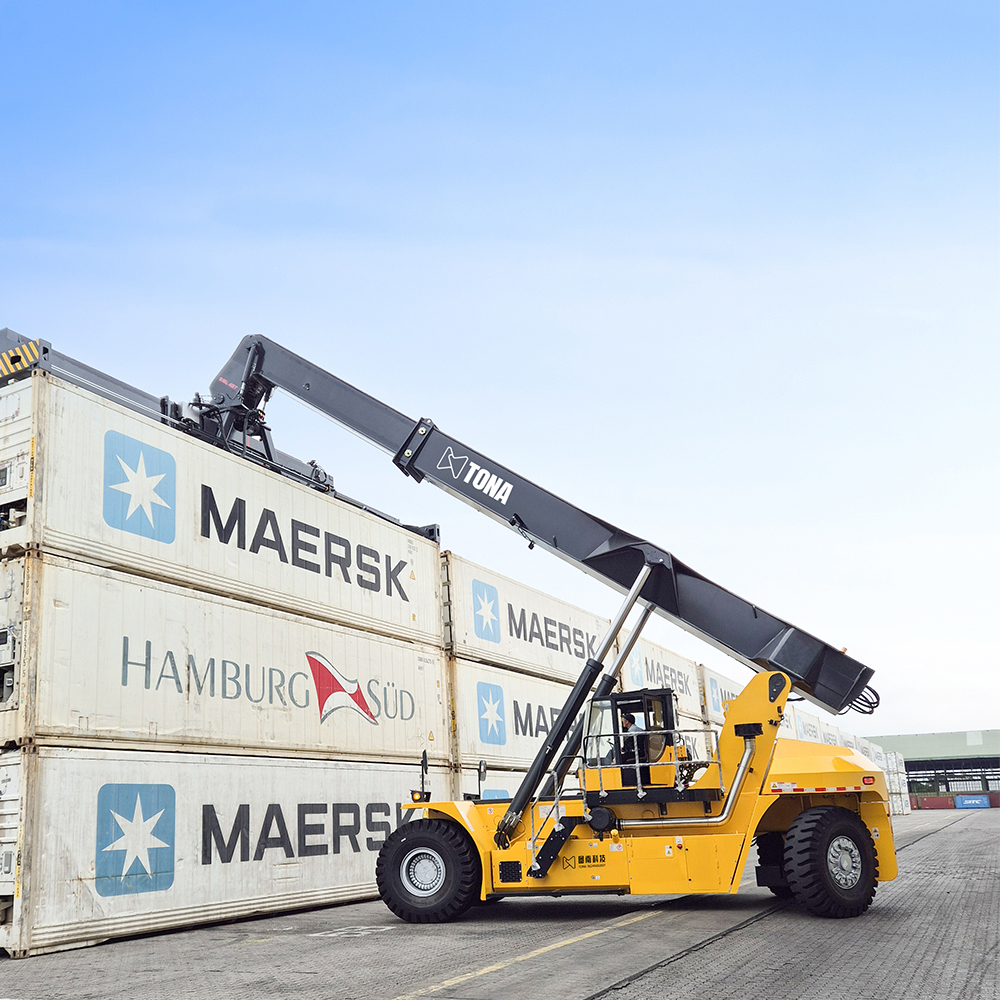 Discover the load capacities and use cases of intermodal reach stackers. Learn how row depth, attachments, and compact designs impact safe heavy lifting in busy container yards.
-
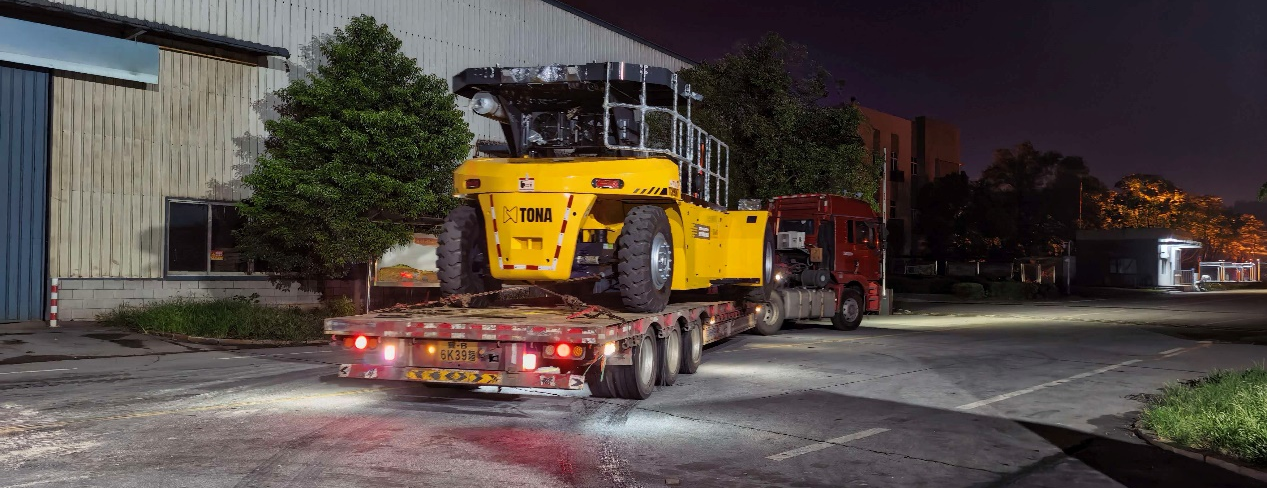 The efficient operation of port terminals and freight yards relies on the strong support of high-performance equipment. TONA's TCH90 Series Empty Container Handler is purpose-built for the handling, transfer, and stacking of 20′ and 40′ standard empty containers. With its core strengths in safety,blogs
-
 Boost depot throughput by 30% with specialized Empty Container Handlers. Learn about double handling, electric vs. fuel options, and ROI.blogs
- TONA Technology TCH90 series empty container handler includes diesel and electric two major models. It is primarily designed for ports, terminals, yards, and other locations to handle the loading, unloading, transfer, and stacking of 20' or 40' standard empty containers.blogs


