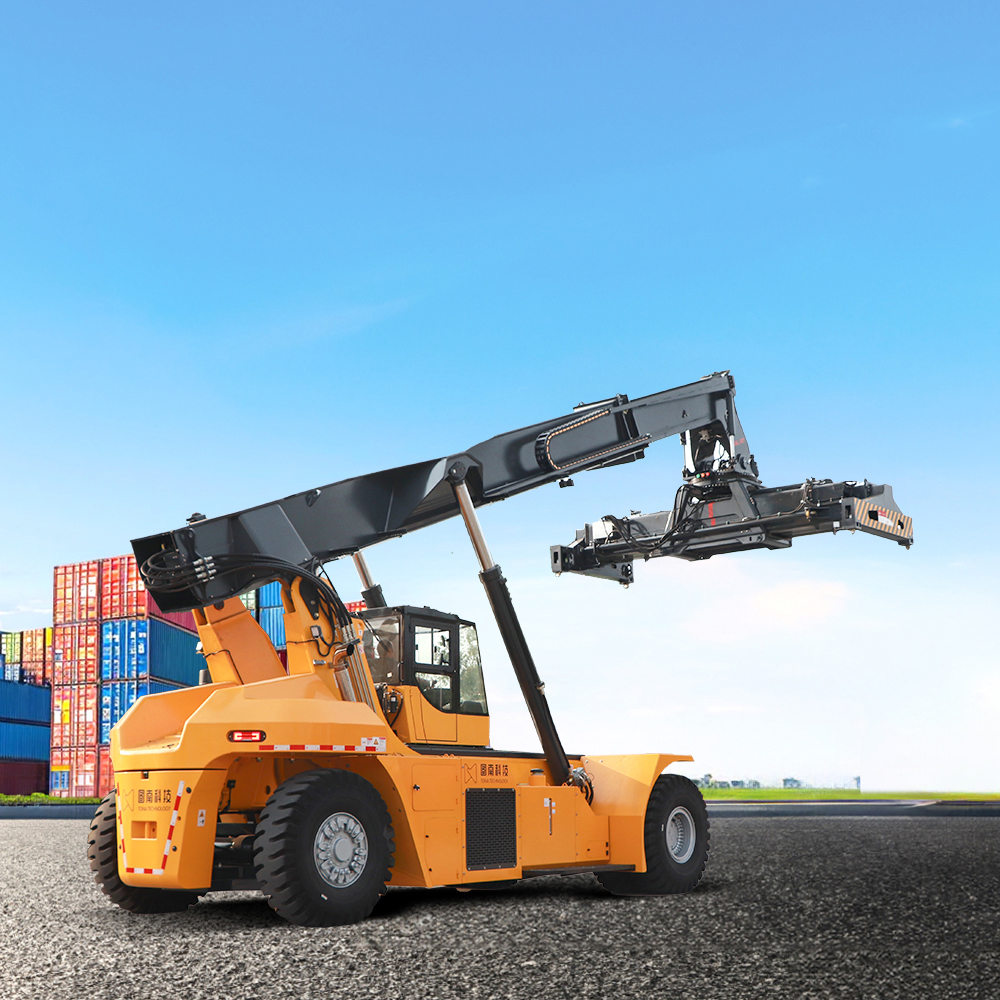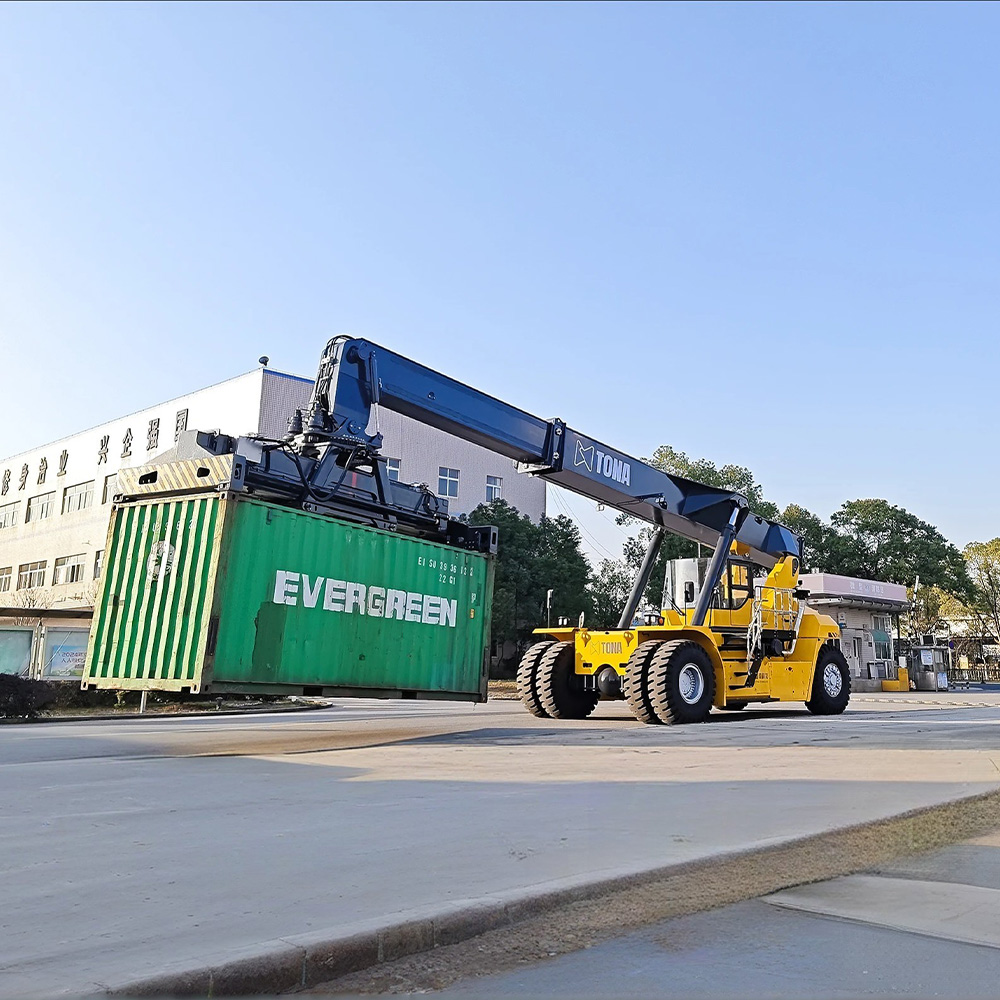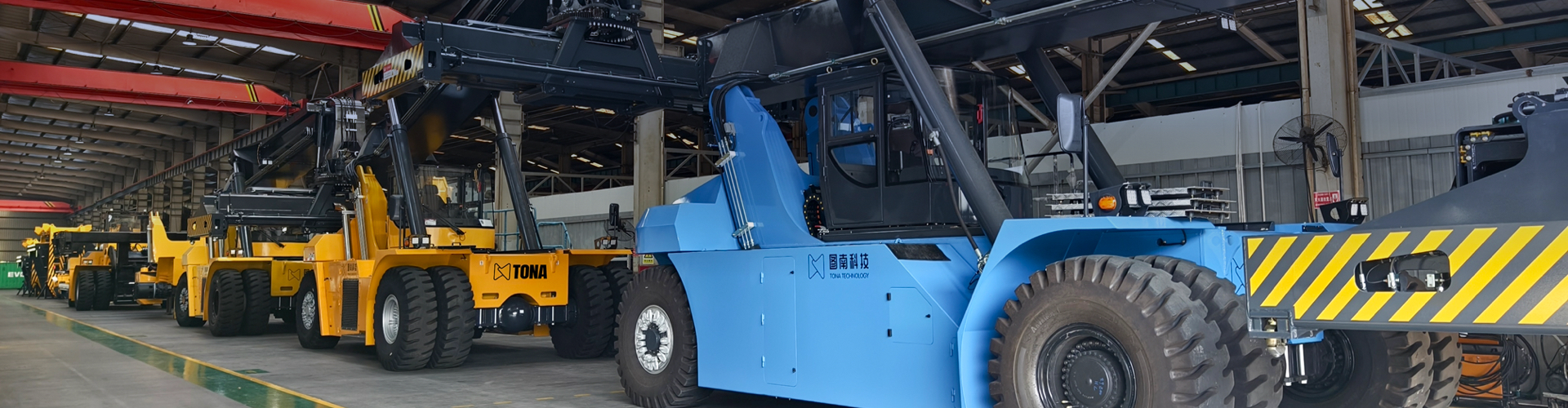

Operating heavy port and terminal machinery requires more than skilled drivers and robust equipment. It demands a foundation built to withstand immense pressure. Picture the sheer mechanical stress during a routine lift. When fully loaded, a 45 ton container reach stacker exerts staggering forces on the ground beneath it. This pressure is particularly concentrated on its front axle. If the underlying terrain is inadequate, terminal operators face a cascade of severe risks. These range from costly pavement destruction to catastrophic equipment rollovers.
For procurement officers, port managers, and logistics planners mapping out their infrastructure, understanding the geotechnical requirements of your yard is critical. It is just as important as selecting the heavy lifter itself. This comprehensive guide breaks down the exact ground conditions, surface materials, and safety standards required to safely support heavy-duty logistics operations.
Key Takeaways
Massive Axle Loads: A fully loaded machine can generate front axle loads exceeding 100 tons. This demands industrial-grade ground bearing capacity.
Surface Material Matters: Reinforced concrete remains the gold standard. Specially engineered heavy-duty asphalt or interlocking pavers can also be utilized under strict design specifications.
Second-Row Dynamics: Reaching deeper into container stacks shifts the center of gravity. This significantly increases the dynamic pressure on the front tires.
Gradient and Drainage: Operational surfaces must be nearly perfectly flat, typically under a 2 percent gradient. Superior drainage is required to prevent subgrade softening.
Safety Interlocks: Poor ground conditions amplify blind-spot risks and stability issues. Modern safety sensors and strict maintenance protocols are absolutely non-negotiable.
Why Ground Conditions Matter for High-Capacity Lifting
Front Axle Loads During Operation
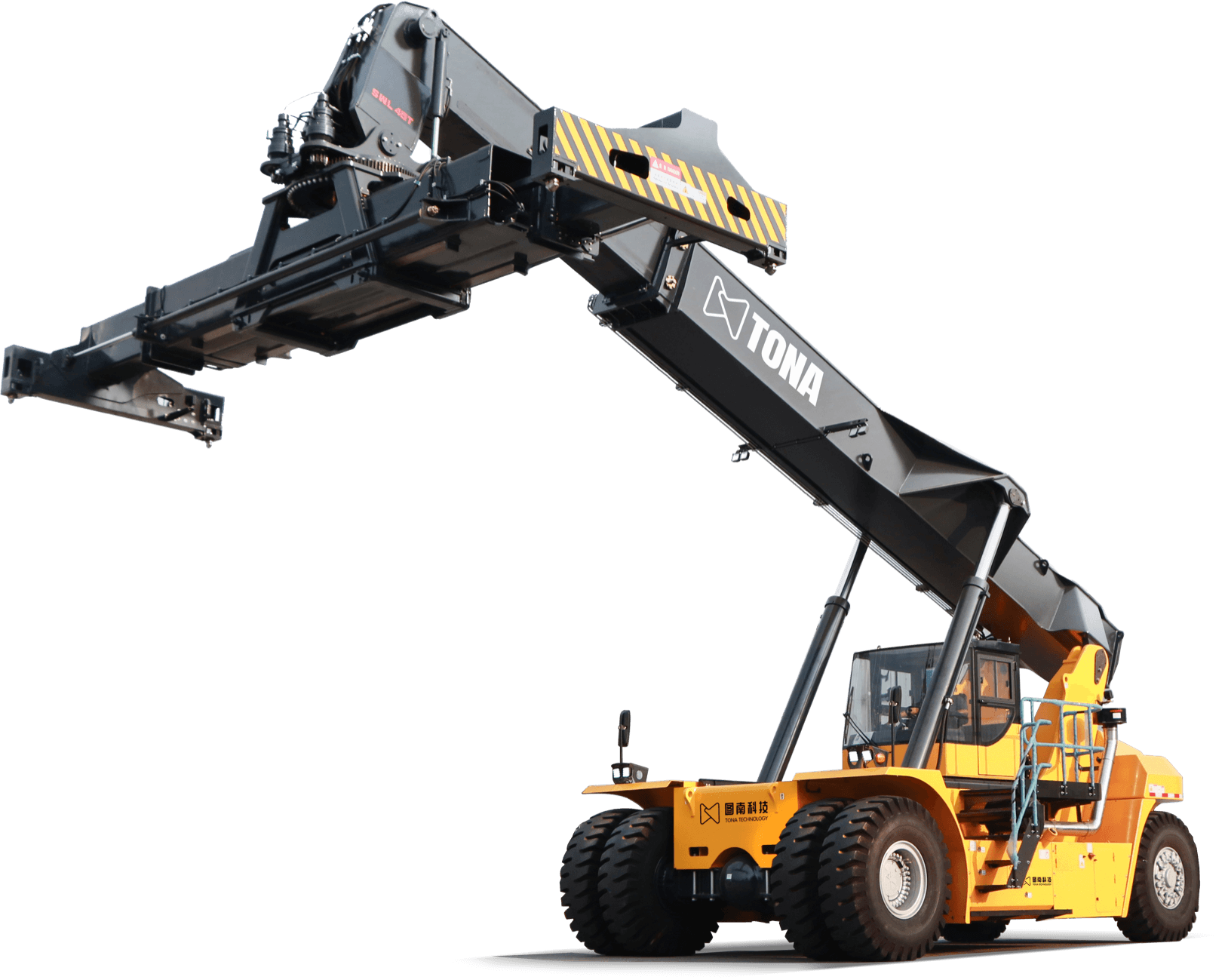
Imagine a bustling intermodal terminal during a peak afternoon shift. When a standard reach stacker approaches a stack and hoists a fully loaded shipping container, the physics of the entire machine shift dramatically. The equipment effectively transforms into a massive lever. The front axle serves as the primary fulcrum point. The combined weight of a maximum-capacity container, the heavy-duty spreader attachment, the extended boom, and the forward chassis transfers almost entirely to the front tires.
In a typical operational scenario, a machine with a deadweight of roughly 70 to 80 tons lifting a 45-ton payload can easily generate a front axle load exceeding 100 metric tons. This highly concentrated load is distributed across just four front tires. Understanding this localized, immense pressure is the critical first step for terminal engineers. If the pavement cannot support this extreme point load, catastrophic structural failure is inevitable.
Dynamic vs Static Weight Distribution
Civil engineering for port terminals requires a strict distinction between static and dynamic weight. Static weight refers to the forces exerted when the asset is simply parked and stationary. Ground conditions, however, must be engineered to support dynamic weight. These are the kinetic forces generated during active, high-tempo operations.
Braking, cornering, accelerating, and the vertical motion of lowering heavy boxes create kinetic energy. This energy multiplies the downward force exerted on the pavement. To illustrate, hard braking while carrying a heavy payload shifts the center of gravity violently forward. This temporarily spikes the pressure on the front axle far beyond its static resting weight. A surface designed only for static loads might easily crack, rut, or shear when that same machine is actively maneuvering through a congested logistics yard.
Minimum Ground Bearing Capacity Requirements
Understanding Ground Pressure Metrics
To safely deploy a heavy duty container reach stacker, the operational floor must meet specific bearing capacity thresholds. Ground pressure is typically measured in Megapascals, or MPa, and Pounds per Square Inch, abbreviated as PSI. Terminal engineers carefully calculate the contact area of the machine's tires against the maximum dynamic axle load. This determines the precise pavement strength required.
For high-capacity port operations, the surface must often withstand localized pressures of 1.5 to 2.0 MPa directly beneath the tire footprint. This equals roughly 217 to 290 PSI. Standard commercial concrete or warehouse-grade asphalt is entirely insufficient for these metrics. The pavement design must incorporate specific mathematical load-transfer models. This ensures the surface will not yield, fracture, or deform under extreme and repetitive pneumatic tire pressure.
Soil Compaction and Subgrade Strength
The visible surface material is only as resilient as the earth beneath it. A high-strength concrete slab will simply snap under the weight of a heavy lifter if the underlying soil is weak or saturated. Consequently, geotechnical surveys are mandatory to assess the natural soil profile long before any pavement is poured.
Proper soil compaction techniques are required to extract air voids and increase soil density. Engineers rely on the California Bearing Ratio, known as CBR, to measure the mechanical strength of the subgrade. For terminal yards handling these massive loads, a subgrade CBR of at least 15 to 30 percent is generally required. This often necessitates soil stabilization techniques, such as lime or cement mixing. Failing to achieve proper subgrade strength inevitably leads to sinkholes, differential settlement, and the eventual structural collapse of the yard surface.
Equipment Specifications and Ground Requirement Matrix
To bridge the gap between civil engineering and machinery procurement, it is crucial to match your yard's capabilities with specific equipment parameters. Below is a practical reference matrix based on industry-standard configurations.
Operational Zone | Reference Equipment Model | Max Payload Capacity | Est. Front Axle Load Loaded | Minimum Required Subgrade CBR |
|---|---|---|---|---|
Standard First-Row Stacking | TONA TR45 | 45 Tons | 100 to 105 Tons | 15 percent |
Deep Reach Second-Row Stacking | TONA TR4535 | 35 Tons at 2nd Row | 110 to 115 Tons | 20 percent |
Heavy-Duty Multi-Row Operations | TONA TR4545 | 45 Tons at Extended Reach | 115 to 125 Tons | 25 to 30 percent |
Ideal Surface Materials for a Heavy Duty Container Yard
Reinforced Concrete as the Gold Standard
For operations handling 45-ton payloads, heavily reinforced, high-strength concrete remains the most reliable and widely recommended surface. To prevent cracking under localized tire loads, the concrete slab typically requires a thickness exceeding 400mm. This thickness depends entirely on the subgrade's CBR value.
Furthermore, the concrete must be reinforced with high-tensile steel rebar grids or advanced steel fibers to provide the necessary flexural strength. The rigid nature of concrete allows it to distribute massive point loads over a much wider area of the sub-base. This prevents localized depressions and ensures a perfectly level operating environment, which is vital for safe container lifting.
Heavy-Duty Asphalt Considerations
While asphalt is generally cheaper and faster to lay than concrete, standard asphalt mixtures will quickly deform. They create deep ruts under the repetitive wheel paths of heavy machinery. If asphalt is chosen for a busy container yard, it must be a highly engineered, multi-layer structural design.
This involves using polymer-modified bitumen mixes designed specifically to resist shear stress and high summer temperatures. The pavement structure usually requires a thick, stabilized sub-base, a dense macadam base course, and a specialized heavy-duty wearing course. Even with these precautions, asphalt is more susceptible to surface abrasion from tire turning. It requires strict, ongoing maintenance protocols to repair early signs of rutting.
Interlocking Concrete Pavers
Interlocking concrete pavers are increasingly popular in modern automated ports and intermodal terminals. These heavy-duty industrial blocks offer unique flexibility. Laid over a precisely engineered sand-bedding course and a crushed stone sub-base, the interlocking design creates a dynamic structural matrix.
When a heavy wheel drives over the pavers, the interlocking joints distribute the massive weight outward across a wider sub-base area. They function similarly to a flexible pavement but offer the surface hardness of concrete. In addition, if localized ground settlement occurs, maintenance crews can easily lift the pavers, repair the sub-base, and relay the original blocks. This makes them highly cost-effective for long-term yard maintenance.
Industry Trends Impacting Terminal Ground Requirements
The global logistics sector is rapidly evolving, and these shifts directly impact infrastructure demands. As ports push toward zero-emission targets, the transition to fully electric lifting machinery introduces a critical new variable: battery weight. Massive lithium-ion battery packs add significant deadweight to the equipment chassis. Consequently, the static and dynamic axle loads of modern green machines often exceed those of their traditional diesel counterparts. This demands even thicker concrete slabs and higher subgrade CBR ratings to prevent surface failure.
Simultaneously, the rise of artificial intelligence in yard management and automated guided operations is changing how pavement wears down. Human operators naturally vary their driving paths slightly, which distributes tire wear across a broader section of the yard. Conversely, automated machines follow exact, mathematically optimized routes down to the millimeter. This creates channelized traffic, where immense stress is repeatedly hammered into the exact same strip of pavement day after day. To adapt, civil engineers are now designing ultra-high-performance concrete specifically formulated to resist the intense, repetitive fatigue caused by autonomous terminal fleets.
The Physics of Reaching the Second Row
How Extended Booms Alter Ground Pressure
Lifting a container from the first row directly in front of the machine is standard practice. Operations utilizing a second row container reach stacker, however, face unique, amplified physical challenges. To access a box tucked in the second row, the boom must be extended significantly forward.
In physics, extending this boom acts as a lever, exponentially increasing the load moment, calculated as force multiplied by distance. For example, the TR4535 model can lift 35 tons in the second row. Even though the payload is lighter than a maximum first-row lift, the increased distance from the machine's center of gravity drastically multiplies the downward force exerted on the front axle. The terrain beneath the front tires must be engineered to handle this concentrated peak pressure, which is substantially higher than during a standard first-row lift.
Counterweight Mechanics and Surface Stress
To prevent the equipment from tipping forward when reaching deep into a stack, the machine relies on massive internal counterweights located at the rear of the chassis. This creates a complex dynamic of shifting surface stress.
During a heavy lift, the front axle bears nearly the entire load. The moment the machine drops the container and reverses out empty, however, those heavy rear counterweights suddenly transfer immense pressure back to the rear steering axle. This continuous, alternating push-and-pull stress between the front and rear axles causes severe fatigue on the yard's pavement. It requires materials with exceptionally high tensile and compressive strength to withstand the constant, rhythmic shifting of weight.
Gradient, Slope, and Drainage Considerations
Maximum Allowable Incline for Safe Lifting
Heavy port machinery is fundamentally engineered to operate on flat surfaces. While robust drivetrains can navigate slight yard variations, lifting operations require strict gradient controls. When a heavy load is hoisted several meters into the air, the machine's center of gravity rises. This makes the equipment highly susceptible to lateral instability.
Operating on steep inclines risks a catastrophic rollover. Therefore, industry safety standards strictly dictate maximum allowable operational gradients. For safe container handling, operational surfaces must be nearly flat, maintaining a gradient of less than 1 to 2 percent. Even a minor cross-slope can cause a suspended container to sway, exerting asymmetrical pressure on the downhill tires and drastically increasing the risk of an accident.
The Role of Proper Yard Drainage
While the yard must be nearly flat, it cannot be perfectly level. Water must have a designated path to escape. Standing water is the ultimate enemy of pavement subgrades. When water pools on the surface, it acts as a hydraulic wedge. Under the immense pressure of passing tires, water is violently forced into microscopic cracks in the concrete or asphalt.
Once moisture penetrates the surface, it softens and erodes the soil subgrade beneath. This phenomenon, known as hydraulic pumping, flushes fine soil particles out, creating hollow voids under the pavement. Terminal yards must incorporate superior drainage solutions, including precise cross-falls usually around 1 to 1.5 percent, heavy-duty trench drains, and catch basins. These systems ensure the operating floor remains completely dry and structurally stable.
Risks of Operating on Substandard Ground
Equipment Tipping and Safety Hazards
The most terrifying consequence of inadequate ground conditions is equipment tipping. A heavy lifter relies entirely on the counterbalancing weight of its rear chassis to offset the load suspended at the front. This delicate balance assumes a solid, unyielding surface.
If the front tires encounter a soft spot, a hidden void, or a sudden depression in the pavement during a lift, the machine will tilt abruptly. This sudden shift in geometry can cause the load moment to exceed the machine's safety parameters in a fraction of a second. The resulting tip-over destroys the asset, ruins the cargo, and poses a fatal risk to the operator and surrounding ground personnel.
Premature Tire Wear and Structural Damage
Even if substandard ground does not lead to a tip-over, it will systematically dismantle the machinery over time. Operating on potholed, uneven, or highly abrasive terrain drastically reduces the operational lifespan of expensive pneumatic or solid rubber tires. Sharp transitions in pavement can cause sidewall blowouts or severe tread tearing.
Furthermore, driving over uneven ground sends violent shockwaves upward through the rigid chassis. Over time, this constant vibration and impact lead to metal fatigue, cracked welds, and premature wear on the boom structure, spreader attachments, and sensitive hydraulic lifting cylinders.
Pavement Rutting and Infrastructure Failure
Infrastructure destruction is a vicious, bidirectional cycle. A heavy machine operating on inadequate pavement will quickly compress weak asphalt, creating deep wheel ruts. Once rutting begins, the machine is forced to drive through these exact depressions. This further concentrates the weight and deepens the channels.
This infrastructure failure requires costly, continuous patching. More importantly, operating in deep ruts restricts the machine's steering capabilities. It forces the hydraulic steering cylinders to work harder and increases the likelihood of mechanical failure.
Site Preparation and Maintenance Best Practices
Conducting Geotechnical Surveys
Before purchasing and deploying heavy-duty lifting equipment, terminal operators must commission professional soil and pavement testing. Purchasing the equipment is only a viable strategy if the terrain can actually support it.
A comprehensive geotechnical survey involves drilling boreholes and extracting core samples to analyze the soil strata. Engineers will look for the depth of the bedrock, the presence of groundwater, and the subgrade's load-bearing capacity. Procurement officers should rely heavily on these reports to determine if their current yard requires deep soil mixing, the installation of geogrids, or complete excavation before the new machinery arrives on site.
Routine Surface Inspections and Repairs
Maintaining ground conditions is not a one-time construction task. It is an ongoing, critical operational requirement. Terminals must implement strict daily and weekly yard inspection protocols to identify pavement degradation before it compromises safety.
Maintenance teams should use checklists focused on identifying early warning signs of pavement failure. Key indicators include spiderweb cracking, surface depressions such as birdbaths where water pools, joint sealant deterioration, and drainage blockages. Addressing a small crack immediately with epoxy or bitumen sealant prevents water ingress and saves the facility from undertaking massive, disruptive structural repairs later.
Enhancing Safety with Modern Technology
Load Moment Indicators
To mitigate the risks associated with dynamic lifting, modern heavy-duty machinery is equipped with sophisticated Load Moment Indicators. These onboard computer systems continuously calculate the weight of the load, the angle and extension of the boom, and the machine's overall stability threshold in real-time.
While these indicators are highly effective at preventing operators from attempting unsafe lifts, they fundamentally rely on the assumption that the machine is sitting on stable, level ground. If the terrain yields or tilts during a lift, the computer's calculations can be instantly compromised. Therefore, ensuring solid ground conditions is a mandatory prerequisite for these electronic safety systems to function accurately.
Blind Spot Alerts and Collision Prevention
Navigating a massive machine through a busy, congested terminal requires ultimate situational awareness. The sheer physical size of the equipment inherently creates massive blind spots for the operator, particularly when carrying a container low to the ground that obstructs forward vision.
Poor ground conditions heavily amplify these risks. Operators may become entirely focused on avoiding potholes or unstable patches, distracting them from their immediate surroundings. Integrating advanced safety technologies, such as 360-degree blind-spot cameras, radar proximity alerts, and pedestrian detection systems, acts as a second set of eyes. This ensures drivers can safely manage ground navigation and load positioning without risking collisions with terminal personnel or infrastructure.
Conclusion
Investing in high-capacity port machinery is a massive leap forward for any intermodal terminal or heavy logistics operation. The efficiency, longevity, and safety of this equipment, however, are entirely dependent on the ground it drives on. From pouring heavily reinforced concrete to maintaining strict gradient controls and drainage systems, preparing your site is a non-negotiable prerequisite.
By ensuring your terminal meets the stringent geotechnical requirements outlined above, you protect your infrastructure from rapid degradation and extend the lifespan of your fleet. Most importantly, you guarantee a safe working environment for your operators and ground personnel. Ready to upgrade your terminal's lifting capabilities? Ensure you have the right equipment for your yard's specific ground conditions. Explore our full range of high-performance lifting solutions at TONA TEC to find the perfect match for your infrastructure.
FAQ
What is the maximum ground pressure of a fully loaded 45 ton reach stacker?
While it varies slightly by manufacturer and specific tire configuration, a fully loaded machine can exert a front axle load ranging from 100 to 120 metric tons. This translates to immense localized ground pressure, often exceeding 1.5 to 2.0 Megapascals directly under the pneumatic tire footprint during an active lift.
Can a reach stacker operate on gravel or compacted dirt?
No. While they may be able to slowly drive over highly compacted, chemically stabilized earth when completely empty, lifting and maneuvering heavy containers requires rigid, engineered surfaces. Operating on dirt or gravel will cause the tires to sink under the dynamic load, leading to immediate tipping hazards and severe structural damage to the yard.
How thick should a concrete pad be for heavy duty operations?
Depending on the underlying subgrade strength, reinforced concrete surfaces for heavy-duty lifting equipment typically need to be between 350mm and 500mm, or 14 to 20 inches, thick. This concrete must utilize high-tensile steel rebar grids and high-strength concrete mixes to prevent cracking under concentrated point loads.
Does reaching into the second row increase the risk of ground failure?
Yes. Extending the boom to access a second row acts as a mechanical lever, significantly increasing the load moment. This action transfers substantially more dynamic weight to the front tires compared to a standard first-row lift. The ground must be specifically engineered to handle this concentrated peak pressure without yielding.
How does uneven ground affect equipment safety?
Uneven ground shifts the machine's center of gravity either laterally or longitudinally. When hoisting 45 tons high into the air, even a few degrees of tilt caused by a pothole, rut, or improper slope can push the center of gravity outside the machine's stability triangle. This can lead to an irreversible and fatal rollover in a matter of seconds.
How often should terminal ground conditions be inspected for heavy lifting?
Terminal ground conditions should undergo visual inspections daily to identify immediate hazards like pooling water or new cracks. Comprehensive structural evaluations by civil engineers should be conducted annually, or immediately following severe weather events, to ensure the subgrade and surface materials maintain their required bearing capacity.
What is the difference in ground pressure between empty and fully loaded reach stackers?
When empty, the machine's weight is relatively balanced, with the rear counterweights placing significant pressure on the rear steering axle. When fully loaded, the physics flip entirely. The payload weight and the boom extension shift nearly the entire combined mass to the front axle, often tripling the localized ground pressure under the front tires compared to its empty state.
Related Blogs
-
 Maximize terminal TEU capacity without expanding your footprint. Discover how reach stackers solve yard congestion via vertical and block stacking.
 -
 Prevent terminal collisions. Learn to calculate dynamic reach stacker safety zones, assess ground conditions, and safely optimize yard layouts.